
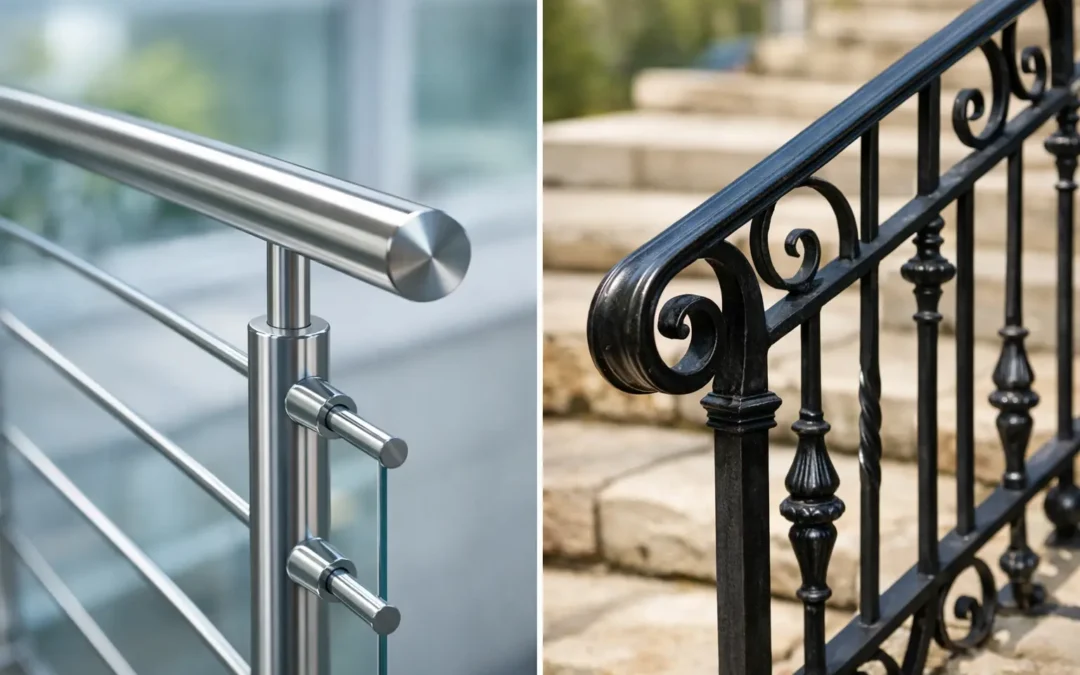
A railing can change the entire feel of a stair, balcony, porch, or commercial entry. When clients ask us about stainless steel vs wrought iron railings, they are usually balancing two priorities at once – the look they want and the level of upkeep they are willing to live with. Both materials can deliver safety, value, and a custom finish. The right choice depends on your architecture, exposure to the elements, and how you want the finished space to feel every day.
Stainless steel vs wrought iron railings: what changes the decision?
This is not just a style question. Stainless steel and wrought iron perform differently over time, especially in exterior applications where moisture, salt, and temperature swings are part of the equation. They also create very different visual impressions. One leans crisp, modern, and minimal. The other brings depth, ornament, and a more traditional architectural presence.
For many homeowners, the decision becomes clearer once they stop thinking in terms of which material is better and start thinking in terms of which material is better for this project. A sleek interior staircase in a contemporary home calls for a different approach than a front entry gate or a balcony on a classic brick property.
The look and feel of each material
Stainless steel is often chosen for clean lines and a refined, modern profile. It pairs naturally with glass, wood treads, stone, and minimalist interiors. If your goal is an open, airy visual with as little visual weight as possible, stainless steel usually gets there faster. It works especially well in homes and commercial spaces where the design language is sharp, simple, and current.
Wrought iron has a different kind of presence. It feels crafted, substantial, and architectural. Even simple wrought iron railings have a hand-finished character that reads as custom. If you want scrolls, decorative pickets, textured details, or a stronger visual frame around stairs and balconies, wrought iron gives you more freedom to create that statement.
Neither look is inherently better. Stainless steel tends to disappear into a modern design. Wrought iron tends to define the space. That difference matters more than most people expect.
Where stainless steel fits best
Stainless steel is a natural fit for interior stairs, glass railing systems, condo-style renovations, commercial entrances, and contemporary exterior decks or balconies. It also suits clients who want a premium finish without a lot of visual ornament.
Where wrought iron fits best
Wrought iron is often the stronger choice for traditional homes, custom entry stairs, fences, gates, Juliet balconies, and projects where decorative metalwork is part of the design story. It can also be adapted into cleaner profiles, but it usually shines when the craftsmanship is meant to be seen.
Durability and long-term performance
Durability is where the conversation becomes more practical. Stainless steel is known for corrosion resistance, which makes it a strong option for exterior use, especially where rain, humidity, or winter conditions are a concern. With the right grade and proper fabrication, it holds up extremely well and maintains its finish with relatively modest maintenance.
Wrought iron is strong and dependable, but it needs more protection from the elements. If the finish is compromised and moisture reaches the metal, rust can develop. That does not make wrought iron a poor exterior choice. It simply means the railing needs proper coating, proper installation, and periodic attention over the years.
For interior projects, both materials can last for decades with excellent results. Outdoors, stainless steel usually has the edge for lower-maintenance performance. Wrought iron can still perform beautifully, but the quality of fabrication and finishing matters even more.
Maintenance expectations
If you want a railing that asks less from you, stainless steel is usually the easier material to own. Regular cleaning helps preserve its appearance, especially in high-touch areas or outdoor settings, but it generally does not require repainting. Fingerprints and surface smudges may show more on some finishes, particularly indoors, though that is more of a cosmetic issue than a structural one.
Wrought iron needs a more active maintenance mindset. Depending on exposure and finish, it may need touch-ups or repainting over time to keep rust from taking hold. For some property owners, that is a fair trade because they want the richer, more custom aesthetic that wrought iron provides. For others, especially those managing multiple properties or busy households, lower maintenance becomes the deciding factor.
This is where honest planning matters. A beautiful railing is only a good investment if it fits the level of care you are realistically going to give it.
Cost and value in stainless steel vs wrought iron railings
Cost is rarely as simple as one material being cheaper across the board. Customization, finish, site conditions, engineering requirements, and installation complexity all affect pricing. In many cases, stainless steel can carry a higher upfront material cost, particularly when paired with glass or premium finishes. Wrought iron pricing can vary widely depending on how simple or decorative the design is.
A straightforward wrought iron railing may be cost-effective, but highly detailed ornamental work can push the price upward quickly. Stainless steel systems with clean geometry may be efficient to fabricate in some applications, but specialty details and hardware can also add cost.
The better way to think about value is over the life of the project. If you want lower maintenance and a modern look that stays consistent over time, stainless steel may justify the initial investment. If you want a distinct custom character and are comfortable with periodic upkeep, wrought iron may deliver stronger design value for your property.
Safety, code, and build quality matter more than material alone
A railing is not just a design feature. It is a safety system. That means the quality of measurement, fabrication, anchoring, and installation matters as much as the material you choose. A poorly planned stainless steel railing will not outperform a properly designed wrought iron one, and the reverse is equally true.
For residential and commercial projects, details like guard height, spacing, handrail profile, structural support, and substrate conditions all need to be handled correctly. On many jobs, drawings, approvals, and engineer review are part of making sure the finished railing is not only attractive but buildable and compliant.
That is why working with a team that manages the process from site measurement through fabrication and installation makes such a difference. Good railing work is never just about selling metal. It is about delivering a finished result that looks right, feels solid, and performs the way it should.
How to choose the right railing for your project
If your space is modern, your priority is low maintenance, and you want a lighter visual footprint, stainless steel is usually the stronger fit. It works especially well when combined with glass or other clean architectural materials.
If your property has a more classic style, you want decorative freedom, or you want the railing to act as a focal point, wrought iron often makes more sense. It brings warmth, detail, and custom craftsmanship that stainless steel does not aim to replicate.
There are also projects where the answer is not purely one or the other. Some clients want the structure and character of ornamental metalwork in one area and a cleaner stainless approach in another. The best solution often comes from looking at the whole property, not making the decision in isolation.
At Iron & Glass Designs, that is often where the process starts – understanding the space, the style, and the performance expectations before drawings and fabrication begin. The material should support the design, not force it.
Stainless steel vs wrought iron railings for resale and everyday living
Both options can improve perceived value when they are well designed and professionally installed. Stainless steel tends to appeal strongly to buyers looking for updated, contemporary finishes. Wrought iron often resonates with buyers who appreciate craftsmanship and more established architectural character.
For everyday living, the difference usually comes down to how you want the railing to behave in your space. Do you want it to blend into a clean design and stay easy to maintain? Or do you want it to add presence, detail, and a more tailored look? Those are two very different goals, and both are valid.
The right railing should feel like it belongs the moment it is installed. If you are choosing between stainless steel and wrought iron, focus less on trends and more on fit. The best material is the one that matches your property, your maintenance expectations, and the way you want the finished project to feel years from now.