
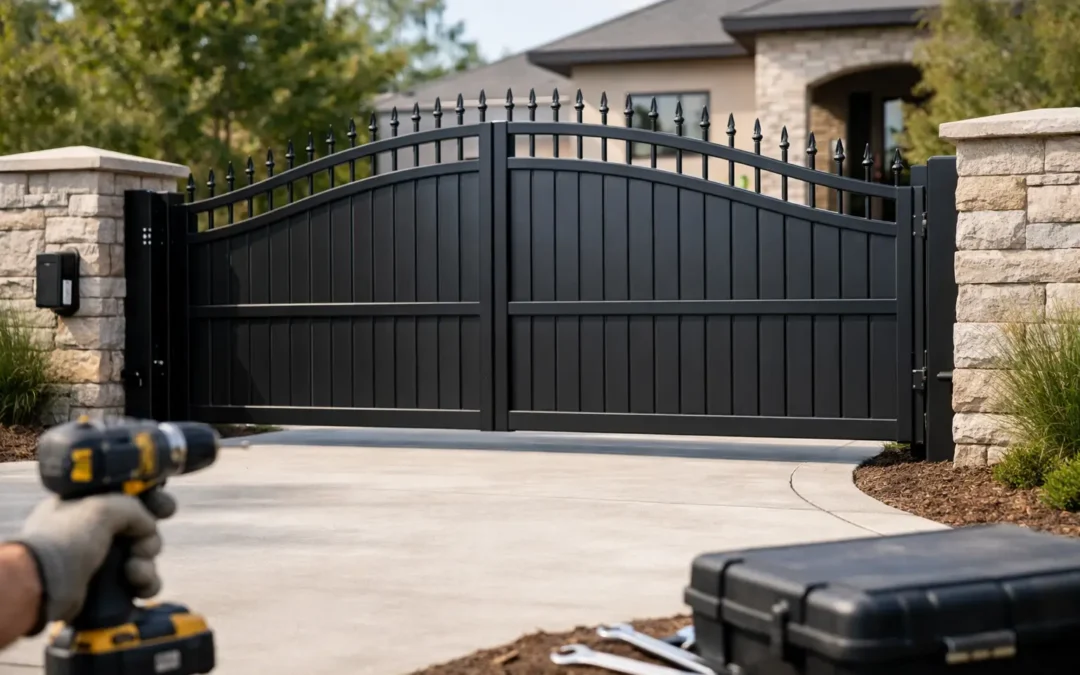
A driveway gate usually becomes the first thing people notice about a home, but the real test starts long before anyone sees it swing open. In this case study custom driveway gate install, the goal was not simply to add a gate. The client wanted a front entry feature that felt architectural, improved security, worked reliably through changing weather, and matched the clean lines of a renovated property.
The project came from a homeowner updating both the exterior appearance and the practical function of a detached residence. The existing entrance had no real visual anchor. Cars entered directly from the street, the front boundary looked unfinished, and there was little sense of privacy or control. What the client wanted was clear from the first conversation – a custom gate that looked refined, felt substantial, and fit the property instead of appearing like an off-the-shelf add-on.
The brief behind this custom driveway gate install
From a design standpoint, the homeowner leaned modern. They liked strong horizontal lines, darker finishes, and a layout that complemented the home’s updated façade without making the front yard feel closed off. At the same time, they were practical about how the gate would be used. This was a daily-use entry, not a decorative piece that would stay open most of the time.
That shaped the scope immediately. The gate needed to support frequent operation, maintain alignment, and provide dependable access for the household while also standing up to seasonal exposure. It also needed to work within the actual site conditions, which is where many driveway gate ideas either become buildable or fall apart.
The opening width, driveway slope, adjacent structure clearances, and placement of posts all mattered. On paper, a custom driveway gate can look straightforward. On site, inches matter. A gate that is visually balanced but poorly planned can scrape, sag, rack over time, or create awkward vehicle movement. That is why the early phase of the project focused as much on measurement and planning as on design.
Site review and design decisions
The first step was a detailed site visit to capture measurements and understand constraints that would affect both the gate structure and the installation method. The property had enough width for a strong visual statement, but there were still key decisions to make about operation style, material weight, and post placement.
A swing gate was the preferred direction because it suited the layout and preserved the clean front approach the homeowner wanted. However, a swing system only works well if the grade and clearance are accounted for correctly. That required careful review of the driveway pitch and the gate arc to avoid future performance issues.
The client also wanted privacy, but not a fully solid panel that would feel heavy from the street. The final concept balanced those goals with a custom metal frame and infill arrangement that offered screening while still keeping a light, modern presence. This kind of choice matters more than people expect. Too much openness can make a security upgrade feel cosmetic. Too much enclosure can overwhelm the front elevation.
Drawings were prepared to translate the concept into a buildable system. This stage helps remove guesswork. Clients can review proportions, spacing, finish direction, and the relationship between gate leaves, posts, and surrounding architecture before fabrication starts. For custom metalwork, this approval process protects both the design vision and the final fit.
Why engineering matters in a driveway gate project
One of the biggest differences between a premium custom gate and a basic fabricated gate is what happens behind the look. A driveway gate is a moving structural element. It carries its own weight, resists repeated use, and has to hold alignment over time. If the structure is underbuilt, problems usually appear quickly.
For this project, engineering review was part of the workflow because the client wanted confidence in long-term performance, not just curb appeal on day one. Post sizing, anchor strategy, hinge support, and fabrication details all had to work together. This is especially important for larger custom gates, where a sleek profile can be visually appealing but may need internal reinforcement to prevent flex or sag.
That trade-off comes up often. Clients usually want a minimal look, and we understand why. Clean lines photograph well and suit modern homes. But the most refined-looking gate is only successful if the structure behind it is properly resolved. Good custom work does not force clients to choose between design and reliability.
Fabrication with finish and durability in mind
Once the design and technical details were approved, fabrication moved forward. This phase is where custom projects either justify their value or expose weak planning. Precision matters because even small inconsistencies in frame geometry, weld quality, or hardware placement can affect installation and operation.
The gate was fabricated to match the approved drawings, with attention paid to symmetry, clean joints, and a finish appropriate for exterior exposure. The homeowner chose a dark powder-coated finish to complement the home’s trim and window framing. It gave the gate the sharp, contemporary edge they wanted without making the entrance feel too industrial.
Material selection also played a major role in the outcome. For a driveway gate, appearance alone is not enough. The gate has to manage weather, movement, and daily wear. A well-fabricated metal gate should feel solid and controlled in use, not loose or noisy after the first season. That level of performance starts in the shop, not at installation.
The installation phase
Installation day tends to look quick from the outside, but it works well only when the earlier phases have been handled properly. This project required careful coordination because the gate alignment, post setting, and hardware positioning all needed to be exact.
The posts were installed and checked for plumb, spacing, and structural readiness before final gate mounting. From there, the team set the gate leaves, adjusted hinges, and verified consistent clearances across the full swing path. This part of a custom driveway gate install is less about speed and more about control. A gate can appear level when closed and still reveal problems once it opens or bears load unevenly.
Final adjustments focused on smooth movement and visual balance. The homeowner was not just looking for a gate that functioned. They wanted the front entry to feel finished, deliberate, and premium. That meant the reveal lines needed to be clean, the operation had to feel solid, and the gate had to sit naturally within the architecture of the property.
What changed for the property
The difference after installation was immediate. Before the project, the front approach lacked definition. Afterward, the property had a clear entry point, stronger street presence, and a better sense of privacy and control.
What stood out most was how the gate changed the overall reading of the home. It did not feel like an accessory. It felt integrated. That is the value of a truly custom solution. When proportions, finish, and installation are handled correctly, the gate looks like it belongs there from the start.
The practical gains were just as important. The homeowner now had a controlled entry, better boundary definition, and a stronger sense of security without giving up the modern aesthetic they had invested in across the rest of the renovation.
Lessons from this case study custom driveway gate install
This project reinforced a point we see often: the best custom gate results come from treating the gate as part of the architecture, not as a separate product. Good design matters, but so do site conditions, structural planning, fabrication discipline, and installation accuracy.
It also showed why process matters. A lot of uncertainty disappears when the workflow includes measurement, drawings, approvals, engineering review where needed, production, and professional installation. That structure gives clients clarity at every stage and reduces the chance of expensive surprises.
For homeowners considering a similar upgrade, the main takeaway is simple. A driveway gate should do more than close an opening. It should improve how the property looks, how it functions, and how confidently it performs over time. That only happens when design and execution are handled together.
At Iron & Glass Designs, that is where custom work proves its value. When a gate is planned carefully and built to suit the property, the finished result feels less like a purchase and more like a permanent upgrade to the home.