
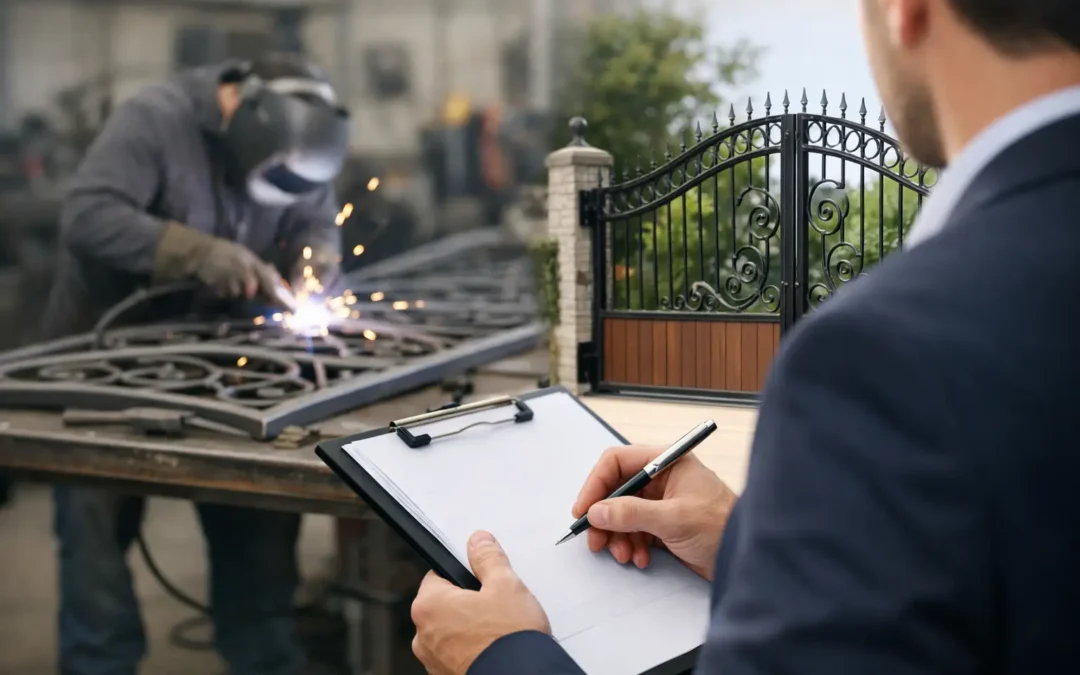
A custom gate can raise curb appeal in a single day or create months of frustration if the wrong company builds it. That is why knowing how to review a custom gate fabrication company matters before you approve a design, sign a quote, or commit to installation. The right partner does more than weld metal together. They translate your ideas into a gate that looks refined, functions smoothly, and holds up through daily use and changing weather.
For homeowners, investors, and commercial property owners, the stakes are higher than appearance alone. A gate affects security, access, privacy, maintenance, and the overall value of the property. When the project involves custom fabrication, the company you choose will shape everything from measurements and drawings to engineering review and final fit.
What a strong custom gate company actually delivers
The best custom gate fabricators are not simply product suppliers. They operate as design, manufacturing, and installation partners. That difference matters because gates are highly site-specific. Grade changes, post conditions, opening widths, latch placement, code requirements, and finish choices all affect the final result.
A strong company starts by understanding how the gate will be used. A front entry pedestrian gate has different demands than a driveway gate, pool enclosure gate, garden gate, or commercial access gate. Some clients prioritize a modern architectural look with clean lines and glass or aluminum accents. Others need heavier wrought iron styling, added privacy, or reinforced security. A good review process should confirm whether the company can handle those nuances without forcing every project into the same template.
Review custom gate fabrication company credentials first
Before you compare styles or discuss lead times, review the company itself. This is where many property owners save themselves from expensive corrections later.
Start with whether the business measures on site rather than quoting blindly from rough numbers. Custom work depends on precision. A company that takes field measurements seriously is more likely to deliver a gate that swings properly, aligns cleanly, and avoids awkward gaps.
Next, ask whether they provide project-specific drawings for approval. This step signals discipline. Drawings show that the company is not improvising in the shop. They are documenting dimensions, layout, hardware placement, and design details before production begins.
For more technical or commercial projects, engineering review can be just as important. If a fabricator can coordinate engineered and stamped drawings when needed, that tells you they understand the real-world demands of code compliance and permitting. It also shows respect for safety, not just appearance.
What to look for in gate design quality
A gate should feel intentional from every angle. Clean design is not only about ornament or minimalism. It is about proportion, balance, and compatibility with the surrounding property.
When you review past work, look closely at how the gate relates to nearby fencing, railings, stairs, balconies, or entry features. Does it look like part of the architecture, or like a disconnected add-on? The strongest fabricators know how to carry a visual language across a property so the gate feels integrated.
You should also check the consistency of lines, spacing, and symmetry. On custom metalwork, small design mistakes become very visible. Uneven picket spacing, bulky frames, or awkward transitions can make a premium project look average. Good craftsmanship has a calm, precise look. Nothing feels forced.
If your goal is a modern upgrade, ask whether the company can tailor the gate style to match clean contemporary elements already on site. If the property includes glass railings, aluminum railings, or black architectural steel details, the gate should complement those materials rather than compete with them.
Materials tell you how the gate will age
Many gates look good on installation day. Fewer still look good after several winters, repeated opening cycles, and exposure to moisture and temperature swings. That is why material selection should be part of any serious custom gate fabrication company review.
Ask what metals the company recommends and why. Wrought iron, steel, aluminum, and stainless steel all have different strengths, maintenance profiles, and design implications. There is no one-size-fits-all answer. Heavier steel construction may suit certain security-focused projects, while aluminum can be a smart fit for clients who want a clean modern look with lower maintenance.
Finishing also matters. A well-fabricated gate can still disappoint if the coating fails early or the finish was not matched to the environment. A strong company should speak clearly about durability, outdoor exposure, and what clients should expect over time. Honest guidance is a good sign. If every material is described as perfect for every application, the review should become more cautious.
Installation is where good fabrication is proven
Even a beautifully fabricated gate can underperform if installation is rushed or imprecise. This is one of the biggest reasons to evaluate whether the company handles the full process or leaves critical field work to others.
A dependable installer checks swing clearance, hinge performance, latch alignment, post stability, and the relationship between the gate and surrounding surfaces. They account for slope, movement, and long-term usability. The result should feel smooth, not forced. The gate should open confidently, close properly, and sit true within the opening.
This is also where communication matters. A professional company keeps the process controlled from measurement through final installation, reducing surprises for the client. At Iron & Glass Designs, that structured workflow is central to how projects are delivered, because quality is easier to trust when each step is clear and accountable.
How to read reviews without getting misled
Online reviews help, but they should not be read casually. A custom fabrication company is not a commodity service. You are looking for signs of process reliability as much as product satisfaction.
Look for comments about responsiveness, accuracy of measurements, professionalism on site, respect for timelines, and whether the installed result matched the approved design. Those details are more useful than generic praise alone. A short review saying the gate looks nice is encouraging, but a review explaining that the team guided the project from quote to drawings to installation tells you much more.
It also helps to notice patterns. If multiple clients mention clear communication, dependable scheduling, and polished installation, that consistency carries weight. On the other hand, repeated complaints about delays, unclear pricing, or difficult follow-up should not be ignored.
Pricing should feel clear, not suspiciously low
Custom gates are quote-driven for good reason. Dimensions, material choices, hardware, finishes, design complexity, and installation conditions all affect cost. That makes it risky to compare companies by price alone.
A very low quote may mean important steps are missing. Maybe there is no site visit, no drawing approval, no engineering coordination, or no allowance for proper installation adjustments. The cheapest proposal can become the most expensive once revisions, delays, or repairs enter the picture.
A strong fabrication company explains what is included. You should understand whether the quote covers measurements, design development, shop drawings, material fabrication, finishing, delivery, and installation. Clear scope builds confidence. It also makes it easier to compare value rather than guess at hidden gaps.
Questions worth asking before you move forward
When you review custom gate fabrication company options, ask direct questions that reveal how they work. Ask who measures the site, who prepares the drawings, whether revisions are possible before fabrication, and how installation is scheduled. Ask what materials they recommend for your property and why. Ask what kind of maintenance you should expect after installation.
The way a company answers often tells you as much as the answer itself. A confident, experienced team will explain the process in plain language. They will not hide behind jargon or rush you into a decision. Custom work should feel collaborative, but also well managed.
The best choice balances design and discipline
The ideal gate company brings two things together: craftsmanship and control. You want a team that can create something tailored to your property, but also one that follows a disciplined workflow so the final installation matches the promise.
That balance is what separates a polished project from a stressful one. A gate should not just fill an opening. It should strengthen the look of the property, perform reliably, and feel like it belongs there.
If you take time to review design quality, material guidance, drawings, engineering support, installation standards, and client feedback, the right company usually becomes obvious. And when it does, the finished gate feels less like a purchase and more like a permanent upgrade you can appreciate every time you come home.