
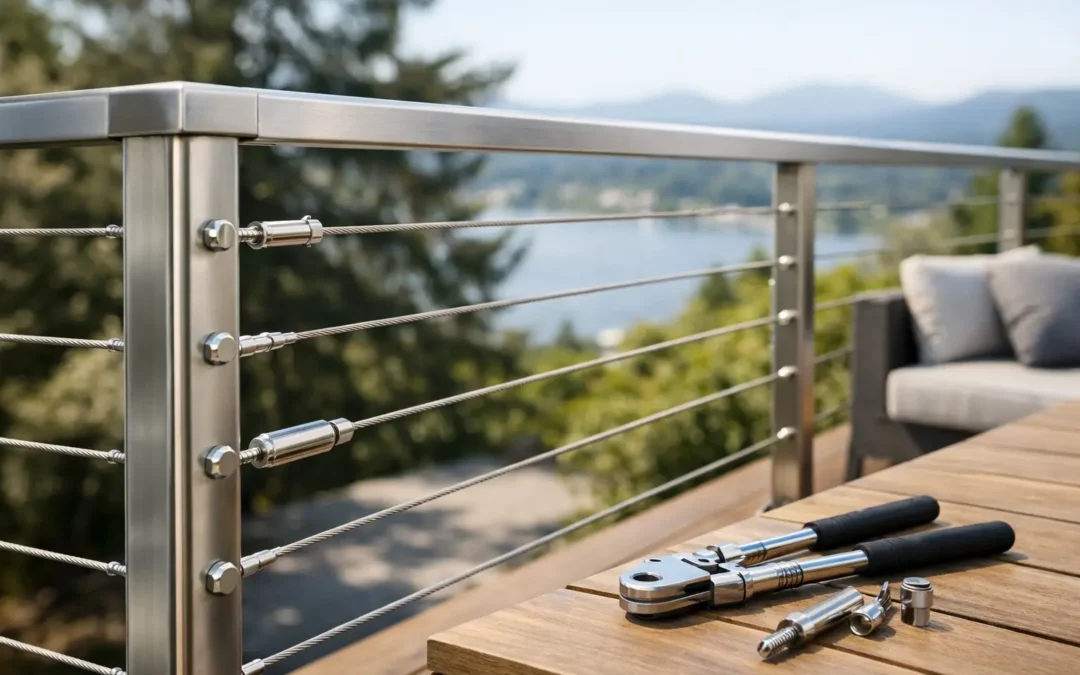
A cable railing kit can look clean and understated in a showroom photo, then become a constant maintenance issue or a failed inspection on a real project. That is exactly why homeowners and builders should review stainless steel cable railing kits with more than price in mind. The right kit delivers a sharp modern finish, dependable tension, and long-term durability. The wrong one can leave you with flexing posts, uneven cable lines, and hardware that starts showing problems far too early.
For many projects, stainless steel cable railing is an excellent choice. It preserves views, works well with modern architecture, and fits both interior and exterior settings. But not every kit is built to the same standard, and not every property is suited to an off-the-shelf solution.
How to review stainless steel cable railing kits the right way
The first thing to look at is not the cable. It is the entire system.
Many buyers focus on cable diameter, finish, or the number of lines per section. Those details matter, but they only perform well when the posts, top rail, end fittings, and structural attachment points are designed to work together. A cable railing system is only as strong as its weakest connection. If the posts are too light, the cables can lose tension. If the top rail is undersized, the system can feel springy even when the hardware is technically installed correctly.
That is where a professional review changes the outcome. On a custom project, we do not just ask what style a client likes. We look at span, mounting conditions, stair geometry, corner transitions, local code requirements, and how the railing will actually be used day to day. A balcony exposed to weather and wind calls for a different level of planning than an interior stair in a controlled environment.
What separates a strong kit from a disappointing one
Material quality is the first big divider. True exterior-grade stainless steel hardware should be selected with corrosion resistance in mind, especially in areas with moisture, freeze-thaw cycles, or air pollution. Some kits look similar online but use lower-grade components that do not hold up the same way over time. You may not notice the difference in the first month, but after a few seasons the finish, fasteners, and tensioning parts can tell a very different story.
Post construction matters just as much. A slim profile is attractive, but it still has to resist cable pull. Cable railings place lateral force on end posts and corner posts, so those elements need proper strength and anchoring. This is where many budget kits fall short. They are designed to sell the appearance of a modern railing, not necessarily the performance of one.
The hardware design also deserves a close look. Better kits provide cleaner tensioning, more precise alignment, and a more refined finished appearance. Lower-end systems often create a cluttered look at end posts or require awkward workarounds at stairs and transitions. On paper, they may seem like a value. On an installed railing, those compromises are easy to spot.
Code compliance is where many kit reviews stop too early
A lot of online reviews talk about ease of installation and appearance. Fewer address whether the system is likely to satisfy actual guard and handrail requirements on a live project.
That gap matters. Guard height, opening limitations, structural resistance, stair-specific geometry, graspability, and attachment conditions are not details to figure out after ordering. They need to shape the selection from the start. A kit that works on a low-risk decorative application may not be appropriate for a second-floor landing, exterior stair, or commercial setting.
This is also why one-size-fits-all systems deserve caution. Real projects are rarely perfectly square, level, and uniform. Existing framing can vary. Concrete edges may not be ideal for standard base plates. Wood stair stringers may need reinforcement. If a system is not reviewed in the context of the actual site, the installation can turn expensive very quickly.
For clients who want confidence instead of guesswork, engineered review is often the smarter route. Job-specific drawings, approval before fabrication, and stamped plans when required help prevent surprises and keep the project moving in a controlled way.
Interior vs. exterior cable railing kits
When you review stainless steel cable railing kits, the setting changes the decision.
Interior applications usually allow for more flexibility in finish and maintenance expectations. The system is protected from rain, snow, salt, and UV exposure, so wear tends to be slower and more predictable. That can make cable railing a very appealing choice for stairways, loft edges, and open-concept spaces where preserving light and sightlines is a priority.
Exterior projects demand more discipline. Water management, substrate condition, thermal movement, and long-term corrosion resistance all become more important. A beautiful cable railing on a deck or balcony still has to perform through changing seasons. If the base attachments are not detailed correctly or the hardware quality is inconsistent, the problems tend to show up outside first.
That does not mean exterior cable railing is risky. It means it rewards good design and proper installation. When the system is selected thoughtfully and built to suit the project, it can deliver the clean, durable finish homeowners are after.
The design trade-offs buyers should understand
Cable railing has a distinct visual advantage. It feels open, modern, and less heavy than many traditional guard styles. For properties with a view, that is often the deciding factor.
Still, there are trade-offs. Cable systems require proper tension and occasional adjustment. They can be less forgiving of weak end conditions. In some designs, they may not provide the privacy or visual presence a client wants. Families with specific safety concerns sometimes prefer alternatives such as glass, depending on the space and use.
This is where the best projects are driven by fit, not trend. A cable railing kit is not automatically the right answer just because it photographs well. It needs to match the architecture, the exposure, the structure beneath it, and the expectations of the owner.
Why custom fabrication often outperforms packaged kits
Packaged kits appeal to buyers because they seem straightforward. The idea is simple: order the components, install them, and get the look for less. Sometimes that works, especially on basic layouts with predictable conditions.
But many premium residential and commercial projects are not basic layouts. They involve stairs, corners, level changes, tricky terminations, permit requirements, and finish expectations that do not leave much room for compromise. That is where custom fabrication usually creates better value.
A custom approach allows the railing to be designed around the property instead of forcing the property to work around the kit. Measurements are taken on site. Drawings are prepared for review. Engineering can be incorporated where needed. Fabrication is based on approved dimensions, and installation is handled with the finished result in mind. That process reduces rework, improves fit, and supports a more polished outcome.
For clients in the Greater Toronto area who want that level of control, Iron & Glass Designs approaches railing work as a complete project, not a box of parts. That difference shows in both appearance and performance.
What to ask before choosing a cable railing system
Before moving forward, ask where the system will be installed, what code requirements apply, how the posts will be anchored, and whether the manufacturer or fabricator can support project-specific details. Ask what stainless grade is being used, how stair sections are handled, and what maintenance should realistically be expected over time.
Also ask who is responsible for field verification. That question alone often separates a smooth project from a frustrating one. A railing can only fit as well as the measurements and planning behind it.
Price still matters, of course. But the lower quote is not always the lower-cost option once modifications, delays, and performance issues enter the picture. A well-built railing should feel secure, look refined, and hold its finish. If a kit does not inspire confidence on those points, it is worth stepping back before ordering.
The best cable railing projects start with clear expectations and honest evaluation. If you review stainless steel cable railing kits with craftsmanship, code, and long-term use in mind, the right choice becomes much easier to spot – and much more satisfying to live with.