
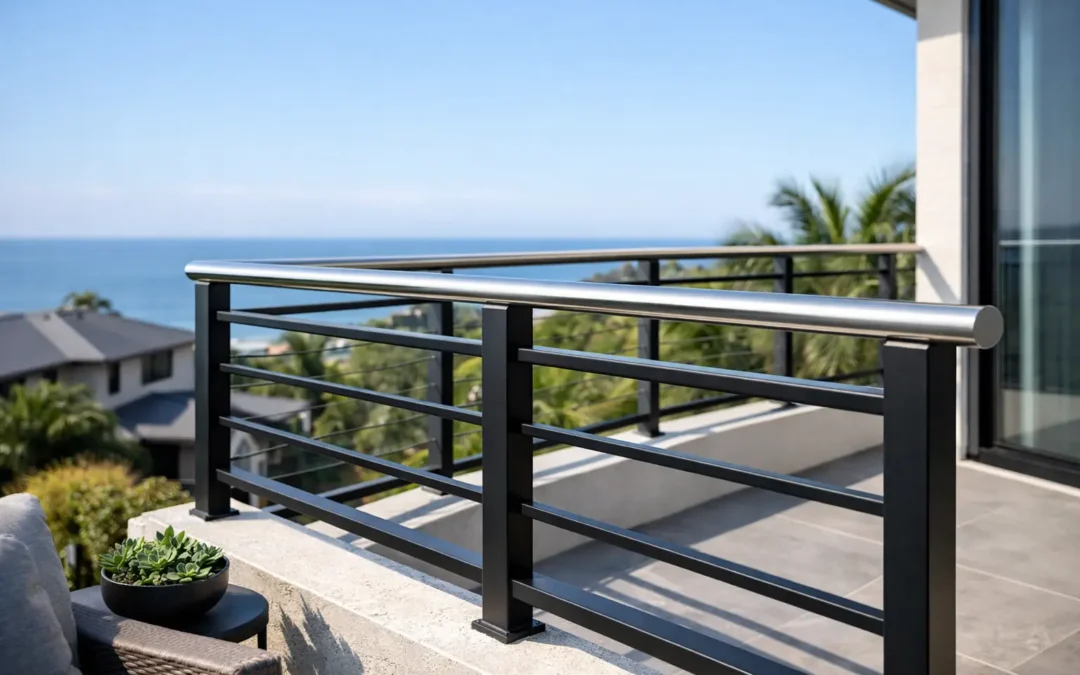
A balcony can change the way a property feels from the outside and the way it lives from the inside. The right balcony railings do more than close off an edge. They shape the view, define the architecture, and add a layer of safety you should never have to second-guess.
For homeowners, that often means finding a railing system that looks clean and modern without feeling cold or generic. For builders, contractors, and property investors, it means balancing appearance, code requirements, durability, and installation timelines. Good railing work brings those priorities together. Great railing work makes it all feel straightforward.
What good balcony railings actually need to do
Most people start with style, and that makes sense. A glass railing creates openness. Aluminum keeps the profile light and modern. Wrought iron adds character and detail. Stainless steel gives a sharper architectural finish. But visual appeal is only one part of the decision.
Balcony railings need to perform in real conditions. They are exposed to weather, temperature swings, moisture, and daily use. On upper-level balconies and terraces, they also become a highly visible part of the building facade. If the system is poorly planned, you notice it quickly – loose lines, awkward proportions, obstructed views, or a finish that starts to age too soon.
That is why the best projects begin with a full view of the job. Material, mounting method, structural conditions, and final appearance all have to work together. There is rarely a one-size-fits-all answer, especially on custom homes, renovations, and mixed-use properties.
Choosing balcony railings by material
The right material depends on the look you want, the level of maintenance you can live with, and how the balcony is used.
Glass railings
Glass is often the first choice for clients who want a clean, premium finish. It keeps sightlines open, which matters on small balconies, elevated decks, and properties with a view. It also works well with modern architecture because it reduces visual weight.
That said, glass is not just about appearance. The detailing matters. The thickness of the panels, the hardware, the top rail decision, and the mounting system all influence the final result. A well-executed glass system feels minimal and precise. A rushed one can look cluttered.
Glass also comes with practical questions. Some owners worry about cleaning, and that is fair. It will show fingerprints, rain spotting, and dust more than metal pickets will. For many clients, the openness is worth that trade-off. For others, a framed or partially screened design may be the better fit.
Aluminum railings
Aluminum remains one of the most versatile options for exterior use. It is lightweight, durable, and naturally well suited to modern and low-maintenance applications. Powder-coated aluminum can deliver crisp lines and a long-lasting finish without the upkeep associated with some traditional metals.
It is especially effective when the goal is a clean architectural look at a practical price point. Aluminum does not have the same visual transparency as glass, but it can be designed to feel refined rather than bulky. The profile design and spacing make a big difference.
Stainless steel and wrought iron
Stainless steel suits contemporary properties that need a sharper, more engineered aesthetic. It pairs well with glass and can create a strong visual statement without becoming ornate. In the right setting, it looks intentional and high-end.
Wrought iron serves a different design language. It brings craftsmanship, texture, and the opportunity for custom detailing. On traditional homes or transitional exteriors, it can elevate the entire facade. The trade-off is that design and finishing have to be handled carefully. If the detailing is too busy or the finish is poorly maintained, the look can shift from timeless to dated.
Design matters more than most people expect
When clients compare railings, they often focus on material first. In practice, proportion and layout have just as much impact. Even premium materials can look underwhelming if the system is not scaled properly to the balcony and the architecture around it.
The height, post spacing, frame thickness, corner treatment, and how the railing meets adjacent walls or stairs all influence the outcome. On a custom project, these decisions should never be left until the last minute. A railing is not an accessory added after the real design work is done. It is part of the finished architecture.
This is where a tailored process makes a difference. Site measurement, project-specific drawings, and client approvals help prevent the common problems that show up when railing work is treated as a commodity. You get better alignment, cleaner transitions, and a result that feels built for the property rather than borrowed from a catalog.
Safety and code are not separate from design
A beautiful railing that does not meet code is not a finished job. For residential and commercial properties alike, balcony railings have to satisfy safety requirements tied to height, spacing, structural performance, and installation method. The exact requirements vary by project type and local jurisdiction, which is why engineering review is often essential.
This is one of the biggest differences between buying a railing product and working with a fabrication and installation partner. On a serious project, you need more than a style selection. You need a system that has been measured correctly, detailed properly, reviewed for compliance, and installed with precision.
That protects the owner in more ways than one. It supports permitting where required. It reduces the chance of site issues during installation. It also gives contractors and property managers confidence that the finished work is not only attractive but defensible from a safety and documentation standpoint.
Renovation vs. new construction
New construction projects offer more flexibility because the railing system can be planned alongside the structure. Mounting conditions, slab edges, waterproofing, and sightlines can all be coordinated early. This usually produces the cleanest visual result and fewer compromises on site.
Renovations require more problem-solving. Existing substrates may not be perfectly level. Waterproofing details may limit how and where hardware can be installed. Older balconies may also need structural review before a new system is approved. None of that makes the project impossible, but it does mean field expertise matters.
A dependable team will identify those issues before fabrication begins, not after materials arrive. That kind of planning saves time, controls cost, and avoids the frustration of redesigning a system midway through the job.
What to expect from a professional process
Clients usually feel most confident when they understand what happens next. With balcony railings, the strongest projects follow a clear sequence: site visit, accurate measurement, job-specific drawings, client approval, engineering review and stamping where needed, fabrication, and installation.
That process is not paperwork for its own sake. Each step protects the finished product. Measurements ensure the system fits exactly as intended. Drawings make design decisions visible before manufacturing starts. Engineering review confirms the system is appropriate for the application. Installation completes the job with the same care used in design and fabrication.
At Iron & Glass Designs, that disciplined workflow is part of how custom projects stay custom without becoming unpredictable. Clients get the benefit of bespoke design with the reassurance of a controlled, professional build path.
How to know which railing system is right for your property
If your priority is openness and a premium modern finish, glass is often the strongest option. If you want durability, value, and low maintenance, aluminum deserves serious consideration. If the property calls for stronger architectural expression, stainless steel or wrought iron may be the better match.
The real answer, though, comes from looking at the property as a whole. The balcony size, exposure to weather, surrounding materials, budget, and permitting needs all influence the right choice. That is why the best conversations start with the project itself, not with a generic product pitch.
A well-designed railing should feel like it belongs there. It should make the facade sharper, the space safer, and the entire property more finished. When that happens, you are not just adding a barrier at the edge of a balcony. You are investing in a detail people notice every time they arrive, step outside, and look up.