
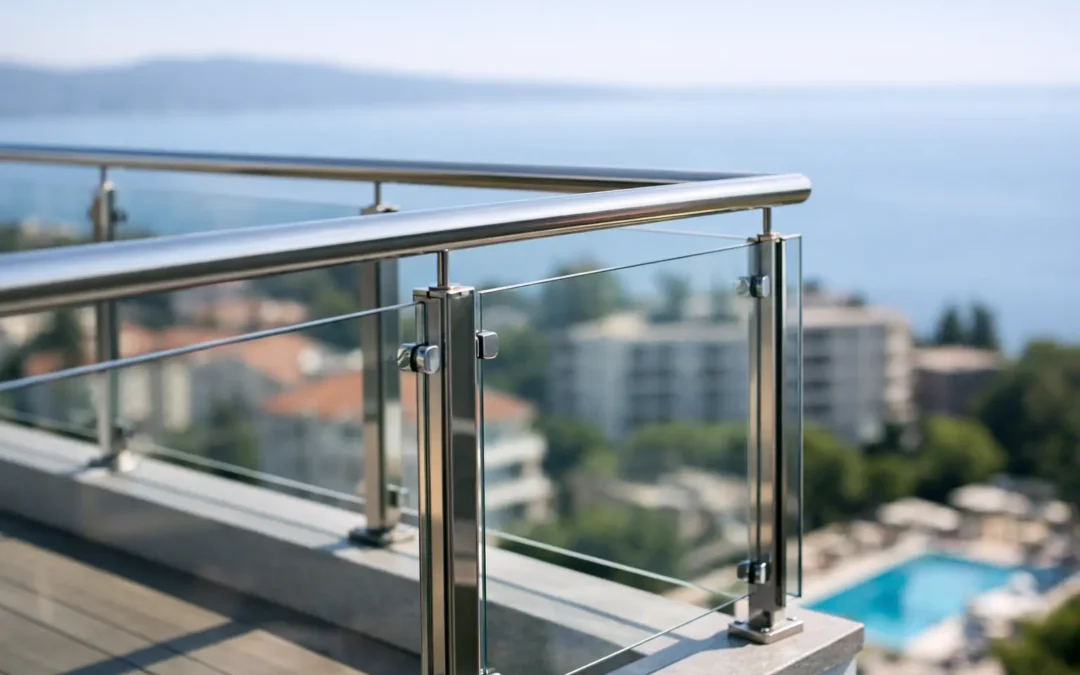
A balcony railing is not the place for guesswork. When homeowners ask, are glass balcony railings safe, what they usually mean is this: will it protect my family, meet code, hold up over time, and still look as clean as it does in the showroom?
The short answer is yes – when the system is properly designed, engineered, and installed. Glass balcony railings are used on residential and commercial properties every day because they can deliver both strong safety performance and a refined modern look. The key is understanding that not all glass railings are equal. Safety comes from the full system, not just the glass panel itself.
Are Glass Balcony Railings Safe When Built Correctly?
Yes, glass balcony railings are safe when they are made with the right type of safety glass, sized for the application, and installed to code. A professionally built system is designed to resist impact, handle required loads, and create a secure barrier along elevated spaces.
This is where details matter. The thickness of the glass, the hardware, the anchoring method, the span between supports, and the surrounding structure all affect performance. A railing that looks minimal still needs serious engineering behind it. That is why a custom approach matters far more than choosing a style from a photo.
In practical terms, a safe glass balcony railing should be reviewed as a complete assembly. The glass must be appropriate for the height and exposure of the balcony. The mounting hardware has to be rated for the load. The substrate – concrete, steel, or wood framing – must be capable of supporting the system. If any one of those elements is weak, the railing is compromised.
What Makes a Glass Railing System Safe?
The biggest factor is the type of glass being used. Balcony railings should use safety glass, typically tempered glass or laminated tempered glass, depending on the design and code requirements. Tempered glass is manufactured to be much stronger than standard glass. If it does break, it shatters into small granules rather than sharp, dangerous shards.
Laminated glass adds another layer of protection. It consists of multiple layers bonded together with an interlayer, which helps hold the panel in place if damage occurs. In some applications, this added redundancy is preferred because it maintains a barrier even after breakage. That can be especially valuable for elevated balconies where fall protection is the entire purpose of the railing.
The second factor is structural engineering. A glass railing is never just decorative. It must resist the force of people leaning, pushing, or accidentally impacting it. That is why load requirements, panel dimensions, and attachment details need to be evaluated before fabrication begins.
The third factor is installation quality. Even excellent materials can underperform if anchors are misplaced, channels are out of level, or hardware is improperly tensioned. Precision matters. Clean lines are part of the aesthetic, but exact installation is also part of the safety equation.
Common Safety Concerns Homeowners Have
Many concerns about glass railings come from a simple mental image: a large transparent panel seems more fragile than metal pickets or a solid wall. In reality, properly specified architectural glass is engineered for demanding use.
One common concern is breakage. While no material is indestructible, safety glass used in railing systems is designed to withstand normal use, weather exposure, and impact far better than people expect. Damage usually results from severe force, incorrect installation, or using the wrong product for the application.
Another concern is whether the railing becomes less safe over time. That depends on materials and maintenance. Quality hardware in aluminum or stainless steel performs well outdoors when chosen for the environment. Poorer components can corrode, loosen, or stain. The glass itself does not rust, rot, or warp, which is one reason it performs so well on balconies.
A third concern is visibility. Some people worry that clear glass may be harder to notice than other railing types. In most real-world settings, the framing, top rail, edge lines, and reflections make the barrier visually clear. If additional definition is preferred, there are design options that make the system more visually prominent without losing the open look.
How Code Compliance Affects Safety
If you are asking are glass balcony railings safe, code compliance is a major part of the answer. A railing can look beautiful and still fail if it does not meet local requirements for height, spacing, load resistance, and approved materials.
Residential and commercial projects may have different code expectations, and balconies are not the same as interior stair guards. Exposure to wind loads, occupancy type, and building height can all change what is required. That is why off-the-shelf assumptions are risky.
A professional process should include site measurement, project-specific drawings, and engineering review when required. That kind of workflow removes uncertainty. Instead of hoping a standard product will fit, the system is built around the actual structure and the applicable code conditions.
For clients who want both design freedom and peace of mind, this is where experienced fabrication teams make a real difference. Iron & Glass Designs approaches projects with that full-system mindset – measuring carefully, preparing drawings, obtaining approvals, and coordinating engineering review so the finished railing is as dependable as it is visually sharp.
Frameless vs. Framed Glass Balcony Railings
Safety is not limited to one look. Both framed and frameless glass balcony railings can be safe when engineered and installed correctly. The difference is in how the loads are managed and how exposed the edges of the glass are.
Framed systems use posts, clamps, or top rails to support and reinforce the glass. They can offer a slightly more defined appearance and may be a strong fit for clients who want a modern look with visible structure.
Frameless systems create the cleanest sightlines, often using a base shoe or concealed channel to anchor the panels. They can be extremely secure, but they demand careful design, high-quality materials, and precise installation. The cleaner the look, the less room there is for field errors.
This is a good example of where it depends. If your balcony is exposed to heavy wind, salt, or high-traffic use, the right solution may not be the most minimal one on paper. The best system is the one that balances appearance, performance, and the actual conditions on site.
Are Glass Balcony Railings Safe for Families and Pets?
For many homeowners, this is the real question. A code-compliant glass railing is often a strong choice for families because it creates a continuous barrier without climbable horizontal elements or wide gaps. That can make it more secure than some traditional railing styles.
For pets, the same principle applies. Glass panels can help prevent small animals from slipping through openings or getting caught between balusters. They can also reduce wind exposure on the balcony, depending on the design.
That said, no railing replaces supervision. Furniture placement matters, especially on smaller balconies. Chairs, planters, and storage pieces should never be positioned in ways that encourage climbing near the guard.
Maintenance and Long-Term Performance
One of the practical strengths of glass is that it ages well. It does not need repainting, and it will not suffer from insect damage or moisture-related decay. Routine care usually involves cleaning the glass and periodically checking the hardware for movement or wear.
Long-term safety comes down to material quality and installation discipline. Exterior hardware should be chosen for the environment, and the system should be inspected if there is visible movement, impact damage, or changes in the supporting structure. A well-built glass railing is low maintenance, but it should never be treated as no maintenance.
When Glass Railings Are Not the Right Choice
There are cases where another material may be a better fit. If privacy is a top priority, clear glass may not deliver the separation you want unless you choose a frosted or tinted option. If a property is subject to frequent hard impacts from moving equipment or heavy commercial use, a more heavily framed system may make more sense.
Budget can also influence the decision. Glass railings often deliver a premium appearance and strong value over time, but custom engineering, hardware, and installation quality all matter. Choosing the cheapest option in this category usually means compromising somewhere that should not be compromised.
The right question is not whether glass is safe in general. It is whether the specific system being proposed is right for your property, your use case, and your structural conditions.
A well-made glass balcony railing should never ask you to choose between safety and design. With the right materials, proper engineering, and precise installation, you can have a balcony that feels open, looks refined, and performs exactly as it should for years to come.