
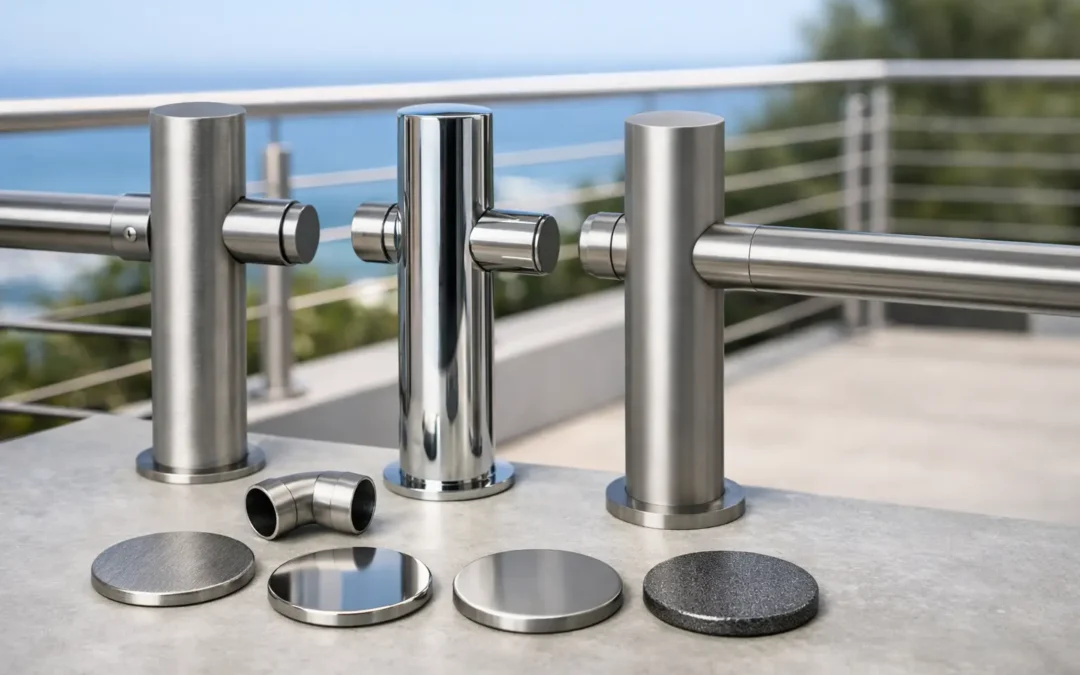
A stainless steel railing can look crisp and understated or bold and high-contrast, and the finish is what makes that difference. When clients ask about stainless steel railing finish options, they are usually deciding between more than appearance. They are also weighing maintenance, fingerprint visibility, glare, weather exposure, and how the railing will sit beside glass, wood, stone, or tile.
That choice matters because the finish is what people see first and touch every day. On a stair, balcony, landing, or exterior entry, it shapes the overall feel of the space just as much as the railing design itself.
Why stainless steel railing finish options matter
The same railing profile can feel completely different depending on its finish. A satin surface tends to read as architectural and practical. A mirror-polished surface feels more decorative and high-end, especially in settings with strong lighting and reflective materials. A bead-blasted or matte finish can create a softer, more contemporary look that hides wear better in some applications.
This is why finish selection should happen early, not as a last-minute add-on. Once you have chosen glass panels, flooring, wall paint, and trim details, the railing finish needs to support the full design rather than compete with it.
There is also a performance side to the decision. Interior railings usually allow more freedom because they face less moisture and less direct wear from the elements. Exterior stainless steel railings demand a more practical conversation. Rain, snow, road salt, and direct sun can all influence which finish is the better long-term fit.
The most common stainless steel railing finish options
Brushed finish
Brushed stainless steel is one of the most requested choices for modern residential and commercial railing systems. It has fine directional lines that create a clean, refined texture without looking overly shiny. In many spaces, this is the finish that gives clients the balanced result they want – polished enough to feel premium, but restrained enough to stay timeless.
Brushed finishes pair especially well with glass railings, white walls, oak stair treads, and black architectural accents. They also tend to hide fingerprints and minor surface marks better than high-gloss finishes, which makes them a smart option for busy homes and frequently used common areas.
That said, not every brushed finish looks the same. Grain direction, consistency, and fabrication quality all affect the final appearance. On custom work, this is where craftsmanship shows. Posts, top rails, brackets, and transitions need to feel visually unified, or the finish can look patchy under certain light.
Satin finish
Satin is often used interchangeably with brushed, but there can be slight differences depending on the fabricator and the specification. In general, satin finishes have a soft luster with less reflectivity than polished steel. They are popular because they feel current without chasing trends.
For homeowners who want stainless steel but do not want a flashy look, satin is often the safer choice. It works well in interior staircases, condo balconies, office entrances, and commercial corridors where you want a professional appearance that still feels approachable.
From a maintenance standpoint, satin is also forgiving. It does not eliminate cleaning, but it usually shows less smudging and less dramatic surface dust than more reflective finishes.
Mirror-polished finish
Mirror-polished stainless steel is the most reflective option and the most visually striking. It creates a bright, premium look that can elevate the right project, especially when it is used intentionally. In luxury interiors, hospitality spaces, and statement staircases, this finish can make a railing feel like a design feature rather than just a safety element.
The trade-off is upkeep. Mirror-polished surfaces show fingerprints, water spots, and minor scratches much more easily. In high-traffic family homes or exterior conditions, that can become frustrating if the client expects the finish to stay pristine with minimal effort.
Lighting also matters. Strong natural light or direct overhead fixtures can create glare on a highly polished railing. Sometimes that brilliance is exactly the goal. Sometimes it becomes more visual activity than the space needs.
Matte or bead-blasted finish
A matte or bead-blasted finish offers a flatter, more muted appearance. This can look excellent in minimalist architecture where the goal is a quieter metal surface that does not pull attention away from large-format tile, warm wood, or expansive glass.
These finishes can also be practical in spaces where tactile use is constant. Because they are less reflective, they often mask smudges better than polished options. The caution is that some matte surfaces can be more susceptible to looking uneven if they are not fabricated and handled carefully during production and installation.
This is not the most common finish for every project, but in the right setting it feels very intentional and current.
Choosing the right finish for interior railings
Interior projects usually give you more room to focus on aesthetics first. If your staircase is part of the main living area, the railing finish should connect with the rest of the design language. Brushed or satin stainless steel tends to be the most flexible. It works with modern, transitional, and even some industrial-inspired interiors without feeling overly cold.
Mirror-polished steel can work beautifully indoors, particularly in custom homes with a more formal or high-design finish palette. If the space already includes glossy stone, reflective lighting, or a strong luxury aesthetic, polished steel can reinforce that direction.
Matte finishes are a strong option when you want the railing to feel integrated rather than highlighted. They are especially effective in interiors where simplicity is the main design goal.
One practical question worth asking is how often the railing will be touched. A feature stair near the entry will be handled differently than a secondary stair leading to a basement suite or office area. The more hands on the rail, the more visible fingerprints and cleaning patterns may become.
Choosing the right finish for exterior railings
Exterior applications require more discipline in the decision-making process. The best-looking finish on day one is not always the best finish after several seasons of weather exposure. Stainless steel performs well outdoors, but finish selection still affects maintenance expectations and long-term appearance.
For many exterior projects, brushed or satin finishes are the strongest all-around choice. They offer a clean modern look while being more forgiving of water spotting and everyday exposure. On balconies, porch railings, raised decks, and exterior stairs, that balance matters.
Mirror-polished finishes outdoors can be used, but they demand a client who is fully aware of the maintenance involved. If the property is near heavy traffic, exposed to road salt, or subject to constant weather shifts, the visual payoff may not outweigh the upkeep.
A matte finish can work well outside too, especially on projects aiming for a softer architectural expression. But the quality of fabrication, finishing, and installation becomes even more important outdoors because inconsistencies are harder to hide over time.
Finish and design should be decided together
A railing is never just a finish sample on its own. It is a complete system with posts, handrails, glass clamps, base shoes, welds, corners, and transitions. The finish has to work across all of those elements.
That is why a structured process matters. Site measurements, project-specific drawings, client approvals, and engineered review help ensure the finish choice supports the final build rather than creating surprises later. A beautiful material can still disappoint if the detailing is not resolved before production.
This is also where working closely with a custom fabrication and installation team makes a difference. On a bespoke project, finish selection is not separate from code compliance, proportions, attachment methods, or the surrounding materials. It is part of a larger design and execution conversation.
What most clients choose and why
Most homeowners and property owners land on brushed or satin stainless steel because it gives them the best mix of appearance, practicality, and long-term satisfaction. It looks current, complements glass exceptionally well, and does not feel high-maintenance.
Polished finishes tend to appeal to clients who want the railing to make more of a statement. Matte finishes appeal to those who prefer a quieter, more architectural look. Neither is wrong. The better choice depends on the setting, the expected wear, and how much visual presence you want the railing to have.
At Iron & Glass Designs, these decisions are part of a larger custom process focused on getting the details right before fabrication begins. That gives clients clarity, protects the design intent, and leads to a finished railing that looks as good installed as it did on paper.
If you are selecting between stainless steel railing finish options, start with how the railing should feel in the space, then weigh the practical realities honestly. The best finish is the one that still looks right to you after the excitement of the renovation has passed.