
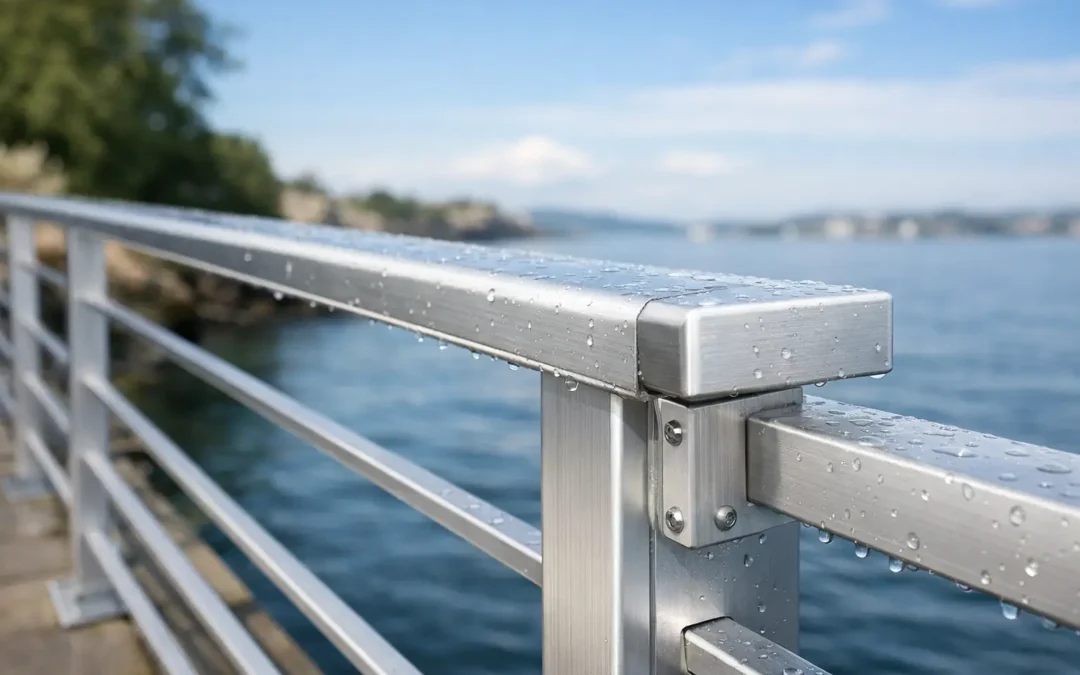
A railing can look sharp on day one and still become a problem a few seasons later if the material is wrong for the space. That is why homeowners, builders, and property managers often ask how aluminum railings resist corrosion, especially for exterior stairs, balconies, porches, and pool areas where moisture never really takes a break.
The short answer is that aluminum protects itself better than many people expect. Unlike plain steel, which can form rust that flakes and spreads, aluminum develops a thin oxide layer on its surface when exposed to air. That layer acts as a barrier. Instead of corrosion eating deeper into the metal at the same rate, the surface film helps slow the process and protect what is underneath.
That natural behavior is one reason aluminum has become such a practical choice for modern railing systems. It offers the clean lines many clients want, but it also brings real performance benefits outdoors. When the railing is properly designed, finished, fabricated, and installed, it can hold up exceptionally well in demanding conditions.
How aluminum railings resist corrosion in real conditions
The science matters, but so does the real-world application. Aluminum is not magic, and no exterior material is completely maintenance-free. What makes it attractive is that its corrosion resistance starts at the material level and can be improved significantly through finishing and fabrication.
When bare aluminum is exposed to oxygen, it reacts quickly and forms aluminum oxide. This is different from red rust on iron or steel. Rust tends to be porous and unstable, which lets moisture keep moving inward. Aluminum oxide is much more stable and adheres tightly to the surface. That means it helps shield the base metal rather than exposing it.
In a railing system, this matters because the material is constantly dealing with changing weather. Rain, humidity, snow, UV exposure, and freeze-thaw cycles all put pressure on an exterior assembly. Aluminum handles that cycle well because it does not rely only on paint for protection. The metal itself already has a built-in defensive layer.
That said, natural oxide protection is only part of the story. Most premium aluminum railings are also powder-coated or otherwise finished to add another level of defense. This finish helps reduce direct exposure to moisture, pollutants, and surface wear. It also gives the railing a cleaner, more consistent appearance, which is a major advantage for projects where design matters as much as durability.
Why finish quality matters as much as the metal
If you are comparing railing systems, this is where details start separating a long-lasting installation from one that looks tired too soon. Two aluminum railings can look similar in photos, but the quality of the finish, welds, fasteners, and fabrication methods can lead to very different outcomes over time.
A high-quality powder-coated finish is especially valuable for exterior railings. The coating creates a durable shell over the aluminum and helps resist chipping, fading, and moisture exposure better than many standard paint applications. It also supports design flexibility. Clients can choose colors and textures that fit a modern facade, glass elements, or other architectural features without giving up performance.
Surface preparation is just as important. If the aluminum is not cleaned and treated properly before coating, the finish may not bond the way it should. That can lead to peeling or premature wear, especially around joints, corners, and high-contact areas. Good fabrication is not only about appearance. It directly affects how well the railing stands up to the environment.
This is one reason custom fabrication has real value. A railing should not only fit the opening. It should be built for the actual exposure conditions of the site. Covered front steps, open balconies, lakefront properties, and commercial entrances all create different demands.
Where corrosion risk still exists
Aluminum resists corrosion very well, but there are still trade-offs to understand. The biggest one is that corrosion resistance depends on the full system, not only the main railing profile.
Fasteners, brackets, anchors, and connectors matter. If dissimilar metals are used carelessly, galvanic corrosion can become an issue. This happens when two different metals are in contact in the presence of an electrolyte such as water. Over time, one of the metals can corrode faster.
For example, combining aluminum with the wrong type of steel hardware in a wet environment can create problems that are not obvious at first. That is why material compatibility should be part of the design and installation process from the beginning. A well-built railing system accounts for these interactions rather than treating hardware as an afterthought.
Salt exposure is another factor. In coastal areas, or in regions where de-icing salts are common in winter, even corrosion-resistant materials face harsher conditions. Aluminum still performs well in these settings, but the finish quality, drainage, and maintenance routine become even more important. In these environments, the question is not whether aluminum can work. It is whether the system has been detailed properly for that level of exposure.
Design details that help aluminum last longer
Good railing performance is rarely accidental. It comes from a series of smart decisions that work together.
Drainage is one of them. If water collects inside channels, around fasteners, or at the base of posts, the risk of long-term deterioration goes up. A well-designed aluminum railing should minimize areas where moisture can sit for extended periods. Clean lines are not only a style choice. They can also support better water management.
Joint design matters too. Tight, well-fabricated joints reduce pathways for water intrusion and help the railing maintain a cleaner look over time. This is especially important where aluminum meets glass, concrete, wood decking, or masonry. Every transition point is a place where detailing affects durability.
Installation quality is just as critical. Even the right material can underperform if posts are set incorrectly, coatings are damaged during installation, or attachment points are exposed unnecessarily. Precision matters here. A railing is a visible design element, but it is also a safety system. It needs to perform on both levels.
That is why many property owners prefer a partner who can handle measurement, drawings, engineering review where required, fabrication, and installation as one coordinated process. It reduces guesswork and helps ensure the final system is not only attractive but built to last.
Aluminum vs. other railing materials
For many projects, aluminum sits in a very practical middle ground. It is lighter than steel, easier to work with in many applications, and far less prone to the kind of visible rust that causes concern on exterior railings. Compared with wrought iron, it typically requires less upkeep. Compared with stainless steel, it can offer a more budget-friendly path while still delivering a premium modern look.
That does not mean aluminum is always the default answer. If a project calls for a very specific architectural style, another material may be a better fit visually or structurally. Interior applications may prioritize appearance over weather resistance. Commercial settings may involve code, loading, or design conditions that influence the material choice.
Still, for many residential exteriors and contemporary mixed-material designs, aluminum is appealing because it balances aesthetics, durability, and value. It pairs especially well with glass and minimalist architecture, where clean sightlines and long-term performance both matter.
What homeowners and builders should ask before choosing a system
If you are evaluating aluminum railings, it helps to look past the broad claim that the material is corrosion-resistant and ask more specific questions. What finish is being used? How is the surface prepared? Are the fasteners compatible? How is water managed at posts and connections? Is the system engineered for the application?
These questions matter because corrosion resistance is not only about the alloy itself. It is about how the entire railing is designed and executed. A lower-cost system may save money upfront but create more maintenance and earlier replacement later. A better-built custom system often pays off in appearance, service life, and peace of mind.
At Iron & Glass Designs, that is exactly where the process makes a difference. A railing is not treated like a generic part pulled off a shelf. It is measured for the project, translated into drawings, reviewed carefully, and fabricated with the end use in mind. That disciplined approach helps clients get the modern look they want with the durability they expect.
Corrosion resistance is one of those features people do not always see right away, but they notice the results years later. A railing that still looks clean, feels solid, and performs through changing seasons is rarely the product of luck. It is the result of choosing the right material, finishing it properly, and building it with care from the start.