
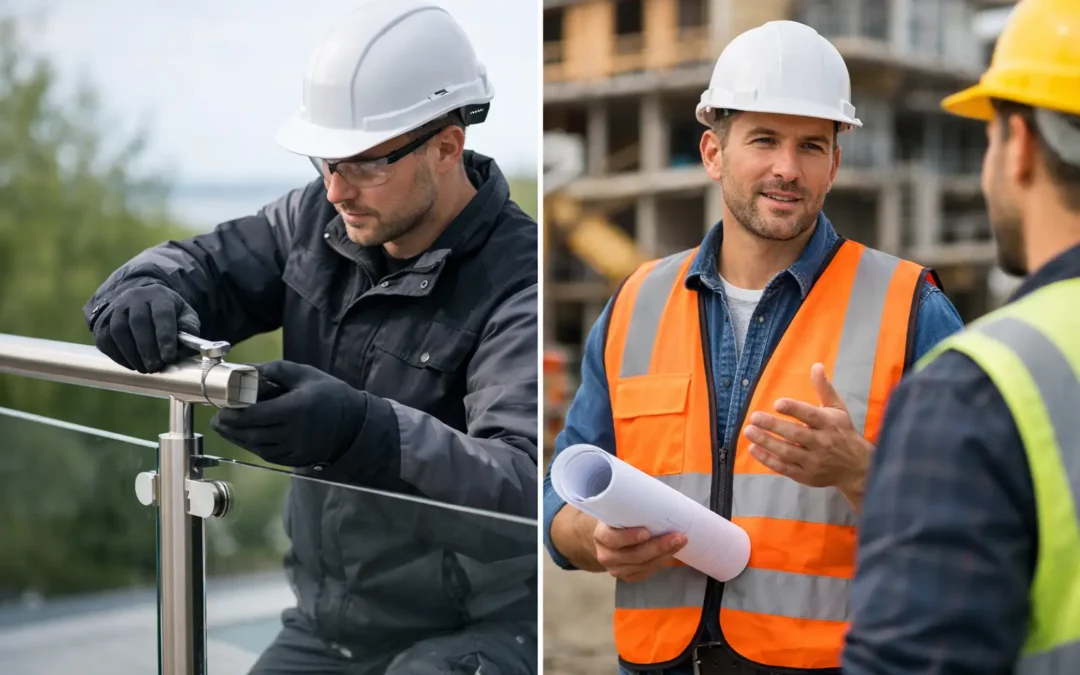
A staircase can look simple on paper and become complicated the moment measurements, code requirements, attachment points, and finish details enter the conversation. That is where the question of railing contractor vs general contractor matters. If your project includes custom glass, metal, or engineered guardrails, the right hire can affect not just the final look, but also safety, timeline, and how smoothly the work moves from concept to installation.
For many homeowners and property investors, a general contractor feels like the default choice because they coordinate broad renovation or construction work. That makes sense when walls are moving, flooring is changing, electrical is involved, and several trades need to be scheduled in the right order. But railings are not a generic finish item. They sit at the intersection of design, fabrication, structural attachment, and code compliance. When the railing is a major visual feature, or when the project requires custom engineering and precise installation, a specialist brings a different level of control.
Railing contractor vs general contractor: what is the difference?
A general contractor manages the full project. They oversee multiple trades, handle scheduling, coordinate site activity, and keep the broader renovation or build moving. Their strength is project orchestration. If you are remodeling an entire home, building an addition, or completing a commercial fit-out, they are often the central point of contact.
A railing contractor focuses specifically on railing systems and related architectural metalwork. That includes taking field measurements, developing project-specific drawings, advising on material options, understanding code-driven dimensions, fabricating components, and installing the finished system correctly. Their strength is depth. They are not trying to know a little about everything. They are expected to know a great deal about one category that has real safety and design consequences.
That distinction matters because railings are rarely just decorative. They must feel solid, meet spacing and height requirements, connect properly to the structure, and look clean from every angle. A specialist is more likely to anticipate those issues early, before they become expensive site fixes.
When a general contractor is the right call
There are plenty of situations where a general contractor should lead the job. If the railing is only one small part of a much larger construction scope, it makes sense to have one person coordinating demolition, framing, tile, finish carpentry, and inspections. In that setting, the general contractor helps sequence the work so the site is ready when the railing team arrives.
A general contractor can also be the right choice when the railing itself is straightforward and does not require much customization. For example, if a project uses a standard system with minimal design requirements and no unusual site conditions, the GC may be able to source and manage that portion effectively.
The trade-off is that the GC is usually not the fabricator and may not be the installer either. They often subcontract the railing scope to a specialist. That can work well, but it adds a layer between the client and the people actually responsible for measurements, shop drawings, and installation details.
When a railing contractor is the better fit
If the railing is a focal feature, a specialist is usually the stronger choice. Glass railings, custom wrought iron, stainless steel systems, aluminum guardrails, interior handrails, balcony railings, and exterior stair systems all benefit from dedicated expertise. The more visible the railing is, the more every detail matters, from sightlines and hardware selection to weld quality and finish consistency.
A railing contractor is also the better fit when the project needs job-specific drawings, engineering review, or stamped plans. That is especially relevant for elevated surfaces, commercial properties, multifamily work, and custom residential builds where permitting or structural review may be part of the process.
There is also a practical advantage. A specialist can often identify attachment conditions and design constraints before fabrication starts. That reduces the risk of getting to install day and discovering the framing is not where it needs to be, the substrate is uneven, or the approved design does not match real site conditions.
The biggest mistake homeowners make
The most common mistake is treating the railing like a late-stage accessory. By the time many people start calling vendors, finishes are selected, floors are installed, and stair geometry is already locked in. At that point, design flexibility is limited, lead times feel tighter, and site conditions may create compromises that could have been avoided.
Bringing in a railing contractor earlier usually leads to a better result. Early involvement helps answer practical questions before they become change orders. Should the posts be fascia-mounted or surface-mounted? Can the look you want work with the structure you have? Will the glass lines stay clean, or will extra framing interrupt them? Can the handrail profile meet both aesthetic and code expectations?
Those are not small questions. They shape the final appearance and the level of confidence you have in the finished installation.
Design, code, and fabrication are where specialists separate themselves
A premium railing project is not just about installing parts. It is about translating an idea into a buildable, code-aligned system. That takes more than product knowledge. It takes a workflow.
A dedicated railing contractor typically starts with a site visit and field measurements. From there, the project moves into drawings that reflect the actual conditions, not a generic catalog image. The client reviews the design, adjustments are made where needed, and engineering review can be added when the project requires it. Only then does fabrication move forward.
That process protects the client. It creates checkpoints. It also helps avoid the disconnect that can happen when one party sells the concept, another party drafts it, and a third party installs it.
For custom projects, this matters even more. A modern glass railing has to look light and minimal, but it still has to perform. A wrought iron guardrail may need decorative character, but it also has to meet dimensional standards. A specialist understands how to balance appearance with function instead of forcing one to compromise the other.
Cost: cheaper up front is not always cheaper overall
Some clients assume hiring a general contractor first will save money because it feels like a bundled approach. Sometimes it does, especially if the railing scope is small and simple. But for custom work, the lower upfront number can hide downstream costs.
If measurements are off, if the wrong mounting method was assumed, or if fabrication starts before approvals are truly settled, the cost of correction can erase any early savings. Delays are expensive. Rework is expensive. A railing that does not feel solid or does not look finished the way you expected is expensive in a different way.
A specialist may not always be the lowest initial quote, but the value often comes from reducing risk. Clear measurements, project-specific drawings, material guidance, engineering coordination, and professional installation create a more predictable job. For many homeowners and commercial clients, predictability is worth paying for.
How to decide who should lead your project
The best choice depends on the scope. If you are renovating an entire property, hire a general contractor to manage the whole job and make sure they bring in a true railing specialist for that portion. If the railing is the primary scope, or if it is custom, highly visible, or engineered, go directly to a railing contractor.
Ask a few practical questions before you decide. Will someone take final field measurements? Are shop drawings included? Who confirms code requirements? Is engineering available if needed? Who fabricates the system? Who installs it? If the answers are vague, that is a warning sign.
The strongest projects happen when responsibilities are clear. Sometimes that means the general contractor leads and the railing contractor executes the specialty scope. Sometimes it means the railing contractor leads the entire process for that feature from concept through installation. Either way, clarity beats assumption every time.
For clients who care about clean design, dependable timelines, and a finished product that feels as solid as it looks, specialty expertise is hard to replace. That is why companies like Iron & Glass Designs build the process around measurement, drawings, approvals, engineering review, fabrication, and on-time installation rather than treating the railing as an afterthought.
If your railing is meant to do more than fill an opening, if it is meant to elevate the space, support safety, and hold up beautifully over time, choose the partner whose work begins before installation day ever arrives.