
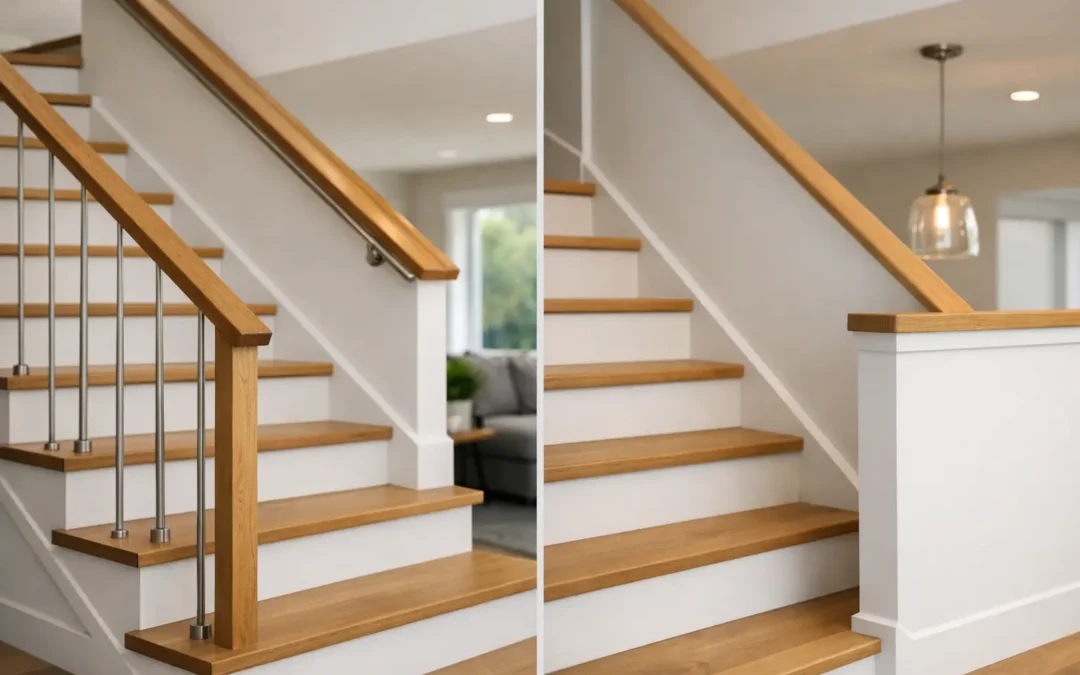
A staircase can look clean and open on paper, then feel unfinished or unsafe the moment you stand next to it. That is usually when the real question comes up: interior handrails vs full guardrails. They are not interchangeable, and choosing the right one affects safety, code compliance, sightlines, budget, and the overall feel of your space.
For homeowners and property investors planning a renovation or new build, this decision is less about picking a style and more about matching the right system to the way the space functions. A slim wall-mounted handrail may be exactly what one staircase needs. In another setting, only a full guardrail will provide the protection, structure, and finished architectural presence the project calls for.
Interior handrails vs full guardrails: what is the difference?
An interior handrail is primarily designed to provide support while walking up or down stairs. It gives the user something to grip for balance and stability. In many homes, that means a rail mounted to the wall along one side of the stair.
A full guardrail does a different job. It acts as a protective barrier at open sides of stairs, landings, lofts, and interior edges where there is a fall risk. A guardrail system may also include a graspable top rail, but its main purpose is preventing someone from stepping or falling off the open side.
That distinction matters because clients often start by thinking in design terms – glass, iron, stainless steel, minimalist lines – when the first question should be functional. Are you looking for support while using the stairs, protection from an open edge, or both? In many projects, the answer is both, which is why the best railing systems are designed as complete, buildable solutions rather than afterthoughts.
When an interior handrail is enough
If your staircase is enclosed by walls and there is no exposed drop at the side, an interior handrail may be all you need. This is common in traditional straight-run interior stairs, basement stairs, and narrower staircases where one or both sides are already bounded by finished walls.
In these cases, a handrail keeps the stair safe and usable without adding visual weight. It can also be the right move when the design goal is simplicity. A custom metal handrail in black, stainless, or another clean finish can sharpen the look of the staircase without making the area feel crowded.
There is also a budget advantage. A handrail-only installation typically uses less material and requires less fabrication than a full guardrail assembly. That can make it an efficient option for remodels where the structure already provides enclosure and the homeowner wants to improve safety and appearance without rebuilding the stair.
Still, “enough” depends on the actual site conditions. If a stair opens onto a side, a landing edge, or an upper-level overlook, a handrail alone may not address the safety requirement. This is where a professional site review becomes valuable, because a beautiful rail only works if it is the right system for the space.
When full guardrails are the better choice
Full guardrails become essential when people are moving near an exposed edge. Open-rise stairs, side-open staircases, second-floor overlooks, mezzanines, loft-style interiors, and raised landings typically call for more than a graspable rail.
From a design perspective, guardrails do more heavy lifting. They frame the architecture, define the stair opening, and shape how open or enclosed the room feels. Glass guardrails keep sightlines open and bring in light. Metal picket or custom wrought iron guardrails create more visual structure and can lean modern, classic, or decorative depending on the profile.
For many residential clients, full guardrails also make the staircase feel complete. Instead of looking like a construction element that still needs finishing, the stair becomes part of the home’s design language. In commercial or multi-unit settings, that sense of finish is just as important, but it comes with an added expectation of durability, code alignment, and dependable installation.
Safety and code are not the same conversation as style
One of the biggest mistakes in the interior handrails vs full guardrails decision is treating it as a purely aesthetic choice. Style matters, but safety and code come first.
Handrails and guardrails are usually subject to different functional requirements. Graspability, height, spacing, load resistance, and opening limitations can all come into play depending on the application. What works visually in an inspiration photo may not work in a built environment once dimensions, stair geometry, and fall protection are considered.
That is why custom fabrication should never start with material selection alone. It should start with measuring the site, understanding the layout, preparing project-specific drawings, and confirming what the installation needs to achieve. In more complex projects, engineer review and stamped drawings can make the process smoother and reduce risk for homeowners, builders, and commercial clients alike.
A well-designed railing system does not force you to choose between compliance and appearance. The right process gives you both.
Design trade-offs to think through
The best choice often comes down to what you want the space to feel like once the work is complete.
A handrail-only approach keeps the look lighter and simpler. It can work especially well in compact interiors where every inch matters and the stair already has solid side walls. It also puts less visual interruption on surrounding finishes like feature walls, flooring, or millwork.
A full guardrail creates more presence. That can be a benefit or a drawback depending on the room. In an open-concept home, a glass guardrail can maintain that airy feel while still protecting the edge. A metal guardrail with strong verticals or custom detailing can become a focal point, which is ideal when the stair is meant to anchor the interior design.
Maintenance is another practical factor. Glass offers a polished, contemporary finish and maximizes light, but it does show fingerprints and needs regular cleaning to stay crisp. Metal systems are often easier to maintain day to day, though the exact finish and environment matter.
Then there is privacy. Open glass or open metal designs can make a room feel larger, but some homeowners prefer a little more separation between levels. The right solution depends on the layout, the traffic pattern, and how the stair connects to the rest of the home.
Cost differences and what drives them
In simple terms, full guardrails usually cost more than interior handrails because they involve more material, more fabrication, and more installation complexity. But the price difference is not just about size.
Material choice plays a major role. Glass, stainless steel, aluminum, and wrought iron all perform differently and create different visual effects. Custom detailing, site conditions, stair shape, anchoring requirements, and finish quality also influence the final number. A straightforward wall-mounted handrail is generally one of the more efficient options. A custom glass guardrail around a stair opening and upper landing is a more involved scope.
That said, cheaper upfront is not always better value. If a handrail does not solve the real safety need, it can lead to redesign, delay, or replacement. The smarter investment is the one that fits the space correctly from the start and delivers a finished result you will not want to revisit in a year.
How to choose the right system for your project
The most reliable way to decide between interior handrails vs full guardrails is to start with the actual conditions of the staircase, not a product category. Ask whether the stair has open sides, whether there is a landing or overlook that needs protection, how visible the stair is in the room, and what level of design impact you want.
Then think about who will use the space. A family home, a rental property, and a commercial interior may all call for different priorities. Some clients want the cleanest possible look. Others want maximum durability. Many want both, but with a clear process that removes guesswork.
That is where working with a fabrication and installation partner matters. A disciplined process – site measurement, custom drawings, client approval, engineering review when needed, production, and on-time installation – turns a confusing choice into a controlled project. At Iron & Glass Designs, that process is what helps ideas move from concept to a finished railing system that looks right, feels solid, and fits the space the way it should.
If you are deciding between a handrail and a full guardrail, the right answer is rarely the one that looks best in isolation. It is the one that makes the staircase safer, the room stronger, and the finished space feel fully resolved.