
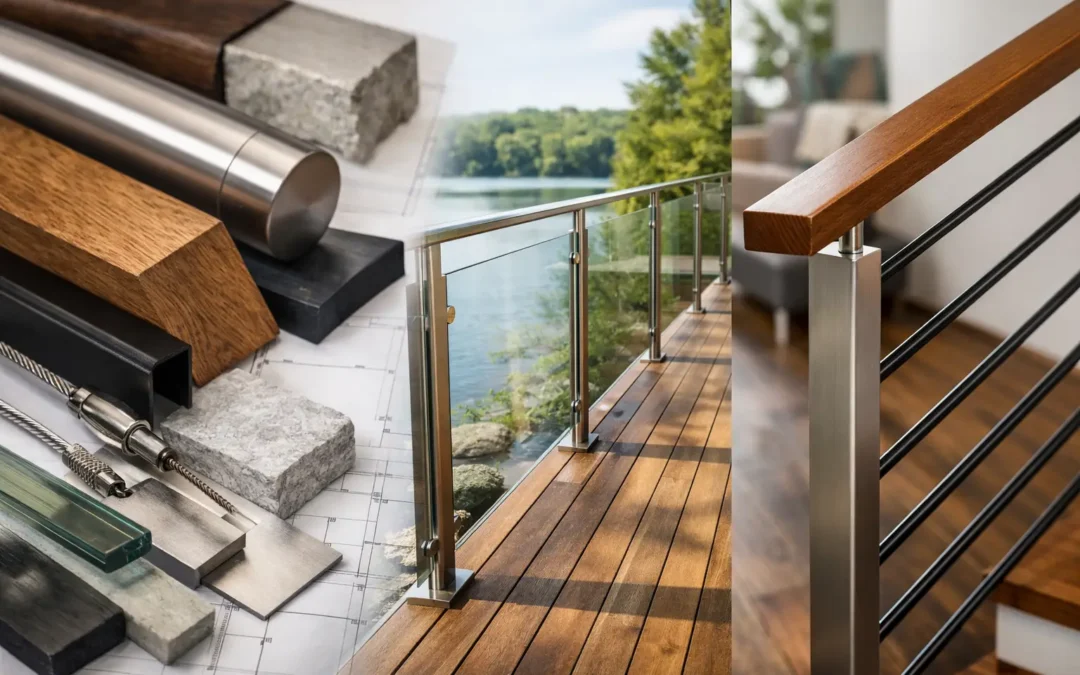
A railing can make a space feel finished or make it feel compromised. The wrong material looks dated fast, needs more upkeep than expected, or simply does not fit the way the property is used. This guide to custom railing materials is built to help homeowners, investors, and commercial clients choose with more confidence – not just by looks, but by durability, maintenance, safety, and how the system will actually perform over time.
When clients start planning a new stair, balcony, deck, or interior upgrade, the first question is often about style. That matters, but material choice affects much more than appearance. It influences sightlines, corrosion resistance, cleaning requirements, structural design, and whether the final result feels light and modern or bold and architectural. A good decision comes from balancing design goals with real-world use.
Why this guide to custom railing materials matters
A custom railing is not a one-size-fits-all product. The material that works beautifully on an indoor staircase may be the wrong fit for an exposed exterior landing. A sleek glass system may be perfect for preserving a view, while a wrought iron railing may be better for a client who wants character, detail, and visual weight.
That is why material selection should happen early, before fabrication begins. Once measurements are taken, drawings are prepared, and engineering is reviewed, the best projects move forward smoothly because the material choice already matches the space, budget, and performance needs.
Glass railings: clean lines and open views
Glass remains one of the most requested railing materials for modern homes and commercial properties. It creates a clean look, allows natural light to move through the space, and keeps views open on balconies, staircases, and terraces. For clients investing in a contemporary upgrade, glass often delivers the biggest visual change with the least visual clutter.
The main advantage of glass is openness. Interior stairs feel larger. Exterior decks and balconies keep the landscape or city view in focus. In commercial settings, glass supports a polished, high-end appearance that works well with modern architecture.
The trade-off is maintenance. Glass is easy to clean, but it does show fingerprints, water spots, and dust more readily than metal picket systems. That does not make it high-maintenance in a difficult sense, but it does mean clients who want a spotless look need to clean it regularly. Privacy can also be a factor. In some settings, full transparency is the goal. In others, it may feel too exposed.
Glass railings are often paired with aluminum or stainless steel hardware for a refined finish. The exact system matters, because the framing, base shoe, posts, and top rail all shape the final look and structural behavior.
Aluminum railings: practical, modern, and low-maintenance
Aluminum is one of the most versatile choices for custom railings, especially for exterior applications. It is lightweight, corrosion-resistant, and well suited to clients who want a modern appearance without committing to the upkeep that some other metals can require.
For balconies, porches, exterior stairs, and perimeter guardrails, aluminum offers a strong balance of value and performance. Powder-coated finishes add durability and give clients flexibility in color and style. Black remains a popular choice for a sharp architectural look, but aluminum can adapt to a range of design directions.
Its biggest strength is low maintenance. Aluminum does not rust the way untreated ferrous metals do, which makes it especially appealing in climates with moisture, snow, and seasonal wear. It is also efficient to fabricate into clean, simple profiles.
The trade-off is aesthetic character. Aluminum tends to suit modern and streamlined projects best. If a client wants heavier visual presence, ornate details, or a distinctly handcrafted look, steel or wrought iron may feel more appropriate.
Stainless steel railings: sleek and performance-driven
Stainless steel is often chosen for projects where durability and a crisp modern finish carry equal weight. It works well in both residential and commercial settings, especially when clients want a premium appearance with strong corrosion resistance.
Visually, stainless steel feels precise. It pairs naturally with glass, cable, and minimalist architectural forms. It is a strong fit for interior stairs, exterior railings, and commercial entries where a refined finish matters.
From a performance standpoint, stainless steel is dependable, but it is usually a more premium investment than aluminum or standard steel. The value is in its long-term resilience and elevated finish. For the right project, that premium makes sense. For others, it may be more material than the design actually needs.
This is where custom planning matters. A property with heavy public use, exposure to the elements, or a strong modern design language may justify stainless steel immediately. A simpler residential application may achieve the same design intent with a different system at a lower cost.
Wrought iron and steel railings: strength with visual presence
If glass feels light and aluminum feels efficient, wrought iron and steel bring presence. These materials are ideal for clients who want railings to read as a design feature, not just a code requirement. They can be minimalist or decorative, depending on the detailing.
For interior staircases, steel railings can create a dramatic architectural frame. For exterior entries, balconies, and gates, wrought iron offers timeless appeal and a more custom, artisanal character. This is often the category clients choose when they want a home to feel more established, distinctive, or upscale.
The biggest advantage is design flexibility. Metal can be fabricated into clean horizontal lines, classic vertical pickets, scrollwork, custom patterns, or mixed-material systems. It is one of the best options for truly bespoke work.
The trade-off is maintenance, especially outdoors. Protective finishes matter. Fabrication quality matters. Installation quality matters. A well-built and properly finished railing can perform beautifully, but exterior steel systems need the right preparation for long-term durability. That is one reason engineered drawings, fabrication discipline, and professional installation are so important.
How to choose the right custom railing material
The best guide to custom railing materials does not end with a chart of pros and cons, because the right answer depends on where the railing is going and what the client wants it to do.
Start with location. Interior railings give you more freedom to prioritize style, because they are protected from weather. Exterior railings need to handle moisture, temperature changes, and daily exposure. A material that looks great indoors may require more upkeep outside.
Next, think about the visual goal. If the priority is openness and light, glass usually leads. If the goal is a simple, durable exterior solution, aluminum is often the practical favorite. If the project calls for premium modern detailing, stainless steel has a strong place. If the design needs warmth, character, or a handcrafted statement, steel or wrought iron may be the better fit.
Budget matters too, but it should be looked at over the life of the system, not just the initial fabrication cost. A lower upfront price can become less attractive if the material needs more upkeep or replacement sooner than expected. On the other hand, not every project needs the most premium material available. Good design is about fit, not excess.
The process matters as much as the material
Even the right material can disappoint if the process behind it is rushed. Custom railings perform best when the project is handled in clear stages: site measurement, design development, drawings, client approval, engineering review where required, fabrication, and installation.
That process reduces surprises. It helps ensure the material works with the space, the dimensions are right, and the finished railing meets both design expectations and code requirements. For homeowners and contractors alike, that kind of structure makes the project feel controlled from the start.
This is especially important with custom systems. A glass railing needs precise tolerances. A steel stair or balcony guard may need engineering input before fabrication. A custom interior handrail should feel integrated with the architecture, not added as an afterthought. Professional execution is what turns a good material choice into a finished result that actually looks custom.
When mixed materials make the most sense
Some of the strongest railing designs do not rely on one material alone. Glass with aluminum framing can offer the openness of glass with the practicality of aluminum. Glass with stainless steel can create a more premium, high-design finish. Steel paired with wood or glass can soften the look while keeping structural clarity.
Mixed-material systems are often the best answer when a client wants both performance and personality. They allow the railing to respond to the property rather than forcing the property to fit a standard product.
At Iron & Glass Designs, that is often where the most successful projects land – in a solution shaped around the space, the use case, and the client’s vision.
A railing should look right on day one, but it should also keep making sense years later. Choose the material that fits the way you live, the way the property performs, and the kind of finish you want to see every time you walk through the space.