
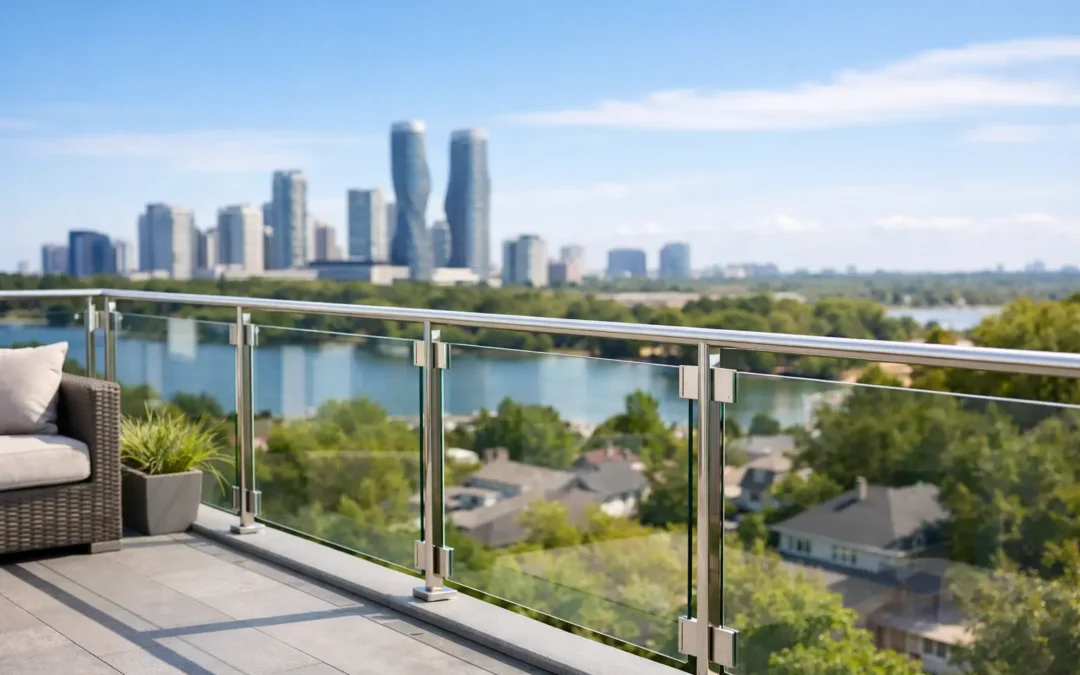
A staircase can make a home feel dated or sharply modern in one decision. The same goes for a balcony, porch, or indoor landing. That is why glass railings in Mississauga have become one of the most requested upgrades for homeowners and property managers who want a cleaner look without giving up safety.
The appeal is easy to understand. Glass keeps sightlines open, lets more light move through a space, and works just as well in a contemporary renovation as it does in a higher-end custom build. But good results depend on more than picking a style from a photo. The right system has to fit the architecture, the use of the space, and the code requirements that apply to the project.
Why glass railings work so well
Glass railings do something many other materials cannot. They create separation without making a space feel closed off. On an interior staircase, that means a brighter, larger-looking room. On an exterior deck or balcony, it means preserving the view instead of cutting it into sections with pickets or heavy framing.
There is also a practical side to the design. Glass pairs well with metal, wood, stone, and concrete, so it rarely forces the rest of the project in one stylistic direction. If you want a minimalist finish with black hardware, that works. If you want stainless steel for a lighter commercial look, that also works. The material is flexible, but the detailing matters.
The best projects balance appearance with day-to-day use. A family home with kids, a multi-unit property, and a retail entrance may all use glass, but not necessarily the same system. Thickness, mounting method, top rail requirements, and edge protection can vary depending on the setting.
Choosing the right glass railings in Mississauga
Most clients start with the look, but the better place to start is function. Where is the railing going? Is it interior or exterior? Does the space get heavy traffic? Is preserving a view the main goal, or is the project more about updating the finish of a staircase?
Frameless glass is often the first choice for homeowners who want the cleanest possible lines. It gives the most open visual effect and feels high-end immediately. That said, it can require more precise detailing and may come at a higher price point depending on the hardware and structure underneath.
A framed or post-supported system is often a smart middle ground. It still delivers the openness people want, but with a bit more visible structure. In some settings, that is actually an advantage. A black aluminum or steel post can tie into window frames, door hardware, or other architectural details and make the railing feel intentional rather than invisible.
Exterior projects add another layer of decision-making. Weather exposure, drainage, fastening surfaces, and long-term maintenance all matter. A system that looks great indoors may not be the right choice for an exposed front porch or second-floor balcony.
Interior vs. exterior applications
Interior glass railings are usually about light and visual flow. They work especially well around open-rise stairs, loft edges, and second-floor hallways where traditional railings can make the layout feel choppy. In these spaces, the goal is often to modernize without overwhelming the room.
Exterior glass railings tend to be more performance-driven. They still offer the same visual advantages, especially around decks and balconies, but they need to stand up to the elements year after year. Hardware selection, proper anchoring, and material quality become more critical outdoors because moisture and temperature swings expose weak installation practices quickly.
Commercial applications often sit somewhere in between. They need a polished appearance, but they also need durability, code alignment, and a clear installation process that keeps the project moving. For builders and property owners, that predictability matters as much as the finished look.
What affects cost
One of the most common questions about glass railings is cost, and the honest answer is that it depends on the design. Size is part of it, but it is not the whole story. The complexity of the layout, the mounting condition, the hardware selection, and whether the project needs engineered drawings all affect the final number.
A straight interior run is generally more straightforward than a custom stair with multiple landings and transitions. An exterior balcony with difficult access may take more planning than a simple indoor guardrail. Frameless systems often cost more than post-supported systems, but they also deliver a different visual result.
This is where a professional site visit matters. Accurate measurements, a review of the supporting structure, and clear drawings prevent the kind of surprises that turn a promising design into a frustrating project. Clients are usually not looking for the cheapest railing. They are looking for a system that looks right, performs properly, and gets installed on time.
Safety, code, and engineering are not optional
A railing is a finish feature, but it is also a safety system. That is why glass railings in Mississauga should never be treated like a decorative add-on that gets figured out at the end. Height requirements, glass specifications, guard conditions, and structural support all need to be addressed before fabrication begins.
This is especially important for elevated surfaces, exterior conditions, and commercial projects. Even when a design looks simple, the details behind it are not always simple. The strength of the substrate, the span of the glass, and the exact hardware used all play a role in whether the finished installation is both safe and compliant.
A disciplined process protects the client here. Site measurement, project-specific drawings, client approval, and engineering review create clarity before material is cut. That reduces delays, helps with permitting where required, and gives homeowners and contractors confidence that the system was designed to perform, not just to photograph well.
The installation process matters as much as the product
A beautiful railing can still disappoint if the install is sloppy. Uneven panel spacing, poor alignment, loose hardware, or damage to adjacent finishes can ruin the effect fast. Precision is what makes glass look expensive.
That is why the strongest results usually come from a full-service approach. When one team handles measurement, design coordination, fabrication, and installation, there is less room for disconnects. The people building the system understand the real site conditions, not just the plan on paper.
At Iron & Glass Designs, that project flow is part of the value. Working closely with clients from concept to final installation helps turn an idea into a finished feature that feels considered, secure, and properly built.
Common mistakes to avoid
The biggest mistake is choosing based on appearance alone. A reference photo may show the style you like, but not the hidden structure needed to support it. Not every slab edge, stair stringer, or wood-framed opening is ready for every type of glass system.
Another mistake is underestimating lead time. Custom railings are not off-the-shelf items. Good work takes field measurement, drawing preparation, approvals, fabrication, and careful installation scheduling. Rushing the process usually creates more cost, not less.
It is also worth thinking ahead about maintenance expectations. Glass is easier to live with than many people assume, but it still shows fingerprints, dust, and weather spotting more than opaque materials. If you love a crisp, clean look, you will want a system that is designed to be accessible for regular cleaning.
Is glass the right choice for your property?
For many homes and commercial spaces, yes. If your goal is to open up a room, modernize a staircase, improve curb appeal, or preserve a view, glass is hard to beat. It offers a clean finish that feels current without being trendy, and it works across a wide range of architectural styles.
Still, the right answer depends on the project. Some clients want full transparency. Others prefer a combination of glass and metal for more visual definition. Some spaces need the premium feel of frameless panels, while others benefit from a more structured and budget-conscious design. A good railing partner does not push one option blindly. They help you choose the system that fits the space, the budget, and the long-term use.
When the design is tailored properly and the installation is handled with care, a glass railing does more than check a box for safety. It changes how a space feels every day – brighter, more open, and more finished in all the right ways. If you are planning an upgrade, start with a clear conversation, accurate measurements, and a team that knows how to build what they promise.