
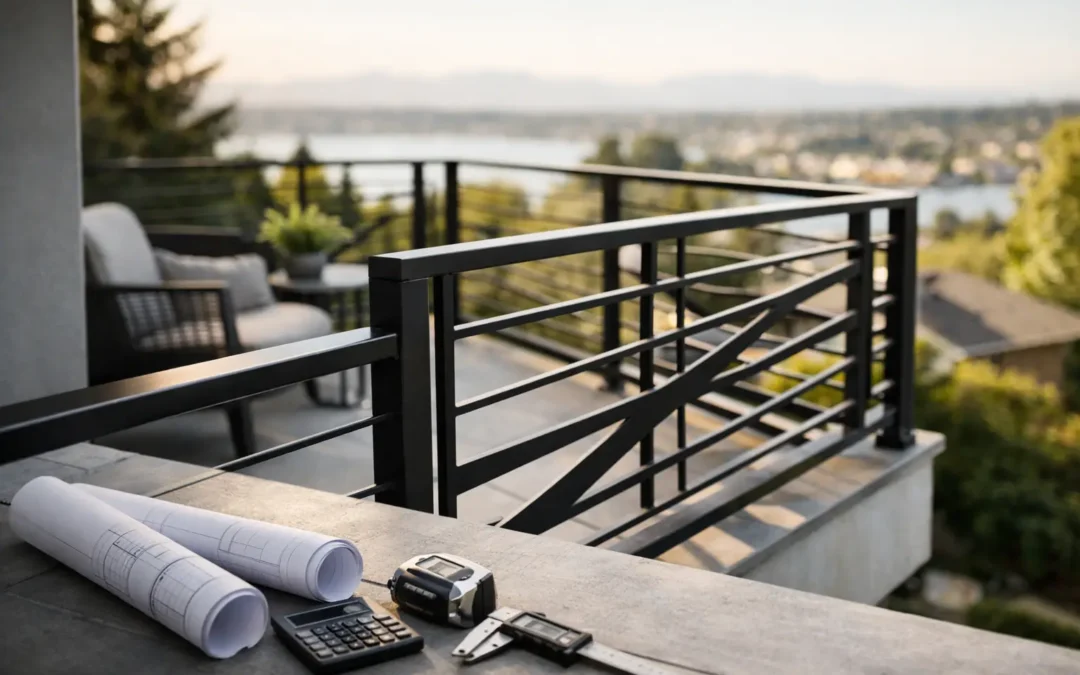
If you are asking for a custom metal balcony railings cost estimate, you are usually trying to answer two questions at once: what will this project cost, and what kind of result will that budget actually buy? That is the right place to start, because balcony railings are not just a finish detail. They affect safety, curb appeal, code compliance, and the overall character of the property.
For most residential projects, custom metal balcony railings can range from about $250 to $750 per linear foot installed, with some straightforward systems landing lower and highly detailed or engineered assemblies going higher. That is a wide spread, but it reflects the reality of custom work. Material choice, design complexity, site conditions, finish, and engineering requirements all shape the final price.
What a custom metal balcony railings cost estimate usually includes
A serious estimate should cover more than the metal itself. Homeowners are often surprised to learn that fabrication and installation are only part of the cost. A complete quote may also include site measurement, design drawings, code-driven adjustments, engineering review, surface preparation, finishing, delivery, and installation labor.
That matters because a low number without process detail can become an expensive project later. If a railing needs revisions for code, field changes during installation, or added structural support, the original price stops being useful. A well-built estimate gives you a clear picture of what is being designed, fabricated, and installed from the beginning.
On premium projects, that clarity is part of the value. You are not buying a generic railing section off a shelf. You are commissioning a system that has to fit your balcony precisely, perform safely outdoors, and align with the look of the home or building.
Typical price ranges by material
The fastest way to understand cost is by material family. Even then, design details can move pricing up or down.
Aluminum balcony railings
Aluminum is often one of the more budget-friendly custom options. A clean, modern design with standard pickets or minimalist profiles may start around $250 to $400 per linear foot installed. Aluminum performs well outdoors, resists rust, and supports contemporary designs without requiring the same maintenance profile as traditional iron.
The trade-off is feel and visual weight. If you want a heavier architectural presence or ornate detailing, aluminum may not deliver the same effect as steel or wrought iron.
Steel or wrought iron balcony railings
Custom steel and wrought iron railings commonly fall in the $350 to $650 per linear foot installed range, and decorative work can exceed that. These materials allow for stronger visual statements, from sleek horizontal designs to classic custom scrollwork.
They also tend to involve more fabrication time, more welding, and more finish work. Exterior exposure makes coating quality especially important. A lower-cost steel railing can become a costly choice if the finish is not handled properly for long-term durability.
Stainless steel balcony railings
Stainless steel typically starts around $400 per linear foot and can run $750 or more depending on grade, detailing, and infill. It is popular for modern homes and upscale commercial properties because it offers a crisp, premium appearance and strong corrosion resistance.
The price reflects both material cost and finish expectations. Stainless looks best when fabrication is precise, so workmanship matters just as much as the metal itself.
Design choices that change the estimate
A custom metal balcony railings cost estimate is heavily influenced by design decisions that seem minor on paper but are significant in production.
Straight runs are simpler than railings that wrap corners, step around architectural features, or connect into stairs. Minimalist systems with clean lines often require tighter tolerances than traditional designs, which can increase fabrication time. Decorative elements, custom posts, curved sections, and mixed materials all push the estimate upward.
Baluster spacing, top rail profiles, frame thickness, mounting style, and visible hardware choices also affect price. A face-mounted railing can create a striking floating look, but depending on the structure, it may require different anchors or coordination with waterproofing. Surface-mounted systems may be simpler in some cases, but that depends on the balcony build.
This is where custom work becomes practical rather than decorative. Good design is not just about appearance. It has to suit the structure, the exposure conditions, and the safety requirements of the project.
Why installation conditions matter so much
Two balcony railings with the same dimensions can have very different installation costs. Easy access keeps labor controlled. Tight urban sites, upper-floor balconies, finished surfaces that must be protected, and limited staging space all add time.
Existing conditions also matter. If an old railing needs removal, if concrete is cracked, or if the substrate needs reinforcement, those issues can change the scope before the new railing even goes in. New construction is often more predictable. Renovation work usually comes with more variables.
For homeowners, this is one of the biggest reasons online calculators fall short. They can give a rough range, but they cannot account for how your balcony is actually built or what the installers will face on site.
Engineering, drawings, and code compliance
This is one area where buyers should be careful about comparing quotes too quickly. Some projects require engineered drawings, stamped review, or specific documentation for approval. Even when local requirements are straightforward, balcony railings still need to meet height, spacing, and structural performance standards.
That work has a cost, but it also reduces risk. It helps avoid redesigns, failed inspections, and installations that do not meet the required standard. On residential projects, owners sometimes treat drawings as an extra. In reality, they are often what turns an idea into something buildable and approvable.
A disciplined process also protects the finish result. Accurate field measurements, project-specific drawings, client approval, and engineering review create far fewer surprises once fabrication begins.
How to budget for a custom metal balcony railings cost estimate
If you are trying to set a realistic budget before requesting quotes, start with linear footage and then add room for the details that make the project custom. For a simple 12-foot balcony, a modest aluminum system may start around $3,000 to $5,000 installed. A custom steel or stainless design on the same balcony may land closer to $5,000 to $9,000 or more, especially if engineering, premium finishes, or complex mounting are involved.
For larger balconies, multi-level exteriors, or higher-end architectural designs, budgets often move well into five figures. That does not mean every project should. It means the cost scales with scope, access, and finish expectations.
A practical approach is to think in three tiers. Entry custom gives you a clean, durable railing with limited detailing. Mid-range custom opens up better profiles, stronger finishing options, and more design flexibility. Premium custom delivers the sharpest detailing, engineering coordination, higher-end materials, and a more tailored visual result.
How to compare quotes without guessing
When reviewing estimates, look beyond the total. Ask what material is being used, how the railing will be finished, whether site measurement is included, whether drawings are project-specific, and whether installation is fully included. You should also understand what assumptions were made about the substrate and site access.
The best quote is not always the lowest one. A lower number may exclude design work, engineering, demo, touch-up, or site complications. A stronger proposal usually feels more specific because it is based on how the project will actually be delivered.
This is especially important with balcony systems, where there is little room for error. Precision fabrication and professional installation are part of the product, not add-ons.
When paying more is worth it
There are times when spending more upfront saves money later. Outdoor metalwork lives with weather, movement, and daily use. Better fabrication, proper finishing, and careful installation help the railing look better longer and reduce the chance of corrosion, looseness, or premature repairs.
The same goes for design. A railing that fits the home, complements the architecture, and feels intentional adds value in a way generic systems rarely do. For many homeowners and investors, that is the whole point of going custom.
At Iron & Glass Designs, that process starts with understanding the space, measuring it properly, and translating the vision into a buildable plan. That kind of workflow is often the difference between a project that simply gets installed and one that feels fully resolved.
If you are budgeting for a balcony upgrade, the smartest next step is not chasing the lowest square-foot guess. It is getting a quote built around your actual balcony, your design goals, and the level of finish you want to live with for years.