
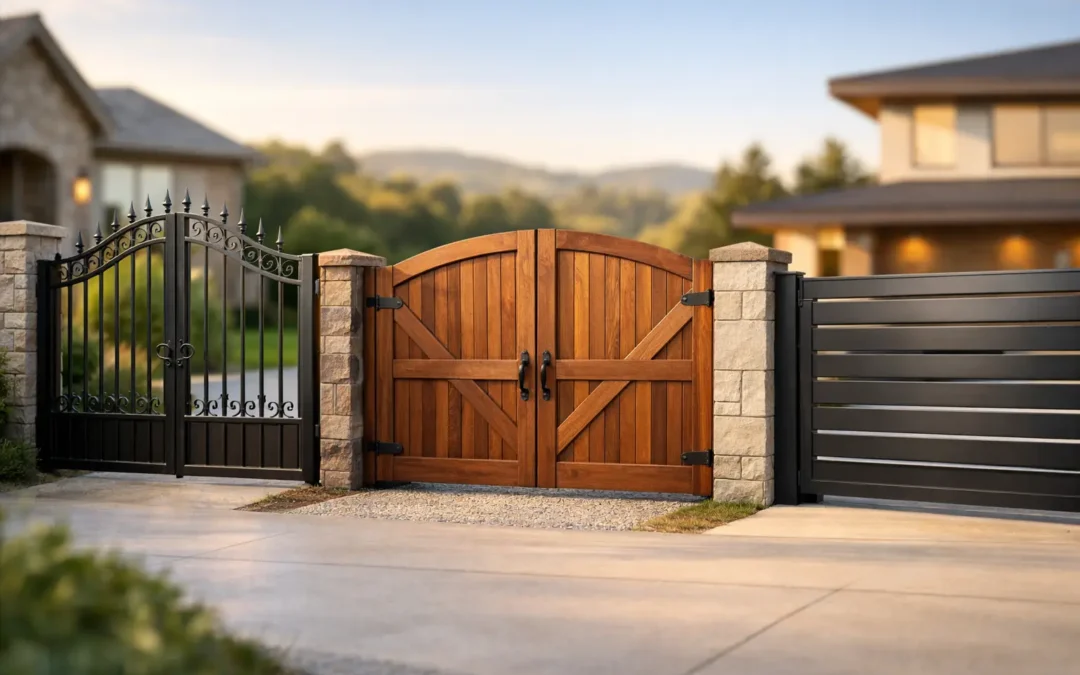
A gate is often the first moving part people notice on a property. If it rattles, sags, sticks, or looks like an afterthought, it changes the whole impression. Well-built custom gates do the opposite. They create a cleaner entrance, improve security, and make the property feel finished in a way off-the-shelf options rarely can.
For homeowners, that might mean a front walkway gate that matches a modern railing system or a side-yard gate that finally solves privacy and access issues. For commercial properties, it often means balancing appearance with dependable daily use, code considerations, and long-term durability. In both cases, the right gate is not just about closing an opening. It is about making the opening work better.
Why custom gates make more sense than standard options
Standard gates are built for average conditions. Real properties are almost never average. Openings vary. Slopes shift the geometry. Posts, masonry, fences, stairs, and surrounding architecture all create constraints that a pre-made product cannot fully respect.
That is where custom gates earn their value. A gate designed for the exact opening, swing clearance, hardware requirements, and visual style of the property performs better from day one. It sits correctly, aligns with adjacent structures, and looks intentional rather than adapted.
There is also the design factor. A gate should relate to the rest of the property. On a modern home, clean lines, slim profiles, and glass or metal details usually look stronger than decorative stock pieces. On a more traditional property, wrought iron detailing or a heavier frame may be the right fit. Custom work gives you control over proportion, spacing, finish, and hardware, which is what makes the final result feel cohesive.
What to consider before choosing custom gates
The best gate decisions start with function, not ornament. How the gate will be used every day should shape the design just as much as appearance.
A front entry gate has different demands than a driveway gate or pool enclosure gate. A side-yard gate may need to maximize privacy, while a courtyard gate may need to preserve openness and light. If children or pets are part of the equation, latch height, gap spacing, and self-closing hardware may matter more than they would in another setting. If the gate serves a commercial building, frequency of use and wear become major factors.
Swing direction is another detail that affects everything. A gate needs enough clearance to open properly without conflicting with stairs, landscaping, parked vehicles, or doors. On some sites, a single swing panel makes sense. On others, a double gate or sliding configuration is the better answer. This is why measurements alone are not enough. The surrounding conditions matter just as much.
Then there is privacy versus visibility. Solid or semi-solid panels can create a more enclosed feel, which many homeowners want for side access and backyard areas. Open picket or horizontal metal designs give a lighter, more architectural look and maintain sightlines. Neither option is universally better. It depends on how the space is used and what matters most on that property.
Materials matter more than most people expect
When clients compare custom gates, they often focus first on style. That is understandable, but the material choice has a major impact on maintenance, weight, and lifespan.
Wrought iron and steel gates offer strength and presence. They work especially well when a project calls for a tailored architectural look, whether minimalist or more decorative. Proper finishing is critical because exterior metal has to stand up to moisture, temperature changes, and regular use. A well-fabricated and properly coated metal gate can perform beautifully for years, but shortcuts in fabrication or finishing usually show up fast.
Aluminum is a strong choice when lower weight and corrosion resistance are priorities. It suits many contemporary applications and can be ideal when a clean profile is needed without excess mass. Depending on the design, it may also reduce stress on hinges and posts over time.
Glass can be incorporated when the goal is a modern, open appearance. In the right application, metal-and-glass gates can look sharp and upscale while preserving light and visual continuity. That said, glass is not right for every location. Privacy needs, maintenance expectations, and impact exposure should all be considered before moving in that direction.
The best choice comes down to use, exposure, design goals, and budget. Good fabrication is about matching the material to the job, not forcing one material into every situation.
Custom gates and the bigger design picture
A gate should not feel separate from the property. It should belong to the same visual language as the railings, fencing, balcony details, stair elements, and entry features around it.
That matters more than people think. Even a beautifully made gate can look out of place if the proportions, color, or detailing do not connect to the architecture. A modern black metal gate with simple geometry can sharpen the look of a renovated exterior. A gate with frosted or clear glass elements can tie into nearby railing systems. Matching or coordinating finishes across metalwork creates a more polished result.
This is where custom fabrication has a real advantage. Instead of choosing from a limited catalog, you can align the gate with the rest of the project. The spacing can match an existing fence line. The frame profile can echo nearby railings. The hardware can support the same design direction. Those details are subtle, but they are what make the installation feel complete.
The build process matters as much as the gate itself
A good-looking gate that is measured poorly or installed without proper planning will become a problem quickly. Gates are moving components. They rely on precision.
That is why the process behind custom gates matters. A professional workflow should begin with a site visit and accurate field measurements, followed by drawings that reflect the actual conditions of the project. From there, the client should be able to review and approve the design before fabrication begins. On projects where engineering review or stamped drawings are required, that step should be built into the process, not treated as an afterthought.
This approach protects the client in practical ways. It reduces surprises during installation, supports code alignment where applicable, and ensures the finished gate is based on real conditions rather than assumptions. It also creates confidence. When clients can see the design, understand the hardware plan, and know what will be built, the project feels controlled from start to finish.
That disciplined workflow is one reason many clients choose a full-service fabricator such as Iron & Glass Designs. The value is not only in the final product. It is in having one team handle measurement, drawings, approvals, fabrication, and installation with accountability at each stage.
Common trade-offs to think through
Every custom gate project involves choices, and the right answer depends on priorities.
Heavier gates can create a bold, substantial look, but they may require stronger support and more attention to hardware selection. More open designs feel lighter and more modern, but they provide less privacy. Powder-coated metal finishes can look crisp and durable, though the finish quality depends heavily on preparation and fabrication standards. Glass inserts can elevate the design, but they may require more cleaning than an all-metal gate.
Budget also affects decision-making. Investing in custom work usually costs more upfront than buying a basic stock gate, but the comparison is not always equal. A gate that fits properly, lasts longer, and complements the property can deliver more value over time than a cheaper option that needs modification or replacement.
The best projects are honest about these trade-offs from the beginning. That clarity leads to better decisions and better outcomes.
What a quality installation should feel like
When a custom gate is done right, it feels easy to use. It swings or slides smoothly. The latch engages cleanly. The gaps look consistent. The alignment feels precise. Nothing drags, binds, or looks improvised.
Just as important, it looks like it belongs there. The gate should strengthen the architecture, not compete with it. Whether the style is sleek and minimal or more classic in character, the craftsmanship should be visible in the fit, finish, and proportion.
That is the difference between simply adding a gate and actually improving a property. A well-executed gate adds security and control, but it also adds confidence every time you arrive home, welcome guests, or present a building to tenants or customers.
If you are considering custom gates, start with the way you want the space to function, then build the design around that reality. The best results come when craftsmanship, engineering, and installation discipline all work together – and that is when a gate stops being a basic barrier and starts becoming part of the property’s identity.