
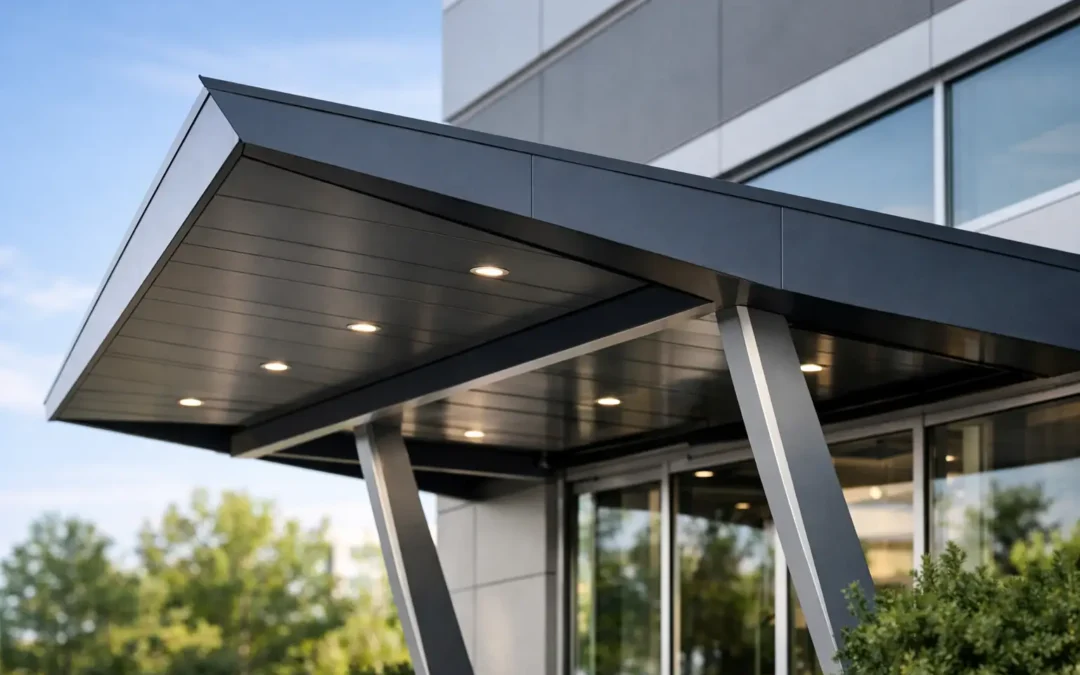
A well-built canopy does more than cover a doorway. It changes how a property looks, how it functions in bad weather, and how people experience the entrance every day. For homeowners and property managers, that makes a canopy one of those rare upgrades that improves appearance and practicality at the same time.
When it is designed properly, a canopy creates a cleaner architectural line, protects entry areas from rain and snow, and gives the exterior a more finished, intentional look. It can also help define the front of a home, frame a commercial entry, or make a side or rear access point feel safer and more usable. The difference is not just in adding overhead coverage. It is in how the structure is proportioned, engineered, fabricated, and installed.
Why a canopy matters more than people expect
Many exterior upgrades are either visual or functional. A canopy tends to deliver both. On the design side, it adds depth to a flat facade and gives an entrance stronger presence. On the practical side, it helps shield doors, steps, landings, and visitors from the elements.
That matters in climates where rain, wind, snow, and freeze-thaw cycles put constant stress on exterior finishes. Water exposure around entry points can lead to slippery surfaces, premature wear, and a less welcoming arrival. A properly built canopy helps reduce that exposure while making the space feel more complete.
For commercial properties, the value goes even further. Entrances need to look professional, feel safe, and handle frequent use. A canopy can make that happen without adding unnecessary bulk. For residential projects, the goal is often a cleaner, more custom look that feels like it belongs to the architecture instead of looking like an afterthought.
Good canopy design starts with the building
The right canopy is not chosen from a generic style sheet. It should respond to the lines, scale, and material palette of the property. A narrow modern entry may call for a slim-profile metal-and-glass canopy with crisp detailing. A wider frontage may need a broader projection and more structural presence to feel balanced.
This is where custom work changes the outcome. Dimensions matter. Pitch matters. The relationship between brackets, supports, fascia lines, and glazing matters. Even small adjustments in projection or thickness can change whether the finished piece feels elegant or oversized.
The best results come from working closely with the client and treating the canopy as part of the architecture, not as an accessory. That means reviewing site conditions, taking accurate measurements, preparing project-specific drawings, and making sure the design works visually before fabrication begins.
Material choices shape performance and style
Not every canopy needs the same material combination. The right solution depends on the look you want, the exposure level, and the structural demands of the project.
Metal remains the backbone of a strong canopy system because it offers durability, stability, and design flexibility. Steel can deliver a bold, architectural look with excellent strength. Aluminum can be a smart choice where clean lines, lighter weight, and corrosion resistance are priorities. Finishes also play a major role, especially when the goal is to coordinate with railings, gates, window frames, or other exterior features.
Glass is often the material that gives a canopy its most refined appearance. It keeps the structure visually light and works especially well on modern homes and commercial facades. But glass is not just a style decision. It needs the right thickness, support method, and engineering review to perform safely over time.
This is where trade-offs matter. A heavier structural expression may suit some properties better than a minimal glass-forward design. Likewise, the most visually discreet option is not always the best choice if the site has higher wind exposure or larger spans. Good design is not about forcing one look onto every project. It is about matching materials and structure to real conditions.
Engineering is what turns a canopy into a dependable system
A canopy should look effortless. That does not mean it is simple.
Because it is mounted overhead and exposed to weather, a canopy has to be designed with structural loads in mind. Snow load, wind load, anchoring conditions, substrate type, and local code requirements all need to be addressed before production. If those steps are skipped, the result may look acceptable at first and become a problem later.
That is why a disciplined process matters. Site measurement comes first. Drawings follow. Client approval ensures the design direction is right. Engineer review and stamping help confirm the system is ready for fabrication and installation under the proper requirements.
For clients, this process removes guesswork. You are not hoping the canopy will work once it arrives on site. You are moving through a controlled workflow where the design is reviewed, the build is planned, and the installation is executed with clear intent.
Where a custom canopy works best
Most people think first about front entrances, and for good reason. That is where a canopy often makes the biggest visual impact. It creates a stronger focal point and gives the arrival sequence more presence.
But there are plenty of other applications where a canopy adds real value. Rear entries, side doors, balcony access points, loading areas, and commercial storefronts can all benefit from overhead coverage. In some cases, the goal is protection. In others, it is visual consistency with surrounding railings, gates, or glazing.
A canopy can also help tie multiple architectural elements together. If a property already includes glass railings, black metal accents, or custom stair components, the canopy can reinforce that language and make the whole project feel coordinated. This is often where custom fabrication shows its strength. Instead of mixing unrelated off-the-shelf pieces, the finished work reads as one complete design.
The installation is just as important as the fabrication
Even a well-designed canopy can underperform if the installation is rushed or poorly coordinated. Anchoring points must align with the structure. Waterproofing details have to be handled properly. Tolerances need to be respected. The final fit should look precise, not adjusted on the fly.
That is why end-to-end delivery matters. When the same team manages measurement, drawings, production, and installation, there is better continuity from start to finish. Fewer details get lost. Expectations are clearer. The finished canopy reflects the original design instead of becoming a compromise on site.
Clients feel that difference. The project moves more smoothly, timelines are easier to manage, and the final result has the polished look people expect from custom architectural metal and glass work. At Iron & Glass Designs, that structured approach is a big part of what gives clients confidence before the work begins.
What homeowners and property managers should ask before moving forward
A canopy is not a small cosmetic add-on, so the right questions matter. Ask how the system will be measured, drawn, reviewed, and installed. Ask what materials are being recommended and why. Ask whether the design is being tailored to the property or adapted from a standard model. And ask how code compliance and engineering review will be handled.
Those conversations usually reveal the difference between a basic installer and a full-service fabrication partner. One is focused on getting something in place. The other is focused on getting the right solution built properly.
Price matters, but so does scope. A lower number can leave out key steps like drawings, engineering, finish quality, or installation precision. A better investment often comes from choosing a team that can deliver the design, technical review, fabrication, and final installation as one coordinated package.
A canopy should feel permanent, not provisional
The strongest canopy projects have one thing in common. Once installed, they look like they were always meant to be there.
That happens when craftsmanship and process work together. The design fits the architecture. The materials suit the project. The engineering supports the span and exposure. The installation is clean and exact. The result is not just shelter above a door. It is a finished architectural feature that improves how the property looks and performs every day.
If you are planning an exterior upgrade, it is worth treating the canopy with the same attention you would give to a railing system, stair package, or custom gate. When it is done right, it adds lasting value in a very visible way – and every entrance feels better when it is built with purpose.