
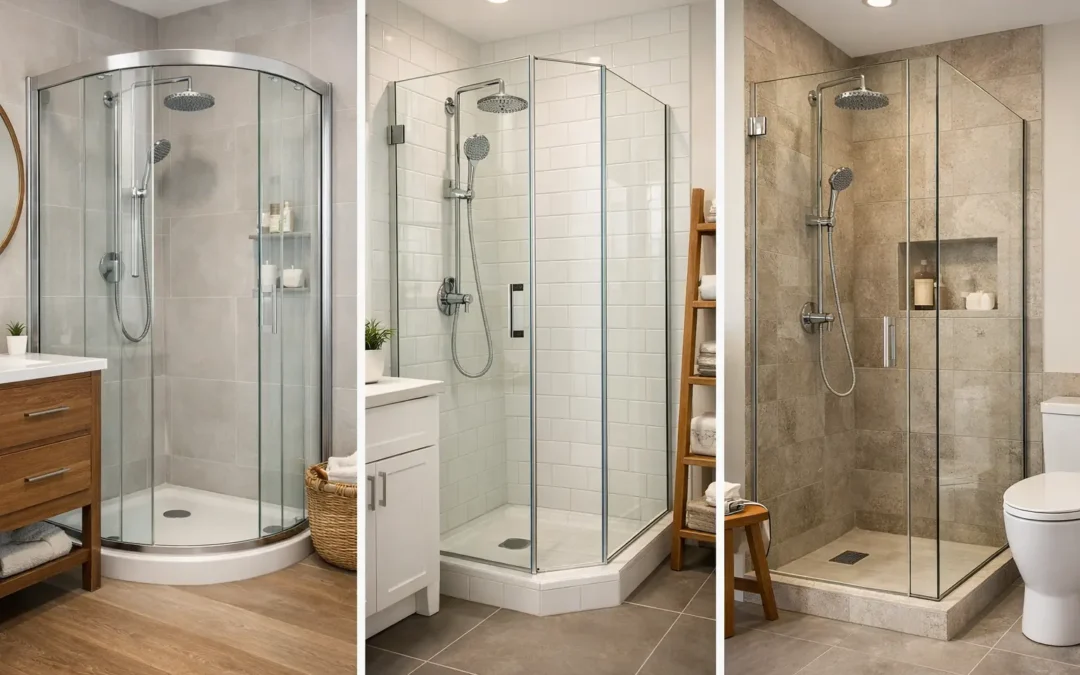
A small bathroom usually feels cramped for one reason – the layout is working against you. The best shower enclosure layouts small bathrooms benefit from are the ones that open sightlines, protect floor space, and make the room feel intentional instead of improvised. When the enclosure is planned well, the whole bathroom reads cleaner, brighter, and larger.
At Iron & Glass Designs, we see this often with renovation projects where the shower itself is not the real problem. The issue is usually the swing of a door, the placement of a panel, or a layout that breaks the room into tight visual fragments. In a compact bathroom, every inch matters, but so does every line.
What makes small bathroom shower layouts work
The best layout is not always the one with the smallest footprint. A good enclosure has to balance access, comfort, cleaning, drainage, and visual openness. A layout that saves three inches but creates an awkward entry can feel worse in everyday use than a slightly larger design with cleaner movement.
That is why small bathrooms benefit from custom thinking. Wall locations, toilet clearances, vanity depth, ceiling height, and how the door opens all shape what will work. A strong layout should let you move naturally, keep water contained, and make the bathroom feel less crowded the moment you walk in.
Best shower enclosure layouts small bathrooms can use
Corner glass enclosure
A corner enclosure is one of the most reliable solutions for compact bathrooms because it uses an area that often creates dead space in a poor layout. By placing the shower in the corner, you free up the central floor area and create a more organized room plan.
This layout works especially well with clear glass because the eye can travel through the enclosure instead of stopping at a bulky framed unit or opaque wall. If the bathroom is close to square, a corner enclosure often gives you the best balance of footprint and comfort. The trade-off is that tight corner entries can feel restrictive if the dimensions are pushed too far, so this layout needs careful measurement.
Alcove shower with a fixed glass panel
If your bathroom already has three existing walls that define the shower zone, an alcove layout with a fixed glass panel is often the cleanest upgrade. Instead of adding a full framed enclosure or a shower curtain that visually chops up the room, a fixed panel keeps the opening simple and modern.
This is a strong option for homeowners who want the room to feel open without giving up a practical shower area. It also reduces the need for a swinging door, which matters in bathrooms where every clearance is tight. The main consideration is splash control. A fixed panel needs the right width and placement to keep water where it belongs.
Sliding glass shower enclosure
When there is not enough room for a hinged door to swing outward, a sliding enclosure is often the most practical answer. It keeps circulation clear, works well beside vanities or toilets, and provides full enclosure coverage without demanding extra floor space.
For small bathrooms, this layout can be very effective in rectangular rooms where the shower spans one wall. It feels ordered and efficient. The trade-off is that sliding systems introduce more hardware and overlapping panels, so the visual effect is slightly heavier than a minimal fixed-panel design. That said, with clean detailing and quality materials, it can still look sharp and contemporary.
Neo-angle enclosure
A neo-angle layout cuts off the corner with an angled entry, which can help when a standard square corner shower would crowd nearby fixtures. This shape is useful in bathrooms with awkward circulation paths because it softens the corner and creates easier movement around the shower.
It is not the first choice for every modern renovation, since more angles can mean a busier look. But in the right room, it solves a real planning problem. If access is tight near the vanity or toilet, a neo-angle enclosure can create better flow than a strict rectangular shape.
Walk-in shower with a single panel
For a high-end, minimal look, a walk-in shower with one fixed glass panel is one of the strongest layouts available. It works best when the bathroom has enough depth to allow a partial opening while still controlling overspray. In the right space, it makes a small bathroom feel surprisingly open because there is almost no visual interruption.
This is often the layout people want for style reasons, but it depends heavily on the room dimensions and drain planning. If the space is too tight, the open section can lead to water escaping into the main floor area. When executed properly, though, it delivers a premium result with a light, architectural feel.
Choosing the right door style matters as much as the layout
In small bathrooms, the enclosure door can make or break the design. A hinged door offers a clean, upscale look and easy access, but it needs room to swing. If that swing interferes with a vanity, toilet, or main entry door, the layout will feel awkward no matter how attractive it looks on paper.
Sliding doors solve clearance issues and keep the footprint contained. Fixed-panel entry designs remove the door entirely and create the most open appearance. There is no single best answer. The right choice depends on how the bathroom is used every day, who is using it, and how much space you truly have once all fixtures are in place.
Why clear glass usually wins in a small bathroom
If the goal is to make the room feel larger, clear glass is usually the best choice. It preserves sightlines, allows tile and wall finishes to remain visible, and keeps natural and artificial light moving through the room. Frosted or heavily framed enclosures tend to divide the bathroom visually, which can make a compact space feel tighter.
This does not mean every small bathroom must use ultra-minimal glass. Privacy preferences, maintenance concerns, and the overall design style still matter. But for most modern renovations, clear custom glass gives homeowners the cleanest result and the strongest sense of openness.
Custom sizing beats off-the-shelf thinking
Small bathrooms rarely forgive standard solutions. Walls are often out of square, fixture locations are fixed, and older homes can present dimensions that do not work neatly with pre-made units. That is where custom fabrication becomes more than a design upgrade – it becomes the practical way to get the layout right.
A custom enclosure allows the shower to be shaped around the room instead of forcing the room to adapt to a generic kit. That means better fit, cleaner lines, and fewer compromises around entry space and water control. It also helps the finished bathroom look intentional, which is exactly what homeowners and property investors want from an upgrade.
A few layout mistakes to avoid
The most common mistake is choosing an enclosure based only on footprint. A shower may fit on a floor plan and still create poor movement in the room. Another issue is ignoring door clearance until too late, especially when the bathroom entry door, vanity drawers, and shower door all compete for the same zone.
Poor panel sizing is another frequent problem. If the fixed glass is too short, water escapes. If it is too large, the entry can feel tight. In compact bathrooms, these details matter more, not less. The best results come from careful measurement, clear drawings, and a build process that accounts for real-world use instead of rough assumptions.
What to prioritize before you commit
Start with movement. You should be able to enter the bathroom, access the vanity, and use the shower without doors colliding or pathways narrowing to a squeeze point. Then think about visual weight. In most small bathrooms, lighter materials and simpler glass layouts create a better result than bulky framing or overly segmented designs.
After that, focus on durability and installation quality. A shower enclosure is a daily-use feature. It has to perform, stay aligned, and hold up over time. That is why a professional process matters – site measurement, project-specific drawings, approval before fabrication, and precise installation all contribute to a better outcome.
If you are planning a bathroom upgrade and want a layout that looks modern, fits properly, and feels built for your space, it is worth getting expert input early. A well-designed enclosure does more than close off a shower – it gives a small bathroom the structure, clarity, and finish that make the whole room feel complete.