
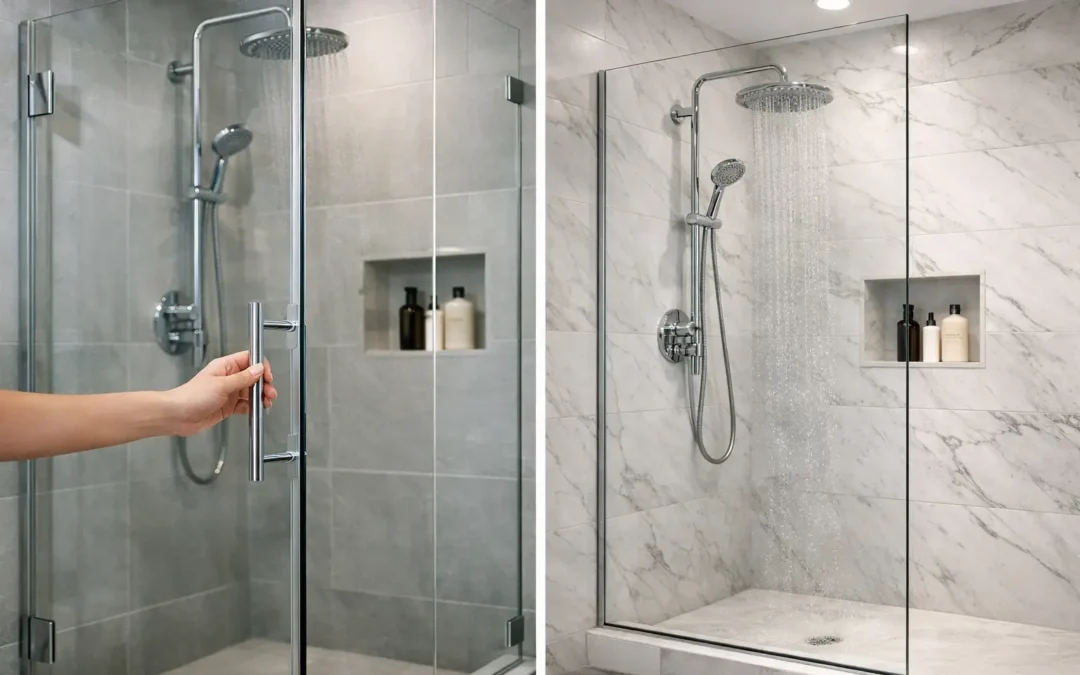
A shower can look clean on paper and still feel wrong the first week you use it. That is why the glass shower door vs fixed panel decision matters more than most homeowners expect. The right choice affects how open the bathroom feels, how much water stays where it should, how easy the glass is to clean, and how comfortably the space works every day.
For some bathrooms, a full glass door is the practical answer. For others, a fixed panel gives you the sharper, more architectural look people want in a modern renovation. Neither is automatically better. The best option depends on your layout, the way you move through the room, and how much performance you expect from the enclosure.
Glass shower door vs fixed panel: what is the difference?
A glass shower door is a moving panel, usually hinged or sliding, that closes the shower opening. Its main job is simple – contain water while giving you a clear, open look. It creates a more enclosed showering experience and usually offers better splash control.
A fixed panel, sometimes called a shower screen, is a stationary piece of glass that blocks part of the opening while leaving the rest open. It is popular in modern bathrooms because it feels minimal, bright, and less visually heavy than a full enclosure. You get a sleek design statement, but you also accept that the shower is not fully sealed.
That single difference – moving door versus open-entry panel – shapes almost every other decision, from cleaning and hardware to layout and budget.
When a glass shower door makes more sense
If your shower is compact or your bathroom layout puts the shower close to a vanity, toilet, or walkway, a glass door usually gives you better control. Water stays in the shower more reliably, warm air is retained better during use, and the space feels more protected.
This matters in real homes, not just showroom bathrooms. A beautifully tiled shower loses some of its appeal if water regularly reaches the bath mat or nearby millwork. A full door is often the smarter choice when the showerhead is aimed toward the opening, when multiple people use the bathroom, or when you want a more forgiving setup.
Doors also tend to feel more comfortable in colder months because they reduce airflow through the opening. That can make a noticeable difference in larger bathrooms where the shower area is more exposed.
From a design standpoint, a frameless glass door still gives you a clean, upscale look. You do not have to sacrifice style to get function. With well-selected hardware and accurate installation, a custom glass door can feel just as refined as a fixed panel while delivering stronger day-to-day performance.
The trade-offs of a shower door
A moving door introduces hardware, swing clearance, and more alignment requirements. Hinges, handles, sweeps, and seals all need to be selected properly and installed with precision. If the opening is tight, the door swing can interfere with nearby fixtures or make the room feel crowded.
Cleaning can also be a little more involved. There are more edges, more hardware contact points, and more spots where soap residue can build up. This does not make a shower door difficult to maintain, but it does mean there are simply more details to wipe down.
Cost can climb as well, especially in custom applications where measurements must be exact and hardware quality matters. Still, many homeowners find that the added containment and comfort justify the investment.
Where a fixed panel stands out
A fixed panel works best when the bathroom design supports it. If you have enough shower depth, a well-placed drain, and a layout that keeps spray contained, a fixed panel can create a bright, open result that looks expensive without feeling overbuilt.
This is why fixed panels are so common in contemporary renovations. They show off the tile, make the room feel larger, and reduce visual interruption. In a primary bathroom, that lighter look can completely change the atmosphere of the space.
A fixed panel is also easier to enter because there is no door to open or close. That can be helpful for homeowners who prefer a more accessible, less restricted shower opening. It creates a clean path into the shower and removes the need to plan around door swing.
From a fabrication standpoint, fixed panels are straightforward in concept, but they still require careful planning. The panel size, glass thickness, support hardware, and placement all affect performance. A panel that looks great but is undersized for the spray pattern will not feel like a premium result once the shower is in use.
The trade-offs of a fixed panel
The biggest compromise is water control. An open-entry shower is never as sealed as a closed-door enclosure. If the showerhead placement, slope, or panel width is wrong, water can escape onto the bathroom floor.
Heat retention is another factor. Fixed panels create an airy experience, but that openness also lets warm steam and air escape faster. Some people love that lighter feel. Others find it less comfortable, especially in winter or in larger bathrooms.
There is also a planning issue many homeowners miss. A fixed panel depends more heavily on layout being correct from the beginning. Drain position, showerhead direction, and entry opening all need to work together. It is a cleaner-looking solution, but it gives you less room to hide a weak design decision.
Cost is not just about the glass
When clients compare these options, they often assume the fixed panel is always the budget choice. Sometimes it is, but not always by as much as expected. The final number depends on glass thickness, hardware finish, panel size, custom cuts, wall conditions, and installation complexity.
A simple fixed panel may use fewer components than a hinged door, which can reduce material and labor costs. But if the panel is oversized, requires premium support hardware, or needs custom detailing to suit the room, the price gap can narrow quickly.
A door system can cost more because of hinges and handles, but it may solve practical issues that would otherwise require layout compromises. That is why the right comparison is not just product versus product. It is performance versus design priorities in your specific bathroom.
Which option is easier to clean?
In many cases, the fixed panel wins on simplicity. Fewer moving parts usually means fewer areas where buildup collects. The uninterrupted glass surface is easier to squeegee, and the overall maintenance routine is more straightforward.
That said, a fixed panel can still develop water spots if it is not cleaned regularly, especially in hard-water areas. Easier does not mean maintenance-free.
A glass shower door takes a little more attention because of the hardware and seals, but a well-made frameless setup still cleans up nicely. The bigger factor is often how the shower is used. If water constantly escapes the opening of a fixed panel layout, you may spend less time cleaning glass and more time cleaning the floor.
Design goals should lead the decision
If your top priority is a minimalist, open look, the fixed panel often delivers it best. It pairs especially well with large-format tile, linear drains, and modern bathrooms where every line is intentional. The result can feel calm, spacious, and highly custom.
If your top priority is practical daily use, especially in a family bathroom or a tighter footprint, a glass door often makes more sense. It gives the room a finished appearance while doing a better job of controlling water and comfort.
This is where a custom approach matters. At Iron & Glass Designs, we work closely with clients to make sure the shower enclosure fits the room instead of forcing the room to fit a standard product. Measurements, drawings, hardware choices, and installation quality all shape how the final result looks and performs.
How to choose between a glass shower door and fixed panel
Start with the shower footprint. If the shower is shallow or exposed, lean toward a door. If it is deep enough to contain spray and you want a more open feel, a fixed panel may be the stronger design move.
Then look at who uses the bathroom. A guest bath used occasionally can be more design-forward. A primary bathroom used every day needs to work effortlessly. Think about warmth, splash control, ease of entry, and cleaning habits, not just appearance.
Finally, think beyond the catalog image. The success of either option depends on exact measurements, glass specifications, and installation. In custom work, those details are not extras. They are the difference between a shower that looks good in photos and one that still feels right a year later.
The best shower glass choice is the one that fits your layout, your routine, and the standard you expect from the finished space. When those pieces line up, the bathroom does not just look upgraded – it feels thoughtfully built every time you step in.