
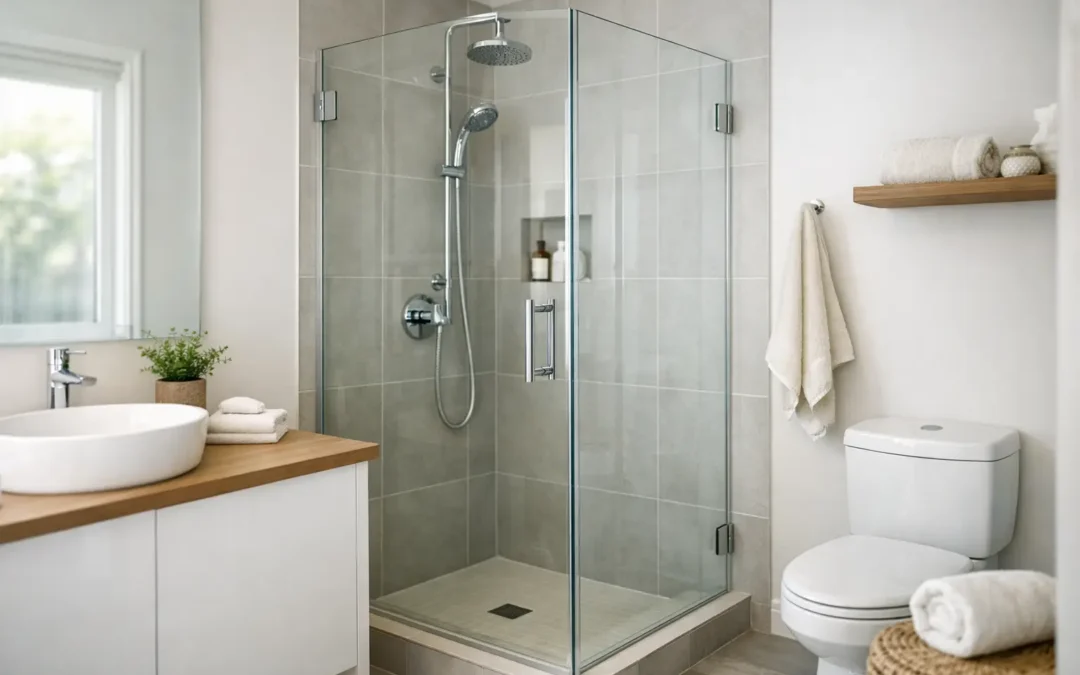
A small bathroom can feel cramped fast, and the wrong shower enclosure makes it worse. If you are choosing the best shower glass for small bathrooms, the goal is not just to keep water contained. It is to make the room look larger, brighter, and cleaner while still giving you a practical enclosure that fits the way you use the space every day.
That balance matters. In a compact bathroom, every visual line counts, every inch of swing clearance matters, and every hardware choice affects how open the room feels. The right glass can make a tight footprint feel intentional and refined. The wrong one can turn a simple upgrade into a daily frustration.
What makes shower glass work in a small bathroom
In larger bathrooms, there is more room to recover from a poor layout decision. In smaller spaces, the enclosure has to do more with less. It needs to control water, preserve sightlines, and fit around vanities, toilets, and door swings without making the room feel boxed in.
That is why clear glass is usually the first recommendation. It allows the eye to travel through the shower area rather than stopping at a visual barrier. When you can see wall tile, floor tile, and full room depth, the bathroom reads as larger than it is.
But clear glass alone is not the full answer. The best result depends on the opening width, whether the shower is an alcove or corner, how much daily cleaning you are comfortable with, and how custom the installation needs to be. A small bathroom benefits from precision, not guesswork.
Best shower glass for small bathrooms: the top choice
For most small bathrooms, the best shower glass is clear tempered glass in a frameless or minimal-frame design. It gives you the cleanest look, lets more light move through the room, and avoids the visual bulk that heavy framing can create.
Frameless glass is especially effective when the bathroom already leans modern. It keeps lines simple and helps tile, stone, and fixtures do the visual work. If your goal is an upgraded, custom look, this option delivers the strongest design impact.
That said, not every small bathroom needs fully frameless glass. In some layouts, a semi-frameless enclosure offers a better balance of budget, structural support, and appearance. You still get a cleaner look than a fully framed unit, but with hardware and edge support that can make certain installations more practical.
The real decision is not frameless versus framed in isolation. It is which system fits the opening, supports the glass properly, and makes the room feel more open instead of more crowded.
Choosing between clear, frosted, and textured glass
If your priority is space perception, clear glass is almost always the winner. It opens the room visually and works well in bathrooms with limited natural light. It also pairs naturally with modern tile and metal finishes, especially black, chrome, or brushed stainless hardware.
Frosted or textured glass has a place, but there is a trade-off. It adds privacy and can soften water spots visually, yet it also interrupts sightlines. In a small bathroom, that can make the shower feel more like a separate block inside the room.
There are cases where privacy matters more. A shared family bathroom, a guest bath with direct sightlines from the door, or a layout where the shower sits immediately beside the vanity may justify partially frosted glass. In those situations, a strategic privacy band or selective frosting can be smarter than fully obscured panels. You preserve some openness without giving up discretion.
The best door style for tight layouts
The glass itself matters, but door function often determines whether the enclosure truly works. In a small bathroom, a swinging door can become a problem if it conflicts with a vanity, toilet, or entry door.
Sliding shower doors are often the most practical choice when clearance is tight. They do not require outward swing space, which makes circulation easier in narrow bathrooms. They are especially useful for tub-shower combinations and wider alcove openings.
Hinged doors still have advantages. They tend to feel more premium, they can be easier to clean around, and they often suit frameless installations beautifully. But they need enough clearance to open comfortably. If the door is constantly grazing a bath mat, bumping a vanity, or forcing awkward movement, it is not the right fit no matter how good it looks in a showroom.
For very compact layouts, a fixed glass panel with an open entry can also be a strong solution. This walk-in style keeps the room visually open and eliminates door clearance entirely. It works best when the shower can be designed to control splash properly through panel size, placement, and drain planning.
Glass thickness and why it matters
When people ask about the best shower glass for small bathrooms, they usually focus on style first. Thickness deserves equal attention because it affects both performance and feel.
Tempered safety glass is the standard, but thickness can vary. Thicker glass generally feels more substantial and premium, which is why it is often used in frameless systems. It gives the enclosure a confident, architectural presence without relying on bulky framing.
However, thicker is not always better in every condition. The right specification depends on panel size, hardware type, anchoring method, and overall design. In a small bathroom, proportion matters. You want the enclosure to feel refined and solid, not oversized for the space.
This is one reason custom fabrication makes such a difference. A properly measured and engineered enclosure accounts for the actual room, not a generic opening on paper. Walls are rarely perfectly square, and in tight bathrooms even minor variations can affect fit, swing, and water control.
Hardware choices that change the look
Small bathrooms reward restraint. Minimal hardware usually creates the cleanest result, but the finish still plays a major role in the final design.
Chrome remains a strong choice when you want light reflection and a crisp, classic look. Brushed nickel feels softer and pairs well with warmer bathroom palettes. Matte black creates contrast and definition, especially in contemporary homes, though it introduces more visible lines around the enclosure.
That contrast can be a benefit or a drawback depending on your goal. If you want the glass to almost disappear, lighter and more reflective finishes often keep things airy. If you want the shower to feel like a design feature, black hardware can frame it with intention.
Neither approach is wrong. The better choice is the one that supports the rest of the room rather than competing with it.
Custom glass vs. prefabricated options
For a standard opening, a prefabricated enclosure may seem like the faster path. Sometimes it is. But small bathrooms tend to expose the limitations of off-the-shelf products quickly.
A few inches in the wrong place can affect toilet clearance, vanity access, and how comfortably the room functions. Prefab units also tend to offer fewer options for unusual wall conditions, low curbs, angled ceilings, or precise panel sizing. If the bathroom is being upgraded for a cleaner, more custom look, those compromises can show.
Custom shower glass gives you control over dimensions, hardware placement, door operation, and overall finish. It also creates a tighter visual fit, which matters in small spaces where every line is easy to see. Working closely with clients from site measurement to drawings and final installation is how a glass enclosure moves from just functional to fully materialized as part of the bathroom design.
When framed glass still makes sense
Frameless gets most of the attention, but there are situations where framed or semi-frameless glass is the better call. Budget is one factor, of course, but not the only one.
If the bathroom is more practical than design-driven, a framed option can provide durability and dependable water control at a lower price point. In rental properties or straightforward refresh projects, that may be the right investment. The key is choosing a frame profile that does not feel overly heavy for the room.
A slim, well-finished frame can still look clean. What you want to avoid is a bulky enclosure that visually chops up the bathroom. In a small space, visual weight matters almost as much as physical dimensions.
A better way to decide
The best shower glass for small bathrooms is usually clear, tempered, and tailored to the room in a frameless or minimal-frame system. But the best choice for your bathroom comes down to layout, privacy needs, door clearance, and how custom you want the final look to feel.
A well-designed enclosure should make the room easier to use and better to look at the moment you walk in. If the glass disappears visually, the hardware feels intentional, and the installation fits with precision, the bathroom will feel larger without adding a single square foot.
That is the value of getting the details right from the start. In a small bathroom, good design is not about doing more. It is about making every inch work harder and look better.