
A railing changes more than the edge of a stair or balcony. It changes how open a room feels, how much light moves through the space, and how finished the entire project looks. When clients ask about glass railing vs picket railing, they are usually deciding between two very different design directions – one that disappears into the architecture and one that adds visible structure and character.
The right answer depends on where the railing is going, how you want the space to feel, and how much ongoing maintenance you are comfortable with. It also depends on code requirements, engineering, and installation quality. A railing is not just a style feature. It is a safety system that needs to perform every day.
Glass railing vs picket railing: the biggest design difference
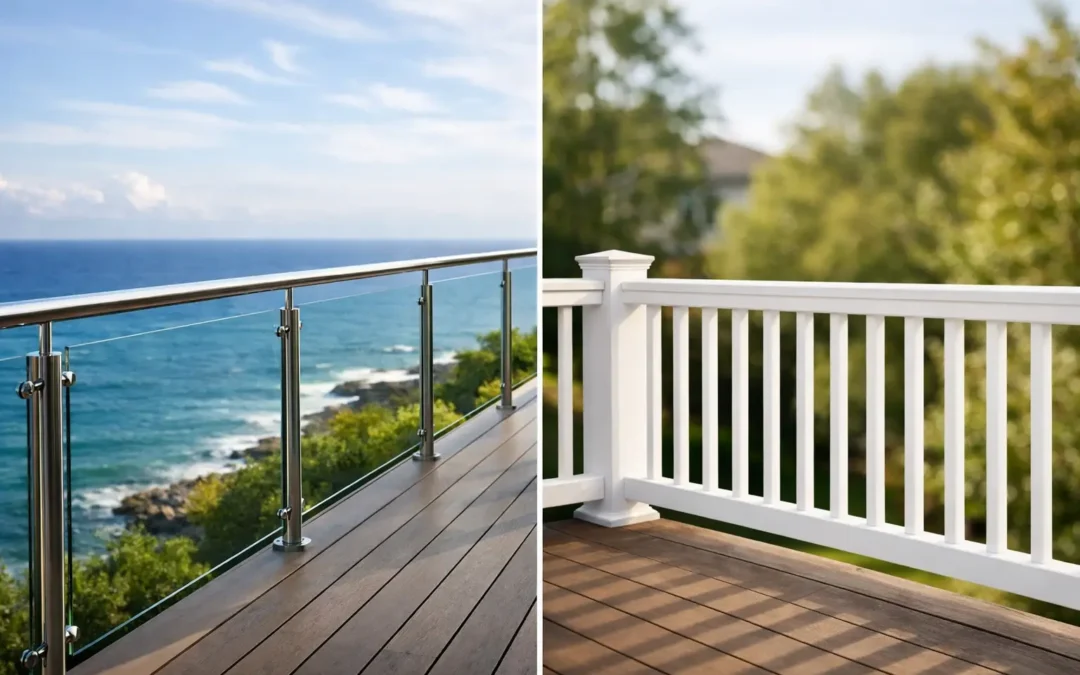
If your priority is a clean, modern look, glass usually leads the conversation. It keeps sightlines open, allows natural light to pass through, and makes both interior and exterior spaces feel larger. On staircases, balconies, and decks, that transparency can completely change the way the architecture reads.
Picket railing does the opposite in a good way. It creates rhythm, definition, and a more traditional sense of enclosure. Depending on the profile, spacing, finish, and top rail design, picket systems can lean classic, contemporary, or somewhere in between. They bring visual detail rather than disappearing into the background.
For many homeowners, this is the first real fork in the road. Do you want the railing to be part of the visual statement, or do you want it to support the space quietly and keep the focus on the view, flooring, staircase, or surrounding finishes?
Where glass railing tends to win
Glass railing performs especially well when the view matters. On a backyard deck overlooking landscaping, a lake, or a pool area, uninterrupted visibility is hard to beat. The same applies indoors where you want to preserve open-concept lines between levels or maintain visibility across a foyer or staircase.
It also works well in homes with a modern design language. If the project includes large windows, slim trim, metal accents, stone, or minimalist cabinetry, glass often feels like the natural extension of that material palette. It gives you a refined finish without adding visual weight.
There is also a practical side to that openness. In smaller homes or tighter stairwells, glass can make the footprint feel less confined. That psychological sense of space matters more than many people expect.
Where picket railing tends to win
Picket railing is often the better fit when you want architectural definition. It frames the staircase or balcony instead of erasing it. In homes with more traditional millwork, classic exterior detailing, or a stronger metalwork presence, pickets can feel more integrated than glass.
It can also be a smart choice when privacy matters more than openness, or when the surrounding view is not the focal point. On some exterior applications, clients simply prefer the grounded look of a solid railing line with consistent vertical elements.
Another advantage is design flexibility within the metalwork itself. With custom fabrication, pickets can be simple and modern, decorative and classic, or tailored to complement gates, fences, or other architectural blacksmith details on the property. That gives the railing more of a crafted identity.
Maintenance is different, not necessarily better or worse
A lot of buyers assume one option is clearly lower maintenance. In reality, it depends on what bothers you most.
Glass railing shows fingerprints, water spots, pollen, and dust more visibly than pickets. If you love spotless surfaces, you will notice when the panels need cleaning. That is not a flaw in the system. It is simply the nature of glass. On the other hand, cleaning glass is straightforward, and there are no vertical bars collecting debris in hard-to-reach corners.
Picket railing hides smudges better, but it still needs care. Exterior systems deal with weather, airborne debris, and general wear. Depending on the material and finish, touch-ups or refinishing may be part of long-term ownership. Well-made metal railings are durable, but durability still depends on proper fabrication, finishing, and installation.
So the better question is not which one needs zero maintenance. It is which type of maintenance fits your expectations.
Safety, code, and real-world performance
This is where professional guidance matters. The glass railing vs picket railing decision should never be made on looks alone. Guard height, infill rules, loading requirements, attachment conditions, and local code compliance all need to be considered before fabrication begins.
With glass, the engineering and hardware details are critical. Panel thickness, edge treatment, fastening methods, and support systems all need to work together. A well-designed glass system feels clean because the technical work behind it has already been solved.
With picket railing, spacing and structural integrity matter just as much. The profile of the pickets, the rail configuration, the post placement, and the anchoring conditions all affect safety and durability. A railing that looks simple on the surface still requires careful planning and accurate installation.
This is one of the biggest reasons clients value a full-service process. Site measurement, project-specific drawings, approvals, and engineering review reduce guesswork. They also help avoid the common problem of choosing a style first and discovering too late that the chosen system needs to be reworked to meet code or fit the structure properly.
Cost depends on more than the material
People often ask which is more expensive. The honest answer is that either system can move up or down depending on the design.
Glass railing often carries a premium because of the glass itself, the hardware, and the engineering involved. Frameless or more minimalist configurations usually increase that investment. But the visual impact is significant, and for many clients, that openness is exactly what justifies the price.
Picket railing can be more budget-friendly in some applications, especially when the design is straightforward. But custom metalwork, upgraded finishes, and more detailed fabrication can also raise the cost. A decorative picket system is not the same product as a simple, standard railing.
The most useful way to compare pricing is to evaluate the complete scope. That includes design intent, fabrication quality, finish, engineering needs, site conditions, and installation complexity. A low number on paper is not a savings if the final result looks generic or does not perform the way it should.
Which railing works best indoors?
Inside the home, glass is often chosen for feature staircases, open-to-below areas, and spaces where natural light is a major asset. It pairs especially well with wood treads, floating stairs, and modern interiors that rely on clean geometry.
Picket railing can be just as effective indoors, but it creates a different mood. It adds line, contrast, and a more visible crafted element. Black metal pickets remain a strong choice because they bridge modern and traditional interiors without feeling dated.
If your staircase is meant to be a focal point, either option can succeed. The difference is whether you want that focal point to feel airy and restrained, or more defined and architectural.
Which railing works best outdoors?
Outdoors, glass shines when there is something worth seeing and when preserving that sightline adds value to the property. Decks, terraces, and balconies benefit immediately from a system that does not block the landscape.
Picket railing remains a strong exterior solution, particularly where weather exposure, privacy preferences, or architectural style point in that direction. On certain homes, especially those with stronger traditional detailing or metal accents, pickets simply look more at home.
Exterior applications also demand extra attention to material selection, finish quality, drainage, and attachment details. A railing may look excellent on day one, but the real test is how it performs through seasons of use and exposure.
The best choice is the one that fits the whole project
A railing should not be selected in isolation. It has to work with the structure, the architecture, the finishes, and the way you use the space. That is why the decision is rarely just glass or pickets. It is clear views or visible detail. Minimalism or definition. A quieter backdrop or a stronger design feature.
At Iron & Glass Designs, we work closely with clients to turn those preferences into buildable, code-aligned systems with clear drawings, engineering review where required, and dependable installation. That process matters because the right railing is not only beautiful in a photo. It feels right in the space, performs safely, and looks intentional from every angle.
If you are deciding between the two, start with the experience you want the space to create. The right railing will follow from there.