
A driveway gate can raise the look of a property in one move – or become a daily frustration if it is planned around appearance alone. If you are figuring out how to plan custom driveway gates, the best starting point is not the panel design or finish. It is how the gate needs to work every single day, for the people, vehicles, and property it is meant to serve.
That practical mindset is what separates a gate that looks good in photos from one that still feels right years later. A custom gate should match the architecture, improve security, and open reliably without creating clearance issues, awkward turns, or maintenance headaches. Good planning brings all of that together before fabrication begins.
How to Plan Custom Driveway Gates Around Real Use
Most homeowners begin with style. That makes sense, because the gate is a major visual feature at the front of the property. But the strongest results come from planning in the opposite order: function first, design second, detailing last.
Start by thinking about traffic patterns. How many vehicles use the driveway daily? Is there enough depth for a car to stop safely before the gate opens? Will delivery vans, service vehicles, or larger trucks need access? A narrow opening may look refined on paper but feel restrictive the first time a moving truck arrives.
Pedestrian use matters too. In some layouts, a separate man gate creates a cleaner and safer solution than relying on the driveway gate for every entry. That is especially helpful for families, side-yard access, or properties with frequent foot traffic.
Security goals should also be clear from the beginning. Some clients want a strong visual boundary and privacy. Others want a more open, modern entry that defines the property line without closing off the facade. Neither is wrong. The right choice depends on the setting, sightlines, and how much visibility you want from the street.
Choosing the Right Gate Type
The gate style has to fit the site. This is one of the biggest planning decisions because it affects layout, hardware, automation, and structural requirements.
Swing gates are a popular choice for residential properties because they feel classic and substantial. They can be designed as a single leaf or double leaf configuration. They do, however, require clear swing space. If the driveway slopes upward too quickly or if space is tight near the entrance, a swing gate may create problems.
Sliding gates are often the better answer when the driveway grade is challenging or when you want to avoid swing clearance. They move laterally instead of opening inward, which can make them more practical for compact sites. The trade-off is that they need enough side room to slide fully open, along with careful planning for track or cantilever support.
Bi-fold gates can work on tighter properties where fast operation and limited space are priorities, but they involve more moving parts and a more specialized setup. For most residential projects, the decision usually comes down to swing versus sliding, and that choice should be made early.
Layout, Clearance, and Site Conditions
This is where custom work earns its value. A gate is never just a gate panel. It is part of a full site condition that includes grade changes, columns, fencing, retaining walls, paving, and utility access.
Accurate measurements are essential, but dimensions alone do not tell the full story. The site needs to be evaluated for slope, drainage, driveway width, and vehicle turning radius. Even a beautifully built gate can underperform if the posts are set in the wrong place or the opening width does not reflect how vehicles actually approach.
Column design is another factor that often gets overlooked. If the gate is being mounted to masonry piers, steel posts, or integrated fence structures, those supports need to be built for the load and movement of the gate system. Large custom gates can be heavy, especially when using thicker steel sections or privacy infill. Support structures should never be treated as an afterthought.
A professional site visit is valuable here because it catches constraints before they become change orders. It also helps align the visual proportions of the gate with the home and the surrounding frontage.
Materials That Match the Property and the Climate
Material selection should balance appearance, durability, and maintenance. Custom driveway gates are long-term exterior installations, so the finish and structural material both matter.
Wrought-iron-inspired steel gates remain a strong choice for clients who want presence, detail, and a custom architectural look. Steel offers strength and design flexibility, especially for ornamental work, geometric patterns, and substantial frames. The key is proper fabrication and finishing so the gate holds up well outdoors.
Aluminum is often chosen when a lighter-weight gate is preferred. It offers strong corrosion resistance and can support clean, modern designs with less structural load on operators and hinges. Depending on the design intent, aluminum can be the better option for larger openings where weight becomes a concern.
Glass can also be integrated selectively in contemporary gate design, though it is usually best used where privacy, impact exposure, and cleaning expectations have been fully considered. In the right setting, it creates a sharp modern result. In the wrong setting, it may ask for more upkeep than the client wants.
Finish color should relate to the architecture, not just current trends. Black remains popular because it works across modern, transitional, and traditional homes, but the right finish depends on window frames, entry doors, fencing, and the overall exterior palette.
Design Details That Make the Gate Feel Custom
A custom driveway gate should look like it belongs to the property, not like it was selected from a generic catalog. That does not mean the design has to be overly ornate. In many cases, the most successful gates are the most disciplined.
Proportion is a major part of that. Rail spacing, frame thickness, panel divisions, and decorative features all need to relate to the scale of the house and the width of the opening. A gate that is too visually busy can compete with the architecture. One that is too minimal can feel undersized or flat.
Privacy level also shapes the design. Open picket-style gates create transparency and curb appeal, while solid or semi-private infill offers more screening and a stronger barrier. There is a trade-off here. More privacy usually means more visual mass and sometimes more wind load, which can affect engineering and operator performance.
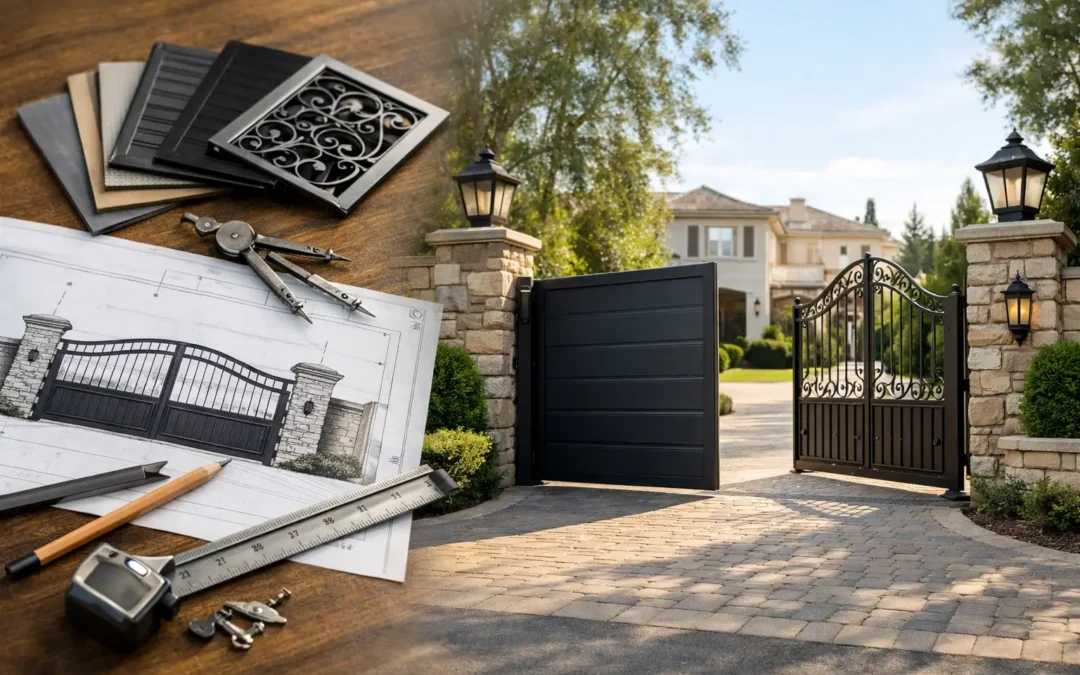
This is why drawings matter. Seeing the gate in plan and elevation helps confirm that the design is not only attractive, but also buildable and properly scaled.
Automation, Access, and Everyday Convenience
Most custom driveway gates today are automated, and that should be planned from the beginning rather than added later. The operator type, power source, safety devices, and access controls all depend on the gate style and site layout.
Think through how you want to use the gate. Remote access is the baseline, but many clients also want keypad entry, intercom capability, smart access, or integration with security systems. If guests, deliveries, or service providers need regular access, those details affect the final setup.
Safety is just as important as convenience. Automatic gates should include the right protective features for vehicles and pedestrians, and the system needs to be installed with reliability in mind. A well-designed gate should feel easy to use, not temperamental.
Planning conduit, power, and controls during the design stage avoids expensive adjustments later. It also keeps the finished installation cleaner.
Engineering, Codes, and Build Process
Custom gates sit at the intersection of design and structure. That is why professional planning should include not just fabrication drawings, but also a review of engineering and code-related requirements where applicable.
Load, span, hinge stress, operator compatibility, and support conditions all need to be considered before production. This becomes even more important on larger gates, sloped sites, or projects tied into masonry columns and fence systems. A disciplined process that includes field measurement, drawings, client approval, and engineering review leads to a better result and fewer surprises.
For homeowners and property investors, this part of the project brings real peace of mind. You are not just buying a gate. You are approving a system that has been thought through from concept to installation.
Budgeting Without Guesswork
Custom means the price will depend on size, material, complexity, automation, and site conditions. The smartest way to budget is to decide early where the investment matters most.
If the visual statement is the priority, put more into design, fabrication quality, and finish. If convenience and performance are the focus, automation and structural planning may deserve more attention. Trying to maximize every feature at once can push the project beyond what is necessary.
The best value usually comes from clear scope, accurate measurements, and a fabrication team that can guide the process instead of leaving decisions vague. At Iron & Glass Designs, that is exactly where professional workflow makes a difference – the design gets refined before production, not improvised during installation.
The right driveway gate should feel intentional every time you arrive home. When the layout works, the proportions feel right, and the build quality is there, the gate stops being a standalone feature and starts feeling like part of the property itself.