
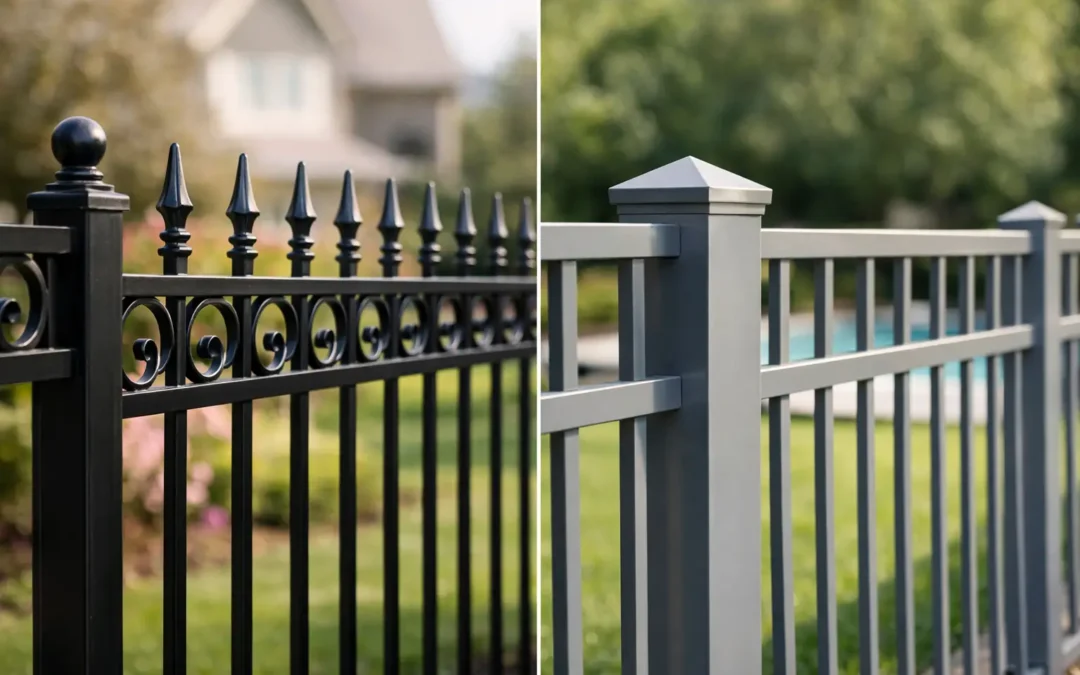
A fence changes more than a property line. It shapes curb appeal, affects maintenance for years, and can either support your architecture or fight against it. When homeowners compare a wrought iron vs aluminum fence, they are usually weighing two priorities at once: the look they want today and the performance they can rely on long term.
Both materials can create a clean, upscale perimeter. Both can improve security and define space without making a property feel closed in. But they do not behave the same way once weather, budget, installation conditions, and design goals enter the picture. The right choice depends on how you want the fence to look, how much upkeep you are willing to take on, and how custom you need the final result to be.
Wrought iron vs aluminum fence: the core difference
The simplest way to think about it is this: wrought iron is chosen for character, weight, and traditional craftsmanship, while aluminum is often chosen for efficiency, lower maintenance, and modern practicality.
Wrought iron has a substantial presence. It feels permanent, architectural, and highly customizable. If you want scrolls, decorative finials, tailored spacing, or a design that echoes railings, gates, or balconies on the same property, wrought iron gives you that handcrafted look.
Aluminum, by contrast, delivers a lighter and cleaner system. It is popular for clients who want a refined appearance without the heavier profile and maintenance demands of iron. Powder-coated aluminum fencing can look sharp and contemporary, especially on newer homes, multifamily properties, and commercial sites where durability and consistency matter.
Appearance and design flexibility
For many properties, the decision starts with style.
Wrought iron has depth and visual texture that is hard to imitate. It works especially well on older homes, estate-style properties, and projects where the fence is meant to feel like part of the architecture rather than just a boundary. Ornamental patterns, custom curves, and detailed fabrication can make the fence feel bespoke in a way that standard panel systems usually do not.
That said, aluminum has come a long way. Today’s aluminum fences are available in a range of profiles and finishes that suit both classic and modern exteriors. If your goal is a crisp black fence with clean pickets and minimal visual weight, aluminum often gets you there with a more streamlined look. For homeowners who prefer simplicity over ornament, that can be a real advantage.
This is often where project-specific design matters. A custom fabrication partner can help you decide whether your property wants the elegance of iron or the restraint of aluminum. The answer is not always about which material is better. It is about which one belongs on that site.
Durability in real-world conditions
A fence has to do more than look good on installation day.
Wrought iron is strong, rigid, and built for presence. Structurally, it offers serious durability. But iron and moisture are never casual companions. If the coating is compromised and maintenance is neglected, rust can develop over time. That does not mean wrought iron is a poor exterior choice. It means it needs proper finishing, quality fabrication, and periodic upkeep to stay at its best.
Aluminum has an edge when it comes to corrosion resistance. It does not rust the way iron does, which is one of the biggest reasons it is so widely used outdoors. In wet climates, freeze-thaw conditions, or properties where owners want less long-term maintenance, aluminum can be the more forgiving material.
For pool enclosures, side yards, and larger perimeter runs, that low-maintenance durability is often the deciding factor. For statement front fencing or highly customized gates, some homeowners still prefer iron because of the visual impact and solid feel.
Maintenance expectations
This is where the trade-off becomes practical.
A wrought iron fence usually asks more from the owner. It may need inspection, touch-up painting, or refinishing over time, especially in areas exposed to moisture, road salt, or landscaping irrigation. If you appreciate traditional metalwork and are comfortable protecting that investment, this maintenance can be worthwhile.
An aluminum fence is easier to live with. A quality powder-coated finish typically keeps maintenance to occasional cleaning and basic inspection. For busy homeowners, landlords, and commercial property owners, that simplicity matters. Less maintenance often means lower lifetime hassle, even if the upfront appearance feels a bit less artisanal.
There is no wrong answer here. Some clients gladly choose wrought iron because they value custom metal craftsmanship enough to care for it. Others want a fence they can install and think about less often. Both are valid priorities.
Cost and long-term value
If budget is part of the decision, aluminum usually comes in as the more accessible option.
Material costs are often lower, fabrication is typically more standardized, and installation can be more efficient because aluminum is lighter. On projects with long fence lines, those differences can become significant.
Wrought iron generally costs more, especially when the design is custom. That higher investment reflects the material, the fabrication time, and the level of detail involved. But price alone does not tell the full story. If a custom wrought iron fence transforms the front elevation of a home and ties together gates, railings, and architectural elements, the value can be much bigger than a line-item comparison suggests.
A better question is not just which fence costs less. It is which fence does the job your property actually needs. A lower-maintenance aluminum system may offer the best value for a rental property or a large backyard enclosure. A custom iron fence may be worth every dollar on a high-visibility frontage where design impact matters.
Security and strength
Both materials can create a secure perimeter, but they do so differently.
Wrought iron has a heavier, more formidable presence. For clients who want a fence to feel substantial and visibly strong, iron often delivers more confidence. It is especially effective when paired with a custom gate, controlled entry, and a design tailored to the property.
Aluminum is still strong enough for many residential and light commercial applications, but it is lighter by nature. That is not necessarily a weakness. In many cases, it is the reason installation is smoother and the system performs well with less strain on the structure. But if your priority is the most solid, heavy-duty appearance possible, wrought iron usually wins on perception and feel.
Installation and project planning
The material you choose also affects how the project moves from concept to completion.
Aluminum fencing systems can be faster to install, especially when the design uses standard panels. That makes them attractive for projects with tight timelines or broad perimeter coverage.
Wrought iron projects often involve more custom work, which can be a major benefit if your site has unique grade changes, architectural details, or matching features elsewhere on the property. The added customization can create a better final result, but it also requires proper measuring, drawings, approvals, and fabrication discipline.
That process matters. On a well-managed project, site conditions are reviewed carefully, the design is developed to suit the property, and installation is handled with precision rather than guesswork. For custom fence work, that level of planning protects both the finish and the function.
Which fence is right for your property?
If you are deciding between a wrought iron vs aluminum fence, start with the questions that actually shape satisfaction after installation.
If you want ornate detail, strong architectural presence, and a fence that feels custom to the home, wrought iron is often the better fit. If you want clean lines, lower maintenance, corrosion resistance, and more budget flexibility, aluminum is usually the smarter choice.
For many homeowners, the answer comes down to where the fence sits and what role it plays. A front-yard statement fence may justify custom wrought iron. A backyard enclosure, pool fence, or long property boundary may make more sense in aluminum. Some projects even combine materials across different site conditions to balance appearance, durability, and cost.
At Iron & Glass Designs, that is where a guided process makes the difference. When a fence is measured properly, designed for the property, and fabricated with the end result in mind, the material choice becomes clearer because it is tied to how you actually live, maintain, and present the space.
The best fence is not the one that wins a generic comparison. It is the one that looks right on your property five years from now, still performs the way you expected, and still feels like money well spent.