
A stairway can look finished and still feel wrong the moment you use it. Maybe the grip is awkward, the rail sits too far from the wall, or the whole run feels more decorative than supportive. When clients ask about indoor handrails vs wall mounted rails, they are usually trying to solve both safety and design at the same time – and the right answer depends on how the space is built and how it needs to perform every day.
For most interiors, this is not a simple matter of one option being better than the other. It is a question of structure, traffic flow, visual weight, code requirements, and the level of support you want the rail to provide. In a custom project, those details matter because a rail should do more than meet a requirement on paper. It should feel solid in the hand, look intentional in the room, and fit the architecture rather than fight it.
Indoor handrails vs wall mounted rails: what is the difference?
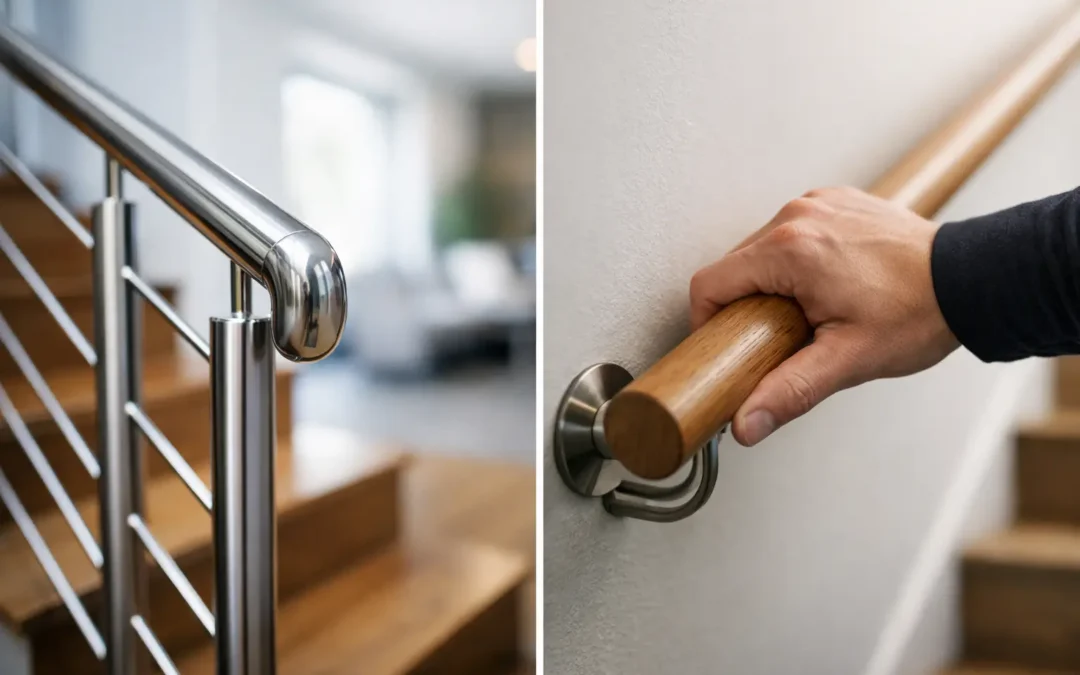
The terms are often used interchangeably, but they are not always the same thing. An indoor handrail is the broader category. It refers to any rail designed to provide support and guidance along interior stairs, ramps, landings, or level changes. That can include a railing system attached to posts, integrated into a guardrail, mounted on glass, or fixed directly to the wall.
A wall mounted rail is a more specific solution. It is typically a continuous rail bracketed straight to the wall, without posts or a larger railing assembly. You see it often on enclosed staircases, basement stairs, side hall stairs, and renovation projects where the goal is to improve safety without adding bulk.
So the real comparison is not category versus category. It is usually a choice between a more complete interior railing system and a simpler wall-mounted handhold. That distinction affects appearance, engineering, installation method, and the way the space feels once the project is complete.
When a full indoor handrail system makes more sense
A full interior handrail system is usually the stronger design move when the staircase is visually prominent. Open-rise stairs, floating treads, glass-sided stairs, and feature staircases in entryways benefit from a rail that is part of the architecture, not an afterthought attached to the wall.
This option also makes sense when you need both a guard and a graspable rail. In many homes and commercial interiors, the stair edge needs fall protection as well as hand support. A fabricated metal railing, a glass railing with a properly designed top rail, or a post-supported system can handle both jobs while keeping the overall look cohesive.
There is also more room for customization. Material choice matters here. Wrought iron brings detail and character. Stainless steel and aluminum keep the look cleaner and more contemporary. Glass can open the sightline and brighten the stair area. With a custom-built system, the proportions, finishes, bracket details, and transitions can be designed to suit the home rather than forcing the home to fit a stock product.
That said, a full railing system asks for more planning. It may require more structural coordination, longer fabrication time, and a higher investment than a straightforward wall-mounted rail. For clients upgrading a high-visibility staircase, that is usually money well spent. For a narrow service stair, it may be more than the project needs.
Where wall mounted rails have the advantage
Wall mounted rails solve a very specific problem well. They add support without taking over the space. On tight stair runs, especially in older homes, every inch matters. A post-supported railing can make the stair feel narrower, while a properly mounted wall rail keeps the profile lean and the path more open.
They are also a practical fit for secondary stairs. Basement access, garage entry stairs, side stairways, and utility corridors often benefit from a clean, durable rail mounted directly to the wall. In those spaces, simplicity is a strength.
From a visual standpoint, wall-mounted rails can feel quieter. That is useful when the goal is to preserve a minimalist interior or avoid cluttering a clean wall line. A slim metal rail in matte black, stainless steel, or another architectural finish can deliver support while staying understated.
Installation can be more efficient too, but only if the wall condition is right. The rail still needs proper backing or secure anchoring into framing. Drywall alone is not enough. A rail that looks sleek but flexes under pressure is not doing its job.
Safety is not just about having a rail
A handrail only works when it is comfortable and reliable to use. This is where many off-the-shelf solutions miss the mark. The diameter, wall clearance, bracket spacing, height, and continuity all affect how the rail performs in real life.
For example, a rail may technically be present but still feel hard to grip if the profile is too wide or too decorative. A beautiful custom staircase can also create problems if the top cap looks like a handrail but does not function like one. This is why the design phase matters. Good fabrication is not only about appearance. It is about making sure the rail feels natural the first time someone reaches for it.
Homes with children, older adults, or anyone recovering from injury usually benefit from a more deliberate approach. In those cases, the rail should be easy to grasp, continuous where possible, and placed with everyday movement in mind. Safety becomes even more important in investment properties and commercial spaces, where durability and compliance need to hold up under repeated use.
Style, sightlines, and the way the room feels
The decision between indoor handrails vs wall mounted rails often comes down to how much presence you want the railing to have.
A full railing system can become a centerpiece. This is often the right call in modern renovations where the stair is part of the visual story of the home. Steel, glass, and refined fabrication details can turn a standard staircase into a major design feature.
A wall-mounted rail does the opposite. It supports the space without asking for attention. That can be exactly right in a hallway stair or a more traditional interior where restraint matters.
Neither approach is automatically more modern. The finish, profile, and detailing determine that. A wall-mounted rail can look highly architectural. A larger handrail system can still feel light if it is designed with clean lines and the right material mix.
Code, engineering, and why custom matters
This is where experienced planning saves time and frustration. Handrails are governed by rules around height, graspability, continuity, extensions, and mounting. Guardrails add another layer of requirements. The right solution depends on the stair configuration and the role the railing must play.
In some projects, a wall-mounted rail is enough. In others, especially open-sided stairs or elevated interior conditions, it is not even close to sufficient on its own. That is why measurements, drawings, and a clear review process matter before fabrication begins.
For homeowners, this means fewer surprises. For contractors and property owners, it means a smoother path through approvals and installation. A company like Iron & Glass Designs works closely with clients from site measure to drawings, approvals, engineering review where required, fabrication, and final installation. That process keeps the final result aligned with both the design vision and the practical demands of the project.
Which option should you choose?
Choose a full indoor handrail system when the staircase is open, highly visible, or needs to provide both guarding and support. It is usually the better long-term choice when design impact matters and when you want the railing to feel fully integrated into the architecture.
Choose wall mounted rails when space is tight, the stair is enclosed, or the goal is straightforward support with a minimal footprint. They are especially effective in renovation settings where safety needs to improve without rebuilding the entire stair area.
If you are between the two, the best next step is not guessing based on photos. It is looking at the actual stair, the wall conditions, the traffic pattern, and the design language of the home. A well-built rail should feel obvious once installed – not because it is generic, but because it fits so naturally that the space works better every time you use it.
The right railing does more than finish a staircase. It gives people confidence in motion, and that is what good design is supposed to do.