
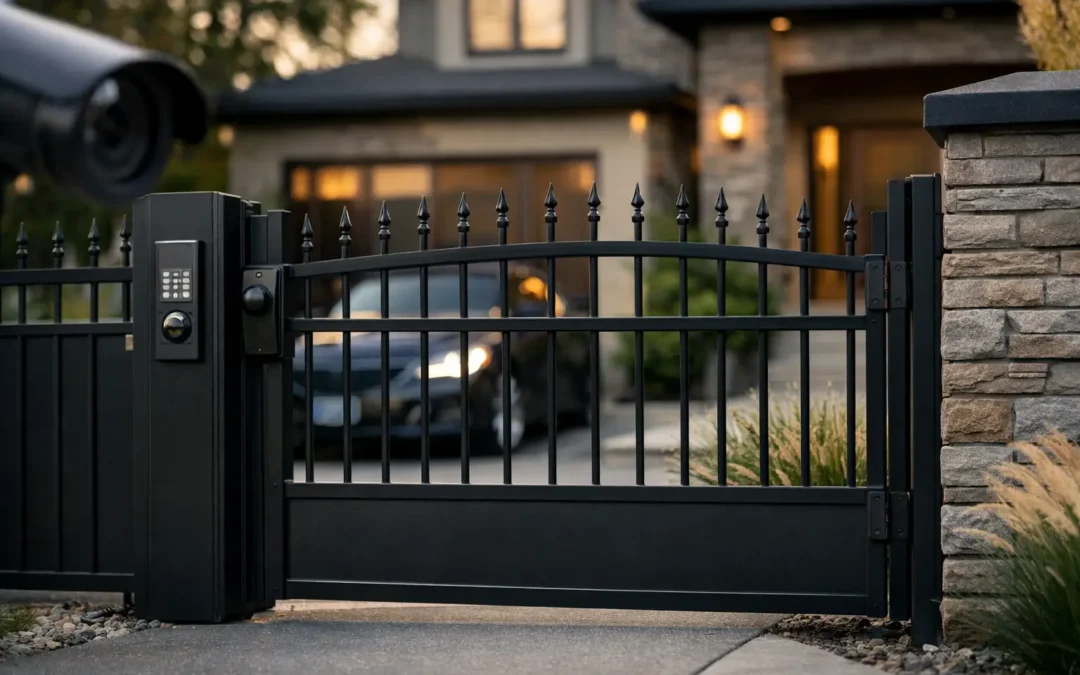
A gate that looks good but leaves gaps, weak points, or easy access is not doing enough. When homeowners ask how custom gates increase security, the answer starts with fit. A gate built for your exact property creates fewer vulnerabilities, gives you more control over entry, and adds a visible layer of protection that standard options often miss.
Security is rarely about one feature alone. It comes from how the gate is designed, what it is made of, how it closes, where it is installed, and how well it works with the rest of the property. That is why custom fabrication matters. It allows the gate to respond to the actual conditions on site instead of forcing your property to adapt to an off-the-shelf product.
Why custom gates increase security more effectively
A custom gate is designed around your layout, grade changes, fencing lines, access points, and daily use. That matters because most weak spots in perimeter security come from mismatch. A gate may be too narrow, too short, too easy to climb, or poorly aligned with the surrounding fence. Even a small gap under the frame can turn into an easy access point for pets, children, or unwanted visitors.
Custom work solves those issues before fabrication begins. Measurements are taken on site, drawings are prepared for the specific opening, and the final gate is built to suit the space rather than approximate it. The result is tighter installation, more reliable performance, and a cleaner finish.
There is also a practical deterrent effect. A well-built metal gate sends a clear signal that the property is maintained, protected, and not easy to access casually. That alone can make a difference. Most intrusions are opportunistic. Visible barriers, especially those that are sturdy and professionally installed, tend to push that attention elsewhere.
Better access control starts at the perimeter
One of the clearest ways custom gates increase security is by controlling who gets in and when. That sounds obvious, but the details make the difference.
A front entry gate may need to balance visibility with privacy. A driveway gate may need to accommodate vehicles, delivery access, and safe operation in all seasons. A side-yard gate may be the most important security point on the property because it closes off direct access to the backyard, basement entry, or rear doors. Each of those needs a different design approach.
With a custom solution, you can choose single or double swing gates, sliding configurations where space is limited, self-closing hardware, keyed locks, magnetic locks, or integrated access systems. For some properties, the right answer is a simple manually latched gate with high-quality hardware. For others, especially larger homes or mixed-use buildings, automation and controlled access provide a stronger layer of protection.
What matters is that the gate matches how the property is actually used. If security features are inconvenient, people bypass them. A gate that is difficult to latch, too heavy to move properly, or poorly placed in the traffic flow often gets left open. Good custom design accounts for daily habits so security remains consistent in real life, not just on paper.
Material strength is only part of the story
People often focus on metal thickness first, and that is fair. Strong materials matter. Steel, wrought iron, and aluminum all bring different advantages depending on the application, exposure, and design goals.
Steel and wrought iron offer excellent rigidity and a strong physical barrier. They are often the right choice when impact resistance and long-term structural stability are priorities. Aluminum can also be a smart security option, particularly when corrosion resistance and lower maintenance are important. The right material depends on the gate size, the surrounding architecture, and the level of use.
But material alone does not make a gate secure. Frame design, weld quality, hinge selection, anchoring method, and latch hardware all matter just as much. A heavy gate with weak posts or poor alignment can sag and fail. A beautiful gate with decorative openings that are too wide can reduce privacy and make climbing easier. This is where experienced fabrication and installation matter. Security comes from the full system, not just the raw material.
Custom design reduces common weak points
Standard gates are built for general dimensions and broad use cases. Properties are not general. They have slopes, retaining walls, uneven paving, existing columns, tight setbacks, and architectural details that affect how a gate performs.
Custom fabrication addresses those conditions directly. If the ground slopes, the gate can be designed to maintain security without dragging or leaving large gaps. If visibility from the street is a concern, infill choices can be adjusted to increase privacy. If the gate needs to connect to masonry, steel posts, or a custom fence line, the attachment points can be engineered accordingly.
That level of coordination is especially important on higher-value homes and commercial properties where appearance and security need to work together. A gate should not look like an afterthought. It should feel integrated with the architecture while still doing the serious job of controlling access.
Privacy and visibility need the right balance
Security is not always about making a property fully hidden. In some cases, complete visual blockage creates its own problems by reducing sightlines to the entry. In other cases, more privacy is exactly what the property needs.
This is one of the biggest advantages of custom work. You can decide how open or closed the design should be. Vertical pickets, laser-cut panels, frosted glass accents, solid metal inserts, and mixed-material designs all change the balance between visibility, light, and privacy.
For a front yard or pedestrian gate, partial visibility may feel more welcoming while still defining the boundary clearly. For a backyard, pool area, or side access route, increased screening may provide better protection. There is no single best answer. The right solution depends on what you want to protect, where the gate sits, and how exposed that area is.
Hardware and closing systems matter more than most people think
The most secure gate in theory can fail in daily use if the hardware is not chosen carefully. Hinges need to support the weight and frequency of use. Latches need to be secure without being frustrating. Closers should return the gate reliably, especially in high-traffic areas.
For families, self-closing and self-latching features can add peace of mind around yards and pool areas. For multi-tenant or commercial properties, controlled entry hardware can help reduce unauthorized access. For driveway gates, operators and safety features need to be matched to the gate weight, swing path, and site conditions.
This is another reason custom planning matters. Hardware should not be selected as an afterthought. It should be part of the design from the beginning so the gate performs well over time.
Professional installation is part of the security value
Even a well-made gate can lose its security benefits if installation is rushed. Posts must be properly set, anchor points must be sound, clearances must be correct, and the gate must move smoothly without binding or drifting out of alignment.
A professional process reduces those risks. Site measurement, clear drawings, client approval, and build coordination all help prevent problems before they show up on installation day. On some projects, engineered review is also an important part of making sure the finished work performs as intended and aligns with code or permit requirements.
That level of discipline is one reason clients choose a full-service partner instead of piecing the job together themselves. With Iron & Glass Designs, the goal is not just to fabricate a gate. It is to deliver a gate that fits the property, supports the design vision, and performs dependably once installed.
Security should also add value to the property
The best custom gates do more than block access. They improve curb appeal, strengthen the architectural character of the property, and make the entry feel intentional. That matters for homeowners planning to stay long term and for investors thinking about resale.
There is a clear difference between a gate that looks added on and one that feels built for the home. Clean lines, quality finishes, and proportionate design can elevate the entire exterior while still serving a practical security purpose. That is the advantage of bespoke metalwork. You do not have to choose between protection and appearance.
Of course, not every property needs the most elaborate solution. Sometimes a simple side gate with strong hardware and precise installation provides the biggest improvement. Sometimes a larger automated driveway gate makes sense. The right answer depends on the property, your priorities, and how you want the space to function every day.
If you are thinking about improving security, start by looking at the access points people overlook most often. A custom gate can close those gaps in a way that feels polished, durable, and built to last – and that is where real peace of mind begins.