
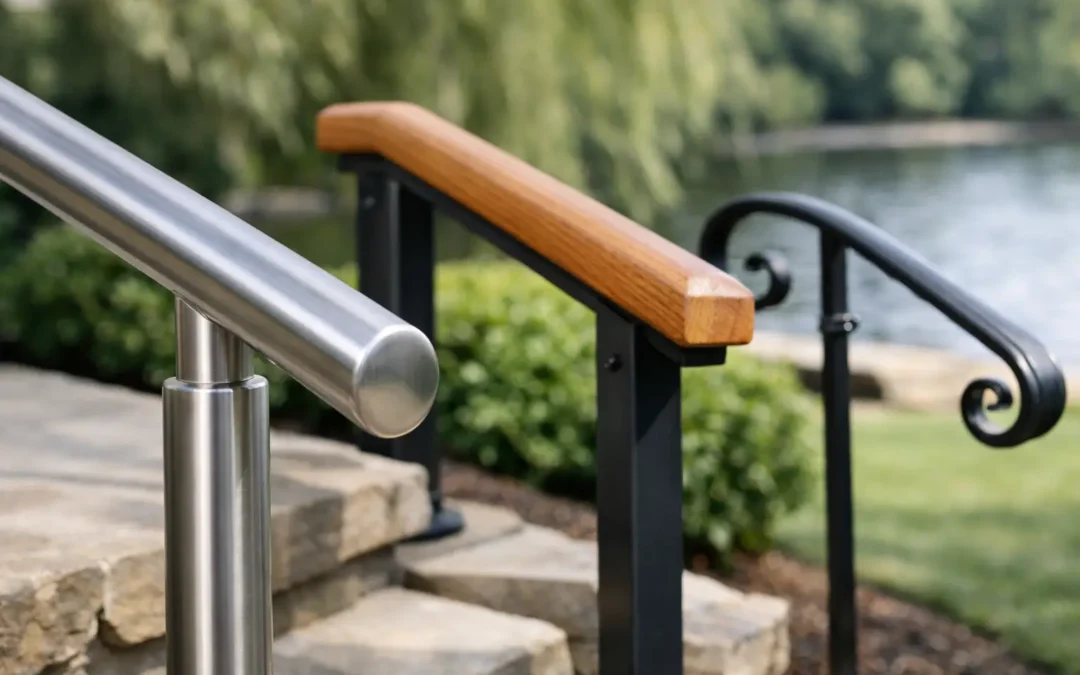
A good-looking outdoor handrail has to do more than finish a stair or frame a porch. It has to stand up to rain, sun, freeze-thaw cycles, daily use, and local code requirements without turning into a maintenance project six months later. That is why choosing the best materials for outdoor handrails is less about trends and more about matching the material to the property, exposure, and design goals.
For some projects, the right answer is a clean, low-maintenance aluminum system. For others, it is stainless steel, custom wrought iron, or a glass-and-metal combination that keeps views open. The best choice depends on how the handrail will be used, how much upkeep you want to take on, and how important custom design is to the final result.
What matters most when choosing outdoor handrail materials
Outdoor railings live in a harsher environment than most homeowners expect. Moisture gets into joints, snow and ice sit on surfaces, UV exposure fades coatings, and temperature swings test every finish and fastener. A material that looks impressive on day one can disappoint quickly if it is not suited to the setting.
Strength is the first filter. Handrails are safety systems, not just architectural accents, so the material has to perform under real load and meet code expectations. Right after that comes corrosion resistance. If a railing will be exposed to frequent rain, pooled water, de-icing salts, or humid air, the material and finish matter just as much as the design.
Appearance also deserves real weight in the decision. A front entry, exterior stair, or balcony railing is highly visible, and it affects how the entire property feels. Some clients want sharp modern lines. Others want a more classic, detailed metal profile. The best material is the one that delivers the look you want without creating maintenance headaches you did not sign up for.
Best materials for outdoor handrails by performance
Aluminum
Aluminum is one of the most practical choices for outdoor handrails, especially for homeowners who want a modern look with very little upkeep. It does not rust like untreated steel, it is lightweight, and powder-coated finishes hold up well when fabricated and installed properly.
For residential stairs, porches, decks, and raised entries, aluminum offers a strong balance of durability, clean design, and cost control. It is especially appealing when you want slim profiles and a contemporary finish in black, bronze, or other architectural colors.
The trade-off is that aluminum does not have the same visual weight or artisanal character as wrought iron or heavier custom steelwork. If your home calls for ornate detailing or a more substantial forged look, aluminum may feel too minimal. But for many exterior projects, it checks the right boxes: durable, attractive, and efficient.
Stainless steel
Stainless steel is a premium option for outdoor handrails when durability and a refined modern appearance are top priorities. It performs very well outdoors and offers excellent resistance to corrosion, particularly when the right grade and finish are selected for the environment.
This material works especially well in contemporary homes, commercial entries, exterior stair systems, and projects that pair metal with glass. Stainless steel has a crisp, engineered look that feels high-end without being flashy. It also tends to age well visually, which matters on highly visible installations.
Its main downside is price. Stainless steel usually costs more than aluminum and can require a more careful fabrication approach. Fingerprints and surface marks may also be more noticeable depending on the finish. Still, for clients who want a premium railing with strong long-term performance, stainless steel is often worth the investment.
Wrought iron and custom steel
When people want character, craftsmanship, and a truly custom result, wrought iron or custom fabricated steel is hard to beat. These materials allow for tailored profiles, decorative details, and a substantial feel that lighter systems cannot fully replicate.
For traditional homes, custom front entries, exterior stairs, gates, and balconies, wrought iron-style railings bring a sense of permanence. They can be simple and modern or more detailed and ornamental, depending on the design direction. This is where collaboration really matters, because the best results come from balancing aesthetics with practical outdoor performance.
The caution with steel-based systems is maintenance. If steel is not properly prepared, coated, and installed, rust can become a problem over time, especially in exposed areas. High-quality finishing and professional installation make a major difference here. This is not the category to cut corners on.
Glass with metal framing
Glass is not usually the first material people think of when discussing the best materials for outdoor handrails, but it is one of the strongest choices for modern properties when preserving views matters. On elevated decks, balconies, terraces, and exterior stairs, glass panels paired with aluminum or stainless steel can create a clean, open look that transforms the space.
The biggest advantage is visual openness. You get safety and wind protection without closing off sightlines. That makes glass especially effective on homes with landscaped yards, ravine lots, waterfront views, or premium outdoor living areas.
Glass does require regular cleaning, and not every property owner wants that. It also needs precise engineering, fabrication, and installation to perform properly outdoors. When done right, though, it delivers a finished look that feels custom, modern, and high value.
Which outdoor handrail material is best for your property?
The right answer depends on where the handrail is going and what you expect from it over time. For a front porch or short run of entry steps, aluminum is often the most efficient option because it looks polished, resists weather well, and keeps maintenance low. For a statement entrance or a home with more traditional architecture, custom steel or wrought iron may better suit the property.
If you are building a balcony or deck where the view is part of the investment, glass with aluminum or stainless steel framing is often the better design move. If the project is commercial or highly exposed to weather and heavy traffic, stainless steel can offer the strongest mix of durability and premium appearance.
This is also where budget should be handled honestly. The lowest upfront price is not always the best value. A material that needs repainting, repair, or replacement earlier than expected can cost more over the life of the project. The smarter approach is to weigh installation quality, finish durability, and maintenance needs from the start.
Design matters as much as material
Material selection is only half the decision. The profile, spacing, finish, connection details, and installation quality all affect how the handrail performs and how polished it looks once installed. A well-designed aluminum railing can look far more premium than a poorly planned stainless system. The same goes for custom ironwork that is beautiful in concept but not protected properly for outdoor exposure.
That is why professional measurement, project-specific drawings, and engineered review matter on exterior railing projects. Outdoor handrails need to look right, feel solid, and align with code. Good design is not guesswork. It is a controlled process that takes the site conditions, the architecture, and the intended use into account before fabrication begins.
For homeowners and property investors, that process reduces risk. It also leads to a better result. When the design is tailored to the actual space, the finished railing looks integrated with the property instead of added on as an afterthought.
The best materials for outdoor handrails are the ones that fit the job
There is no single winner for every project. Aluminum is a standout for low maintenance and clean modern style. Stainless steel offers premium durability and a refined finish. Wrought iron and custom steel bring character and tailored design. Glass creates openness and elevates exterior spaces when views matter.
At Iron & Glass Designs, we see the strongest results when material choice is made alongside layout, finish, and installation planning rather than as a stand-alone product decision. That is how outdoor handrails stay safe, attractive, and durable year after year.
If you are comparing options for an exterior stair, porch, balcony, or deck, start with the conditions the railing will face and the look you want to live with every day. The right material should not just survive outdoors. It should make the whole property feel more finished the moment it is installed.