
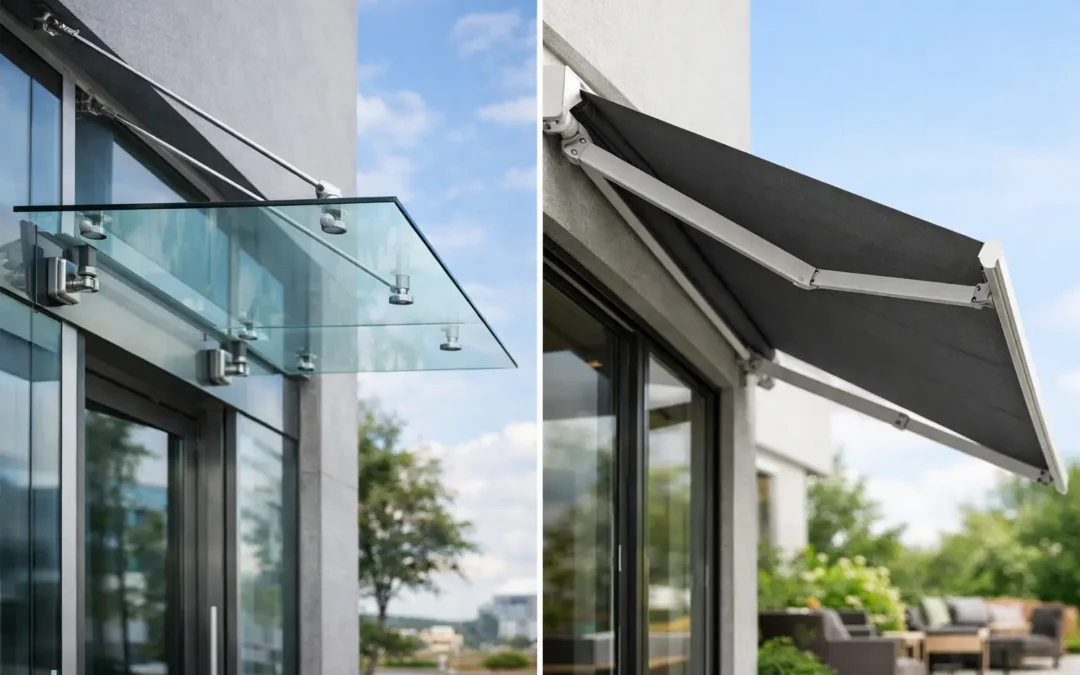
The wrong entry cover can make a finished exterior look like an afterthought. When clients ask about a cantilevered glass canopy vs awning, they are usually weighing more than weather protection. They are deciding how the entrance will look, how long it will last, and whether the final result feels custom or temporary.
For modern homes, multifamily buildings, retail fronts, and office entrances, both options can work. But they do very different jobs visually and structurally. The better choice depends on the architecture, the amount of exposure, the maintenance expectations, and how permanent you want the installation to feel.
Cantilevered glass canopy vs awning: the visual difference
A cantilevered glass canopy gives you a crisp, architectural look. It typically uses tempered or laminated glass supported by engineered metal hardware, with the structure projecting outward without visible posts at the front. The result is light, open, and contemporary. It protects the entrance without making the facade feel heavy.
An awning creates a softer and more conventional profile. It can be fabric, metal, or a framed system with a covering stretched over it. Depending on the style, it can look practical, decorative, or commercial. On some properties that is exactly the right fit. On others, especially homes or buildings with clean lines and a lot of glass, it can feel visually disconnected from the architecture.
This is often the first decision point. If the goal is to preserve sightlines, highlight the front door, and keep the elevation feeling high-end, glass usually wins. If the goal is straightforward shade or budget-conscious coverage, an awning may be the simpler answer.
What each option does best
A cantilevered glass canopy excels when design matters as much as function. It allows daylight through, keeps the entrance bright, and pairs well with metal railings, glass balconies, and modern storefront systems. It tends to look intentional because it is part of the building language rather than an accessory added later.
An awning is often chosen for flexibility and cost control. It can provide broad coverage, block more sun, and work well on traditional facades. In some commercial settings, it also offers branding opportunities or a more familiar streetscape appearance.
Neither option is universally better. A luxury custom home with a minimalist exterior may benefit from a glass canopy that feels integrated and engineered. A café patio, side entrance, or budget-sensitive retrofit may be better served by an awning that delivers quick shelter without extensive structural work.
Durability and long-term performance
Durability is where the cantilevered glass canopy vs awning comparison becomes more practical.
A properly designed glass canopy is built as a permanent exterior feature. With the right glass specification and corrosion-resistant metal supports, it can perform for years with minimal visual aging. It does not fade like fabric, and it does not usually need the kind of periodic replacement that lighter awning systems often require.
That said, glass canopy systems are not casual installs. They need accurate measurements, appropriate anchoring, and engineering that reflects wind load, snow load, and the conditions of the wall or structure they are attached to. Done correctly, they feel solid and dependable. Done poorly, they become a liability.
Awnings vary a lot. A fixed metal awning can be quite durable. A fabric awning is more vulnerable to fading, tearing, mildew, and wear from weather exposure. Retractable systems add convenience, but they also introduce more moving parts, which means more maintenance over time.
For property owners thinking beyond the next season, the maintenance cycle matters. If you want an entrance feature that feels permanent and keeps its appearance with routine cleaning, glass and metal often make more sense.
Maintenance and day-to-day upkeep
A glass canopy is relatively simple to maintain. It needs cleaning, especially in areas with dust, tree debris, or hard water spotting, but the routine is straightforward. Because the material is rigid and non-porous, it does not absorb moisture or lose shape the way fabric can.
The hardware also matters. Stainless steel, aluminum, or properly finished steel components hold up well when they are selected for exterior use. This is why custom fabrication and material quality should not be treated as side details. The best-looking canopy on day one should still look right years later.
An awning may need more regular attention depending on the material. Fabric can collect dirt, trap moisture, and show wear more quickly. Frames can loosen, coverings can sag, and in harsh weather some systems may need seasonal removal or repair. For some owners, that trade-off is acceptable because the upfront investment is lower. For others, it becomes frustrating fast.
Cost: upfront price vs long-term value
In most cases, a cantilevered glass canopy costs more upfront than a standard awning. That is not surprising. You are paying for engineered glass, custom metalwork, precise fabrication, professional installation, and often stamped drawings when the project requires them.
But upfront cost is only one part of value. A glass canopy can elevate the entire front elevation of a home or commercial property. It contributes to curb appeal, reinforces a modern design language, and avoids the replaced-every-few-years cycle that some awning systems fall into.
An awning usually wins on initial affordability. If your main goal is simple weather coverage and you want the quickest path to installation, it can be the right decision. Still, cheaper does not always mean better value. If the awning ends up looking worn, dated, or out of place against the building, the savings can feel short-lived.
For owners planning a higher-end renovation or a lasting exterior upgrade, the stronger investment is often the one that still looks right after the rest of the project is complete.
Design fit matters more than most people expect
The best entry cover is the one that belongs on the building.
A cantilevered glass canopy works especially well on modern custom homes, condos, commercial entrances, and properties using glass railings, black metal, aluminum, or minimalist exterior finishes. It supports a clean design story. It can also make smaller entry areas feel more open because it adds protection without visual bulk.
An awning fits more naturally on traditional homes, hospitality settings, casual retail, and projects where softness or color is part of the design. It can also be useful where sun control matters more than transparency.
This is where professional guidance makes a difference. A product can be high quality and still be the wrong choice if it clashes with the facade. Good design is not just about materials. It is about proportion, attachment points, visibility, and how the feature reads from the street.
Installation complexity and code considerations
A glass canopy usually requires a more disciplined process. Site measurement needs to be exact. Drawings should reflect the specific condition of the wall, projection, and support method. Depending on the scope, engineering review and stamped drawings may be needed to satisfy local requirements and ensure safe installation.
That level of process is not a drawback. It is what gives the final result credibility and performance. For many homeowners and commercial clients, the reassurance matters as much as the finished appearance. Working with a team that handles measurement, drawings, approvals, fabrication, and installation reduces guesswork.
An awning can be simpler to install, but simple should not mean improvised. Even lighter systems need proper attachment, water management, and material selection suited to the environment.
Which one should you choose?
If you want the shortest answer in the cantilevered glass canopy vs awning decision, here it is: choose glass when you want a permanent architectural upgrade, and choose an awning when you want economical shelter with a more conventional look.
Choose a cantilevered glass canopy if your priorities are modern design, natural light, long-term durability, and a custom built-in appearance. It is especially strong for front entries where the cover should enhance the property, not just protect it.
Choose an awning if your priorities are lower upfront cost, more shade, or a style that matches a traditional or casual exterior. It can also make sense for secondary doors, temporary improvement plans, or spaces where branding and fabric options matter.
At Iron & Glass Designs, this is the kind of decision we encourage clients to make with the full picture in view – aesthetics, structure, code, fabrication, and how the finished piece will actually live on the building.
The best exterior upgrades do not call attention to the compromise. They look right, perform well, and make the entrance feel finished the moment you pull into the driveway or walk up to the door.