
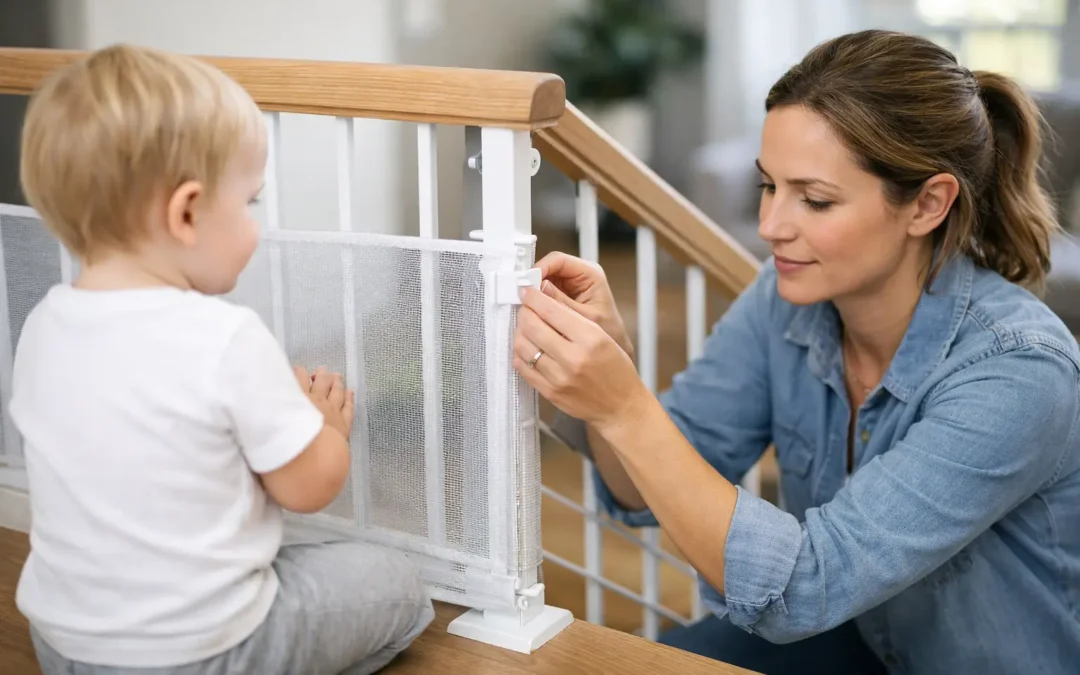
A staircase can look finished, solid, and beautifully built – and still leave a few child-safety problems hiding in plain sight. If you are wondering how to childproof stair railings, the goal is not to cover everything with temporary fixes. It is to identify where a child can slip through, climb up, reach over, or get stuck, then solve those issues in a way that still respects the design of your home.
That balance matters more than most homeowners expect. Parents want safety now, but they also want a railing system that feels clean, durable, and appropriate for the space. In many homes, the best answer is not one product. It is a combination of better spacing, the right infill, secure gates, and a railing design that was built with both code and daily life in mind.
How to childproof stair railings without guesswork
The first step is to stop thinking only about the handrail. What protects a child is the full railing assembly – balusters, panels, bottom gaps, side openings, landing edges, and the gate at the top or bottom of the stair. A railing can meet the eye test and still have climbable horizontal elements, wide spacing between pickets, or a gap near the tread that invites trouble.
Start by looking at the staircase from a child’s height, not an adult’s. Kneel down and check where a toddler could crawl through, wedge a head, or use a decorative element as a foothold. Open-riser stairs, ornamental iron scrollwork, and older wood railings often need extra attention because they were not always designed with small children in mind.
There is also a difference between a temporary childproofing phase and a long-term upgrade. If your child is already mobile and you need immediate protection, short-term add-ons may help. If you are renovating, replacing a railing, or upgrading a stair system, it makes more sense to build safety into the design from the start.
The main hazards to look for
The biggest issue is usually spacing. If the openings between balusters or panels are too wide, a child may fit a body through or get stuck trying. Gaps at the bottom of the railing can be just as risky, especially where the railing meets the stair tread.
Climbability is the next problem. Horizontal rails, decorative bars, and certain geometric patterns can turn a guard into a ladder. A child who would never fit through the railing may still be able to climb over it.
Then there are transitions. The top of the staircase, the bottom newel area, and side openings near a landing often create awkward gaps that standard baby gates do not address well. These are the places where custom solutions tend to outperform off-the-shelf products.
Material matters too. Glass, metal, and wood each behave differently. Glass offers a clean surface with no footholds, but only if it is properly designed and installed. Metal balusters are durable, though some ornamental layouts create climb points. Wood can be safe and attractive, but older assemblies sometimes loosen over time, which is not something you want in a high-traffic family home.
Best ways to childproof stair railings
For many homes, the safest and cleanest solution is to reduce or eliminate openings in the railing system. Full glass panels are one of the strongest options because they remove the pass-through issue and make climbing much harder. They also preserve sightlines, which parents tend to appreciate in open-concept interiors.
If you prefer metal railings, closely spaced vertical balusters are usually the better choice over horizontal members. Vertical lines are harder to climb and can be designed to suit both traditional and modern homes. The spacing has to be planned carefully, and that is where professional measurement and fabrication make a real difference.
For existing railings, temporary mesh guards or clear plastic shields are often used during the toddler years. These can work, but they come with trade-offs. Some look bulky, some collect dust, and some become loose if they are not fastened correctly. They are best treated as short-term solutions rather than permanent upgrades.
Gates are non-negotiable at the top of the stairs and often helpful at the bottom as well. The key is choosing a gate designed for stairs, not a pressure-mounted model in the wrong location. At the top of a staircase, a hardware-mounted gate is typically the safer choice because it is less likely to shift under force.
Choosing the right railing style for child safety
If you are planning a new railing, this is where good design earns its value. A child-safe railing does not need to look heavy or improvised. In fact, some of the most modern systems are also the easiest to childproof because they rely on strong materials, minimal gaps, and clean geometry.
Glass railings work especially well in homes where the priority is both safety and a contemporary look. When fabricated and installed correctly, they create a strong barrier without visual clutter. They also avoid the common problem of climbable intermediate rails. The trade-off is maintenance – fingerprints are real – but many homeowners decide the safety and design payoff is worth it.
Aluminum and steel systems are another strong option, particularly with vertical pickets or panel infill. These materials hold up well over time and can be engineered to suit interior stairs, exterior entries, and elevated landings. The advantage here is flexibility. You can keep a clean architectural look while still controlling spacing and structural performance.
Wrought iron can also be child-safe, but decorative patterns need careful review. What looks elegant in a showroom can create footholds or openings in a family home. If you love that material, the answer is not to avoid it – it is to customize the design so it works for your household.
When temporary fixes are enough – and when they are not
There are situations where a temporary guard attachment makes sense. Maybe you just moved in, your child is beginning to crawl, and a full stair renovation is still months away. In that case, a properly secured barrier wrap or infill panel can buy you time.
But if the railing is loose, badly spaced, climbable by design, or part of a larger stair upgrade, patchwork fixes usually become frustrating. They shift, discolor, interfere with cleaning, and rarely look integrated. More importantly, they may solve one hazard while leaving another one untouched.
This is where homeowners often decide to replace or retrofit the system instead of continuing to adapt it. A professionally built railing can address child safety, code alignment, durability, and appearance in one project. That tends to be the smarter investment when the staircase is a central feature of the home.
How professionals approach childproof stair railings
A well-executed railing project starts with measurement, not assumptions. Every stair has its own dimensions, angles, landing conditions, and wall connections. That is why stair safety is not just about choosing a material. It is about designing a complete assembly that fits the actual site.
A professional process usually includes a site visit, precise field measurements, design drawings, client review, and engineering input where required. That process matters because a child-safe railing still has to be structurally sound, visually balanced, and install correctly. Homeowners are not just buying a barrier. They are investing in a finished system that has to perform every day.
For custom homes, major remodels, and premium interior upgrades, this approach also protects the design intent. You should not have to choose between a staircase that looks refined and one that feels safe for your family. With the right layout and materials, you can have both.
Iron & Glass Designs works with clients who want that kind of result – tailored design, dependable fabrication, and installation that feels complete rather than improvised. That is especially valuable when the railing is a focal point and not just a basic safety feature.
A few mistakes homeowners make
One common mistake is assuming a baby gate solves the whole problem. Gates are essential, but they do not fix wide baluster spacing or climbable rails. Another is choosing a temporary product based only on reviews without checking whether it fits the specific railing profile or stair condition.
Homeowners also underestimate how quickly children change. A solution that works for a crawler may not work for a climber six months later. That is why it helps to think one step ahead rather than only solving the problem you see today.
The other mistake is treating stair safety as separate from the design process. If you are already replacing floors, updating an entry, or remodeling a staircase, that is the right time to rethink the railing itself. It is easier, cleaner, and often more cost-effective than layering fixes onto an outdated system.
A childproof staircase should feel secure without making your home look temporary. When the railing is designed with the right spacing, materials, and installation details, safety becomes part of the architecture – and that is usually the best outcome for everyone in the house.