
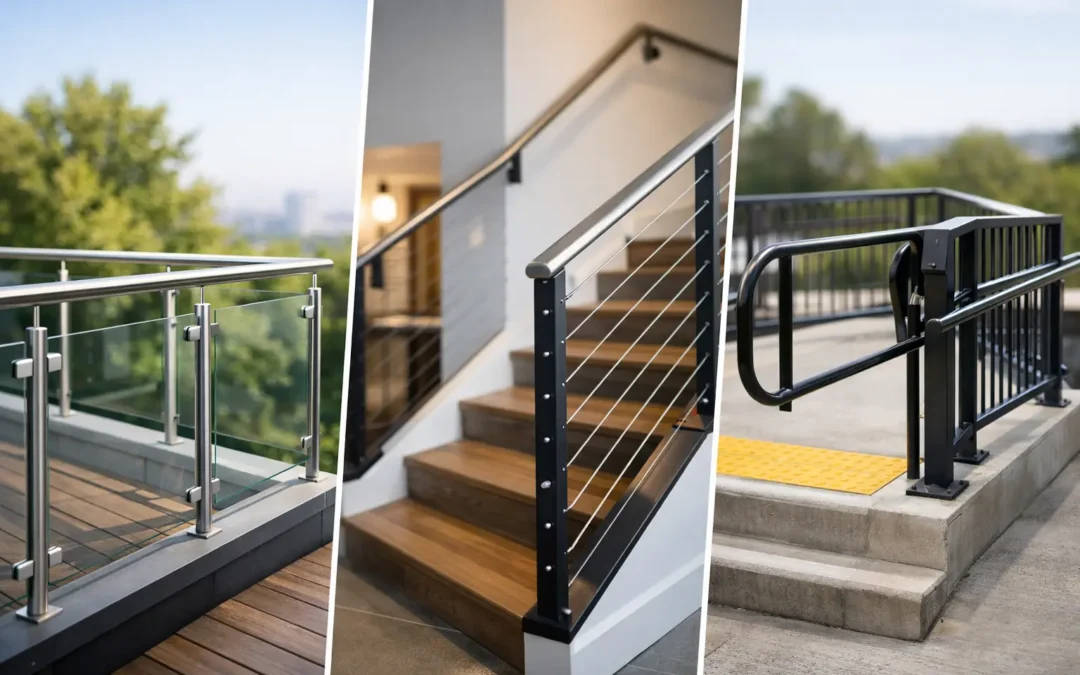
A railing is one of those details people notice immediately, even if they cannot explain why. The right railings make a staircase feel lighter, a balcony feel more finished, and an entryway feel more secure. The wrong choice can make a space look dated, block sightlines, or create avoidable maintenance problems.
For homeowners, builders, and property investors, railings sit at the intersection of design and safety. They are not just decorative trim attached at the end of a project. They shape how a space is used every day, how open it feels, and how confidently people move through it. That is why the best results come from treating railings as part of the architecture, not an afterthought.
Why railings matter more than most people expect
A well-built railing does three jobs at once. It protects people on stairs, balconies, and raised platforms. It supports the overall look of the property. And it helps the finished space feel complete rather than pieced together.
That balance matters because every project has competing priorities. A family renovating a main staircase may want a cleaner, more modern look without making the home feel cold. A landlord may need durable exterior railings that hold up through weather and heavy use. A commercial owner may care most about code compliance, clear drawings, and a smooth installation schedule. In every case, the railing has to perform first, but appearance still matters because it is always in view.
The strongest projects usually start with a simple question: what should this railing do for the space? Once that answer is clear, the right material and layout become much easier to choose.
Choosing railings by material
Material has the biggest influence on look, upkeep, and long-term value. There is no single best option for every property. The better approach is to match the material to the environment, design goals, and level of maintenance the owner is comfortable with.
Glass railings
Glass railings are often the first choice for clients who want a modern, open feel. They preserve views, let in more light, and make staircases, balconies, and decks feel larger. In interiors, they can transform a heavy stair run into a cleaner architectural feature. Outdoors, they are especially popular where there is a yard, pool, or skyline worth keeping visible.
The trade-off is maintenance. Glass shows fingerprints, dust, and water spots more than metal pickets or framed systems. For many owners, that is a fair exchange for the visual payoff. For others, especially in high-traffic family spaces, it is worth thinking carefully about how much day-to-day cleaning is realistic.
Aluminum railings
Aluminum railings are a smart option when durability and low maintenance are top priorities. They resist corrosion well, work beautifully outdoors, and fit contemporary homes especially well. They also offer a cleaner, lighter profile than many older steel systems.
From a budget standpoint, aluminum can be a strong middle ground. It delivers a polished look without some of the maintenance concerns tied to traditional iron. If the goal is a dependable exterior system with straightforward upkeep, aluminum deserves serious consideration.
Stainless steel railings
Stainless steel railings bring a crisp, refined look that works in both residential and commercial settings. They pair well with glass and are often selected for projects that lean modern, minimal, and durable. They also perform well where moisture resistance is important.
That said, stainless steel is not chosen only for utility. It has a distinct visual character. If the home or building already includes warm, traditional finishes, stainless may need to be balanced carefully so the result feels intentional rather than mismatched.
Wrought iron and custom metal railings
Wrought iron and custom metal railings are ideal when the project needs character, detail, or a stronger architectural statement. They can be classic, ornate, slim, modern, or somewhere in between. This is where fabrication quality really shows. A custom metal railing should look deliberate from every angle, with clean welds, solid connections, and proportions that suit the space.
The main advantage here is design freedom. The trade-off is that custom work requires more planning and precision. That is not a drawback when the process is managed well. It simply means drawings, approvals, and fabrication need to be treated seriously from the beginning.
Where railings change a property the most
Some projects benefit from a railing upgrade more than others. Staircases are at the top of that list because they are often central, highly visible, and used constantly. Replacing an outdated stair railing can shift the entire feel of a foyer or open-concept main floor.
Balconies and exterior stairs are another major opportunity. These areas demand durability, but they also have a strong effect on curb appeal. A front entry railing that is clean, properly fitted, and suited to the architecture makes the property feel better cared for immediately.
Bathrooms are often overlooked in this conversation, but glass systems and coordinated metalwork can also elevate shower enclosures and adjacent safety features. When finishes are handled consistently, the result feels custom instead of patched together over time.
Good railing design is about proportion, not just style
A common mistake is choosing a railing based only on a photo. Inspiration matters, but a design that works in one house may not work in another. Ceiling height, stair width, floor plan, natural light, and surrounding finishes all affect what will look right.
Slim profiles and clear glass can make smaller spaces feel more open. Heavier custom metal may suit homes with stronger architectural detailing. Horizontal lines can look sharp in the right context, but they are not always the best match for every setting or every code requirement. This is where professional guidance makes a difference. Good design is not only about taste. It is about proportion, use, and buildability.
The most successful railings feel like they belong to the property. They do not fight the architecture for attention. They sharpen it.
Why process matters as much as product
Many railing problems do not come from the material itself. They come from rushed measurements, vague planning, or installation handled too late in the project. When a railing is custom fabricated, small errors early on can create visible issues later, from awkward transitions to poor alignment.
A disciplined process protects the result. That means site measurement, project-specific drawings, client review, and when required, engineering review and stamping. It also means fabrication that follows approved plans and installation that respects both finish quality and schedule.
For clients, this structure reduces uncertainty. You are not guessing how the final railing will look or hoping it fits properly on installation day. You are moving through a clear sequence designed to catch issues before they become expensive or frustrating.
That is one reason companies like Iron & Glass Designs place so much emphasis on working closely with clients from concept through final installation. Custom railings are not a commodity purchase. They are a built component of the property, and they should be handled with that level of care.
Railings and long-term value
A quality railing adds more than immediate visual appeal. It contributes to daily comfort, stronger safety, and a more finished presentation when it is time to sell or lease the property. Buyers and tenants notice when details feel current, secure, and professionally executed.
There is also value in choosing a system that will age well. Trend-driven choices can sometimes date a property faster than owners expect. Cleaner designs, durable finishes, and material choices suited to the environment usually hold up better over time. That does not mean every railing should be minimal. It means the design should still make sense five or ten years from now.
If budget is part of the discussion, it helps to think beyond initial price alone. A lower-cost railing that needs early replacement, frequent repair, or constant upkeep may not be the better value. The right solution is usually the one that balances appearance, performance, and durability for the way the property is actually used.
What to look for before saying yes
Before moving forward with a railing project, ask whether the design fits the space, whether the material suits the environment, and whether the team can show a clear path from measurement to installation. Those three factors matter more than polished sales language.
You also want confidence that the final product will meet applicable code requirements and be installed with precision. A beautiful railing that feels loose, looks uneven, or creates permit issues is not a successful project. Good craftsmanship should always come with dependable execution.
The best railings do not just fill a gap along a stair or edge. They make the property feel safer, cleaner, and more intentional every single day. If you are planning a renovation or new build, that is a detail worth getting right from the start.
A great railing should feel effortless once it is in place – not because it was simple, but because every decision behind it was handled with care.