
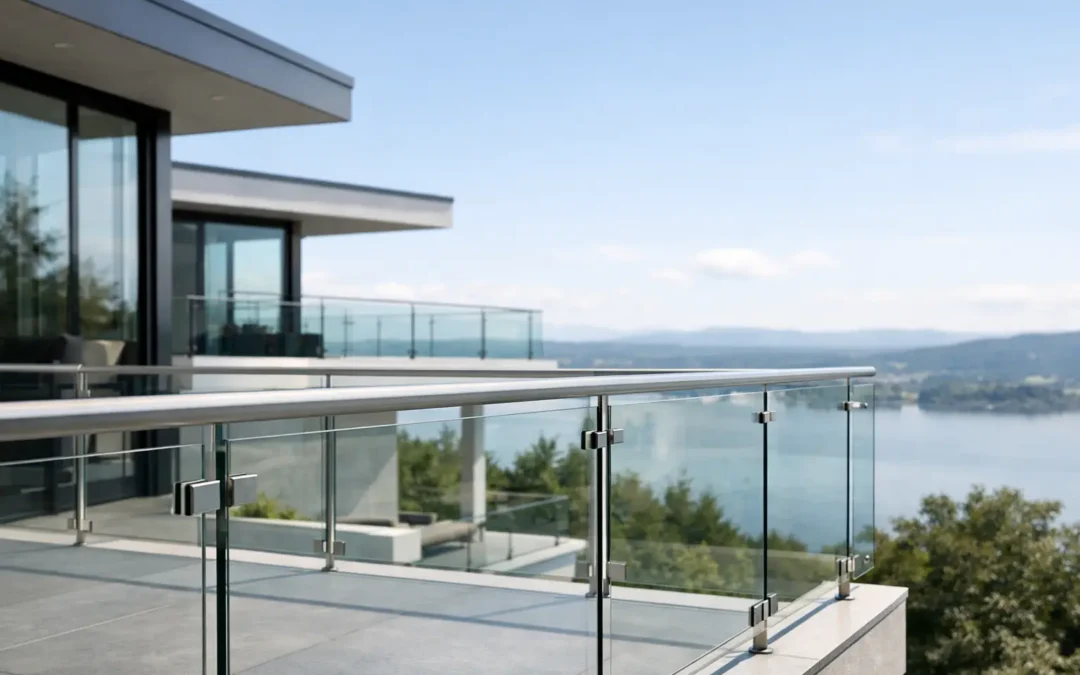
A dark wood stair can feel heavy. A balcony can look smaller than it is. A deck with a great view can lose half its appeal behind bulky pickets. Glass railings solve that problem in a way few other systems can. They open up sightlines, sharpen the architecture, and add a premium finish that feels current without looking trendy.
That visual impact is usually what gets people interested first. What keeps glass railings at the top of the list is the combination of design, safety, and long-term practicality. When they are properly designed, engineered, and installed, they do more than make a space look better. They make it feel brighter, more open, and more intentional.
Why glass railings keep showing up in high-end projects
Modern homes, renovated townhouses, mixed-use buildings, restaurants, and commercial entries all benefit from the same thing – fewer visual barriers. Glass gives you that clean edge without making the railing disappear from a safety standpoint. You still get the protection the space requires, but not the visual weight of traditional balusters.
Inside the home, that matters on staircases and lofts where natural light is limited. A glass system can help daylight move farther through the floor plan, which changes how the whole space reads. Outside, it matters even more. If you have a backyard, ravine, pool area, or city view, there is no reason to block it with a heavy railing system unless the design truly calls for it.
There is also a versatility to glass that people often underestimate. It works with steel, aluminum, and custom metal details. It can lean very minimal or feel more architectural depending on the hardware, top rail, tint, and framing approach. That flexibility makes it a strong fit for both residential and commercial work.
Where glass railings work best
The obvious applications are stairs, balconies, decks, and landings, but the best choice depends on how the space is used.
For interior stairs, glass is often the right move when the goal is to modernize without a full structural rebuild. Replacing dated spindles with glass can transform the character of the staircase quickly. It creates a lighter, cleaner profile and usually makes the surrounding finishes feel more expensive.
For balconies and elevated exterior spaces, the value is in both appearance and visibility. A framed or frameless-style glass railing can define the edge without closing off the experience of being outside. That is especially useful in properties where square footage is limited and every visual inch counts.
For commercial properties, glass can create a polished first impression while still meeting safety requirements. In office interiors, retail environments, and hospitality spaces, it supports a clean professional image. It also pairs well with metal systems when durability and code compliance are central to the project.
Choosing the right type of glass railing
Not every glass railing system is the same, and this is where many projects benefit from working with a specialist early. The best system is not just about appearance. It is about structure, code requirements, maintenance expectations, and how the railing connects to the building.
A framed system uses vertical posts and top rails to support the glass panels. This option tends to be a practical fit when clients want the openness of glass with a bit more visible structure. It can also be a smart choice for exterior applications where site conditions and budget need to stay balanced.
A more minimal system reduces visible hardware and puts more attention on the glass itself. This creates a crisp, upscale finish, especially on interior stairs and premium balconies. The trade-off is that minimal systems often demand more precise planning, stronger substrates, and tighter installation tolerances.
There is also the question of top rails. Some clients want the uninterrupted look of exposed glass. Others prefer a cap rail for comfort, style, or code-related reasons. Neither is automatically better. It depends on the design language of the property and what the local requirements allow.
Design matters, but so does engineering
A railing is a safety system first. That should never get lost in the design conversation.
Glass railings need to be built around the realities of the project: span lengths, mounting conditions, stair geometry, occupancy type, and code requirements. The hardware selection, glass thickness, and attachment details all have to work together. If they do not, the final product may look good in photos and still create headaches during approval, fabrication, or installation.
That is why a disciplined process matters. Accurate site measurement, project-specific drawings, client review, and engineer review are not extras. They are the framework that keeps the project moving in the right direction. For homeowners, that means fewer surprises. For contractors and commercial clients, it means a cleaner path to execution and better confidence in the finished result.
In custom work, details are everything. A quarter inch in the wrong place can affect alignment, reveal gaps, and hardware fit. On stairs, even small inconsistencies become obvious fast. The difference between a railing that feels premium and one that feels improvised usually comes down to planning and fabrication discipline.
What homeowners should know before choosing glass railings
Most people ask about cleaning first, and that is fair. Glass shows fingerprints, dust, and water spots more than many metal systems. But in real use, maintenance is usually manageable, especially with quality glass and a layout that makes the panels easy to reach. For many clients, that upkeep is a worthwhile trade for the open look.
The second concern is durability. Properly fabricated railing glass is designed for this application. It is not the same as standard window glass, and it should never be treated as an afterthought. With the right materials and installation, glass railings are strong, dependable, and well suited to everyday residential and commercial use.
Budget is the third question, and the honest answer is that it depends. Glass generally sits in the premium category, but the cost range can vary significantly based on hardware, framing style, site complexity, and engineering needs. A straight interior run is different from a multi-level exterior stair with custom transitions. What matters is getting a quote based on the actual conditions, not a generic number that ignores the details.
Why installation quality changes everything
Even the best materials can look average if the installation is rushed. With glass, poor alignment stands out immediately. Uneven panel spacing, inconsistent heights, poorly placed anchors, and visible adjustment issues can undermine the entire project.
A strong installation team thinks beyond simply fastening components in place. They consider sightlines, symmetry, edge conditions, and how the railing meets surrounding finishes. They protect other finished surfaces, coordinate with the jobsite schedule, and install with the kind of precision the product demands.
This is especially important in renovation work, where existing conditions are not always perfect. Floors may be out of level. Walls may vary. Exterior substrates may require reinforcement. An experienced fabricator-installer knows how to anticipate those variables before they become delays.
That full-service approach is one reason many clients prefer working with a company that handles the project from measurement through fabrication and final installation. Iron & Glass Designs builds that process around clear approvals, engineered drawings, and dependable delivery so the finished railing looks right and performs the way it should.
Glass railings as a long-term upgrade
Some upgrades are mostly cosmetic. Glass railings are not. They affect how a property looks, how it feels to move through it, and how finished the architecture appears. They can modernize an older home, strengthen the appeal of a new build, and help a commercial property present itself with more confidence.
They also age well when the design is right. A clean glass-and-metal railing does not rely on ornament to make an impression, so it tends to stay relevant longer than trend-driven alternatives. That matters if you are investing with resale in mind, updating a rental property, or building a space meant to hold its value over time.
The best results come from treating the railing as part of the architecture, not a last-minute add-on. When the design, engineering, fabrication, and installation are handled with care, the finished product feels effortless. And that is usually the mark of quality – when something looks simple because every detail was handled properly behind the scenes.
If you are considering glass railings, the right next step is not guessing from photos or price ranges. It is getting the space measured, the conditions reviewed, and the design translated into something buildable. That is where a good idea starts to become a finished result you can trust.