
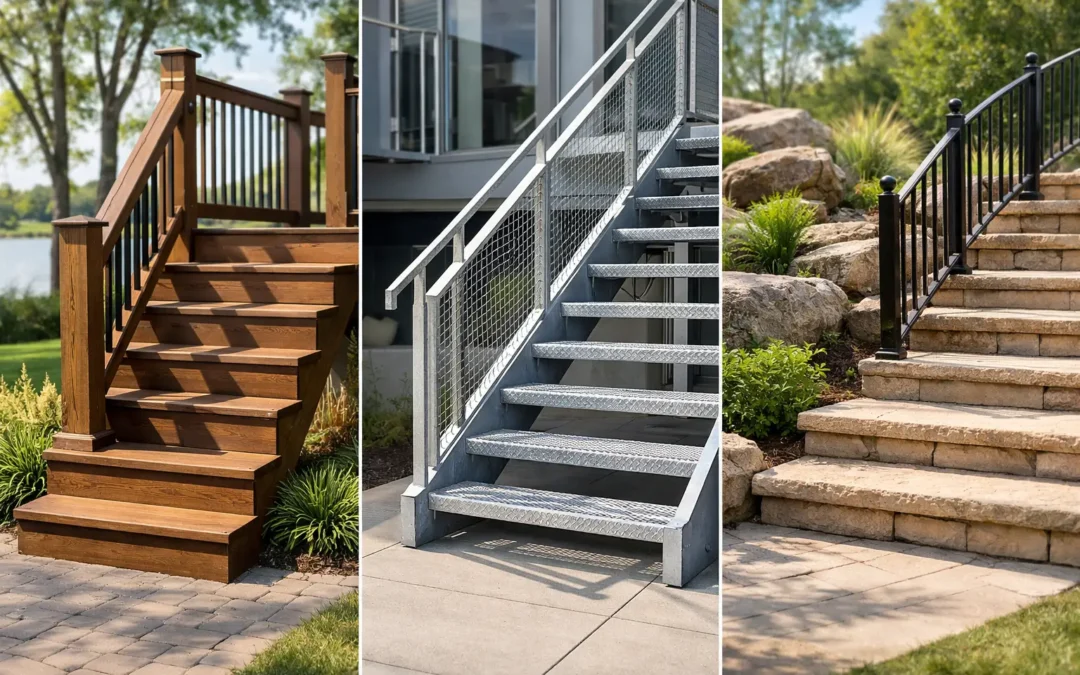
A front entry stair that looks sharp in a rendering can become a headache fast once weather, drainage, and code enter the picture. That is why a solid guide to exterior stair systems starts with more than style. It starts with how the stair will perform through rain, snow, freeze-thaw cycles, daily traffic, and years of use.
For homeowners, builders, and property investors, exterior stairs sit at the intersection of appearance, safety, and structural reliability. They shape first impressions, but they also need to feel stable underfoot, shed water properly, and integrate with railings, landings, balconies, or elevated entrances. When the design, engineering, fabrication, and installation are handled as one coordinated process, the result is cleaner, safer, and far more durable.
What exterior stair systems actually include
When people think about stairs, they often picture only the treads and railings. In practice, exterior stair systems are made up of several connected parts that need to work together. That includes the stringers or structural frame, the treads, risers if the design uses them, landings, guards and handrails, anchoring points, and sometimes integrated drainage details.
The material palette matters just as much as the shape. Metal stair structures are popular because they allow for crisp lines, custom fabrication, and strong long-term performance when properly finished. Aluminum, steel, stainless steel, and wrought iron each serve different priorities. Glass can also be incorporated into railing systems to keep the look open and modern without sacrificing safety.
The right system depends on where the stair is located and what kind of traffic it will carry. A simple set of backyard stairs has a different set of demands than a commercial exterior access stair or a front entrance that defines the entire facade.
A guide to exterior stair systems starts with function
The most successful projects begin with a simple question: what does this stair need to do every day? A secondary access stair can lean more utilitarian. A main entry stair usually needs stronger design presence. A stair connecting a deck, balcony, or terrace may need to solve for views, privacy, and weather exposure all at once.
This is where custom work has a clear advantage. Standard prefabricated options can work in some situations, but they often force awkward compromises in rise, run, landing size, or railing style. A custom approach allows the stair to fit the property instead of forcing the property to fit the stair.
That matters aesthetically, but it also matters structurally. Exterior stairs rarely exist in isolation. They meet foundations, porches, slabs, balconies, and door thresholds. Good planning accounts for all those transition points before fabrication begins.
Choosing materials for appearance and durability
Metal is often the strongest choice for modern exterior stair systems because it can be fabricated precisely and adapted to many architectural styles. Still, not every metal performs the same way in every setting.
Steel offers strength and flexibility in custom fabrication. It is a strong option for many residential and commercial stairs, especially when paired with the right protective finish. The trade-off is maintenance. If steel is not properly coated and detailed for outdoor use, moisture can eventually create corrosion issues.
Aluminum is lighter and naturally more resistant to rust, which makes it appealing for outdoor applications. It works especially well for contemporary railing systems and certain stair assemblies. The trade-off is that aluminum behaves differently structurally than steel, so the design needs to be engineered accordingly.
Stainless steel brings a clean, premium look and strong corrosion resistance. It is an excellent fit for modern projects where finish quality matters. It also tends to come at a higher price point, so it is best used where the design and performance justify the investment.
Glass is not typically the stair structure itself, but it can transform the finished system when used in guards or railings. It opens sightlines and gives exterior stairs a lighter architectural feel. The trade-off is that glass requires precise detailing, quality hardware, and thoughtful maintenance planning to keep it looking its best.
Safety and code are not add-ons
A stair can look impressive and still fail if the proportions are off or the railings are not code-aligned. Rise and run dimensions, handrail height, guard requirements, landing conditions, and load expectations all need to be addressed early. This is especially important for investment properties, commercial sites, and any project that may require permit review.
One of the most common mistakes is treating code as something to check after the design is chosen. In reality, code should shape the design from the start. That does not limit creativity. It simply means the project moves forward with fewer surprises and less rework.
For custom metal stair projects, engineered drawings can make a major difference. They provide clarity for fabrication, support the approval process, and reduce uncertainty for property owners and contractors. A professional workflow that includes site measurement, job-specific drawings, client approval, and engineering review creates a much more dependable path from concept to installation.
Why drainage changes everything outdoors
Exterior stairs fail early when water has nowhere to go. This is one of the biggest differences between indoor and outdoor stair design. Every tread, landing, and connection point needs to account for runoff, snow, and freeze-thaw conditions.
A good-looking stair with poor drainage can become slippery, stain prematurely, or suffer from coating breakdown and structural wear over time. Water can pool at tread surfaces, collect near anchor points, or migrate into adjacent building materials if the details are wrong.
That is why exterior stair design is not only about profile and finish. It is about slope, spacing, material selection, and how each part sheds moisture. In climates with snow and ice, this becomes even more critical. Small decisions in fabrication and installation have an outsized effect on long-term performance.
Design choices that shape the final result
The best exterior stair systems feel integrated with the property, not attached as an afterthought. That comes down to proportion, finish selection, and how the stair relates to nearby elements like balconies, canopies, fences, and entry railings.
Open-riser stairs can create a lighter, more modern look. They also allow snow and debris to pass through more easily in some situations. The trade-off is that they are not ideal for every site or every user group. Families with young children, multi-tenant properties, or commercial settings may be better served by a more enclosed solution depending on the use case and code requirements.
Tread material also changes the feel of the system. Metal treads, concrete infill, and other surface treatments each create a different balance of traction, maintenance, and appearance. A polished design decision on paper still needs to make sense under wet shoes in bad weather.
Railing design deserves equal attention. Clean horizontal or vertical metal railings, stainless steel details, or glass panels can each support a modern look, but they should be selected as part of the whole stair system rather than as a separate package.
Fabrication and installation are where quality shows
Even a strong design can be undermined by poor site measurement or rushed installation. Exterior stair systems need accurate dimensions, reliable anchoring, and a fabrication process that reflects the actual conditions of the property. Minor site variances can have a major visual and structural impact once steel or aluminum is cut and finished.
That is why a measured, professional process matters. A free site visit, precise field measurements, project-specific drawings, client approvals, engineering review where needed, and coordinated installation all reduce risk. They also give clients confidence that the finished stair will look right and perform as promised.
This is especially valuable on custom homes, renovations, and mixed-scope properties where stairs must align with other architectural elements. At that stage, craftsmanship is not only about welding or finishing. It is about control of the whole process.
When custom is worth it
Not every project needs a fully bespoke stair, but many do. If the site has grading challenges, unusual elevations, modern design goals, or strict safety requirements, custom fabrication often becomes the smarter investment. It solves the actual problem instead of masking it.
For homeowners, that can mean a front entrance that adds curb appeal while feeling secure and easy to use. For commercial owners and contractors, it can mean a code-conscious system with engineered documentation and a cleaner installation path. For both, it usually means better fit, better finish, and fewer compromises.
A company like Iron & Glass Designs brings value here because the work does not stop at fabrication. When design, engineering coordination, production, and installation are handled as one disciplined workflow, the end result feels intentional from every angle.
The right exterior stair system should do more than connect one level to another. It should carry weight confidently, hold up to weather, and make the property look finished in a way that still feels practical years later. If you start with performance and build toward design, you usually end up with both.