
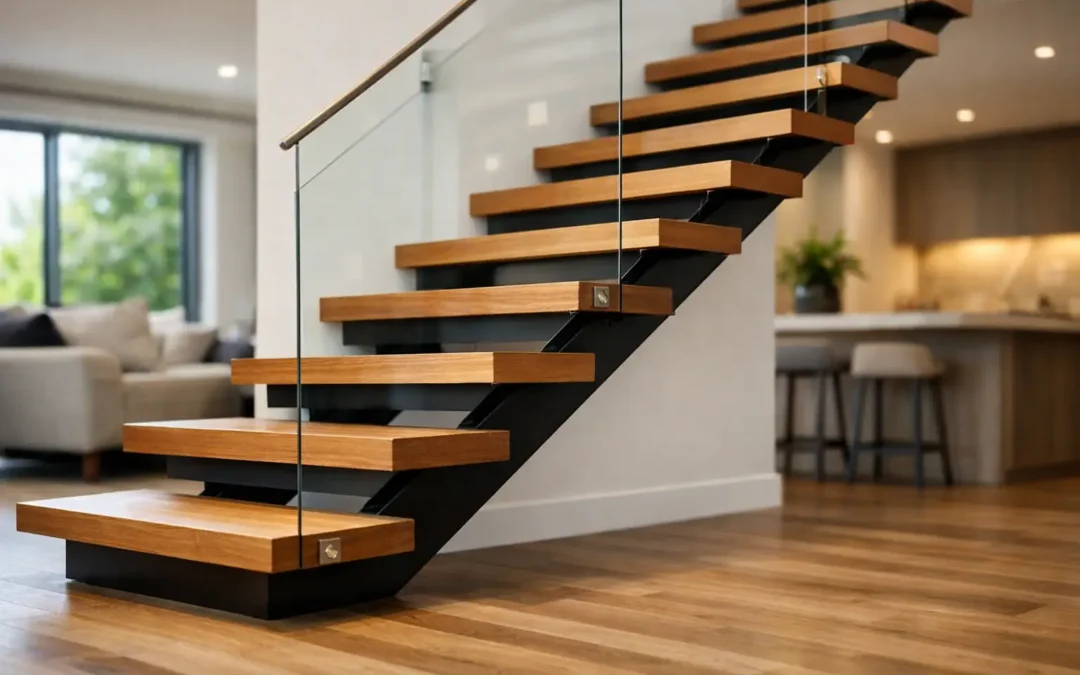
A staircase can either disappear into the background or completely change how a space feels. Custom staircases (monostringers) fall into the second category. They create a clean architectural line, open up sightlines, and give a home or commercial interior a more intentional, modern presence from the moment you walk in.
For property owners planning a renovation or new build, that visual impact is only part of the decision. A monostringer stair has to work structurally, fit the layout precisely, and meet code requirements without losing the design clarity that made it appealing in the first place. That is why this is rarely an off-the-shelf product. It is a custom fabrication project that depends on accurate measurements, engineered drawings, material selection, and professional installation.
What custom staircases (monostringers) actually are
A monostringer staircase is built around a single central structural beam that supports the treads. Instead of using two side stringers, the stair relies on one carefully engineered spine. That changes the look immediately. The stair appears lighter, more open, and less bulky than many traditional systems.
In practical terms, that open profile makes a strong difference in modern interiors. Natural light moves through the stair more easily, nearby finishes remain visible, and the staircase reads more like a design feature than a heavy structural block. When paired with glass railings, metal pickets, or clean wood treads, the result feels tailored rather than standard.
That said, monostringers are not the right answer simply because they look minimal. The geometry has to be precise. Tread spacing, rise, run, landing transitions, anchoring points, and railing integration all matter. A staircase that looks effortless usually comes from a very disciplined process behind the scenes.
Why homeowners and builders choose monostringer stairs
The biggest reason clients ask for monostringers is visual simplicity. If you want an updated interior without making the space feel crowded, a central stringer design does a lot of work. It helps smaller foyers feel less boxed in and gives larger open-concept spaces a stronger architectural focal point.
There is also flexibility in how the stair can be finished. Steel is a common choice for the center stringer because it offers strength and a crisp profile. From there, the treads can be finished in hardwood for warmth, metal for an industrial look, or other custom materials depending on the project. Railings can shift the tone even further. Glass keeps the composition light and contemporary, while metal railings can make the stair feel more sculptural.
For commercial settings, the appeal is similar but the priorities often expand. Owners and contractors may want a staircase that looks refined in a lobby, office, or retail space while still supporting long-term durability and code compliance. In these cases, aesthetics matter, but so does confidence in engineering review, drawings, fabrication accuracy, and a clear installation schedule.
Where custom monostringers work best
Custom staircases monostringers tend to perform best in spaces where openness is part of the design goal. Entryways, living rooms with double-height ceilings, modern basement renovations, and office interiors are common fits. Exterior applications are possible as well, but they need a more careful approach to drainage, coatings, slip resistance, and weather exposure.
The surrounding architecture matters. A monostringer stair can look exceptional in a contemporary home, but it can also work in a more transitional interior if the finishes are chosen thoughtfully. For example, a black steel center stringer with warm oak treads can bridge modern structure and a softer residential feel. The point is not to force a style. It is to design a stair that belongs to the property.
This is where custom work earns its value. The best result is rarely about copying a photo. It is about adapting proportions, materials, and railing details to the actual site conditions and the way the space is used every day.
The trade-offs to understand before you commit
Monostringers have real advantages, but they are not a shortcut. They often require more planning than homeowners expect. Because the stair is visually exposed, inaccuracies stand out. There is less room to hide poor detailing, uneven lines, or awkward transitions.
Budget is another factor. A custom monostringer staircase is a fabricated architectural feature, not a basic framing element. Costs can rise based on span, finish level, tread material, railing style, and installation complexity. If the design includes glass railings, custom landings, or challenging structural conditions, the price will reflect that.
There are also structural and code considerations that depend on the project. The central beam must be engineered for the load it carries. Guard and handrail requirements have to be integrated cleanly. In some layouts, a monostringer may need more coordination with surrounding framing than a more conventional stair system. None of that makes it a bad choice. It simply means the project should be approached professionally from the beginning.
Design details that make the staircase feel custom
The difference between an average monostringer and a strong one usually comes down to detailing. Proportion is the first part of that. The thickness of the stringer, the depth of the treads, and the visual weight of the railing all need to feel balanced. If one element dominates, the stair can lose the clean, floating effect clients usually want.
Material pairing is the next major decision. Steel and glass create a sharp contemporary look. Steel with solid wood treads introduces warmth and contrast. Matte black finishes remain popular because they define the structure without making it look heavy. Stainless steel can work well in select interiors or commercial spaces where a brighter, more polished finish fits the environment.
Railing selection changes the staircase more than many clients expect. Glass railings preserve openness and show off the tread profile. Metal pickets can add rhythm and character. A minimalist handrail can keep the design restrained, while a more pronounced metal detail can make the stair feel like a centerpiece.
Lighting also deserves attention. Because monostringers expose more of the stair structure, integrated lighting under treads or along adjacent walls can enhance both safety and appearance. It is a practical detail that often adds a premium feel without overwhelming the design.
Why process matters as much as design
A custom staircase is not something you want figured out on install day. The strongest projects start with a site visit and precise field measurements. From there, drawings are developed to reflect the actual conditions, not assumptions from a concept sketch. That step is critical because small dimensional errors in staircase fabrication can turn into major problems once steel and glass are on site.
After drawings are prepared, client review matters. This is where layout, finishes, railing style, and overall appearance can be confirmed before production begins. Engineer review and stamping may also be required depending on the scope and jurisdiction. For many homeowners, that part of the process is reassuring. For builders and commercial clients, it is often essential.
Once fabrication starts, craftsmanship takes over. Weld quality, finish consistency, tread alignment, and hardware selection all affect the final result. Then comes installation, which should feel controlled and precise rather than improvised. A staircase like this needs to fit as designed, integrate with surrounding finishes, and meet the approved plans.
That structured workflow is what protects both the look of the project and the client experience. It reduces surprises, supports code alignment, and gives the finished staircase the confidence it should have.
How to know if a monostringer is right for your project
If your goal is a modern, open staircase that feels custom to the space, a monostringer is often worth serious consideration. It is especially strong when the stair will be highly visible and expected to contribute to the overall design of the home or commercial interior.
If your main priority is the lowest possible cost, this may not be the best fit. A simpler stair system may make more sense. But if you value clean lines, premium materials, and a staircase that looks engineered rather than assembled, custom staircases (monostringers) offer a compelling balance of function and visual impact.
For clients who want that balance, working with a team that can measure, design, fabricate, engineer, and install under one process makes a real difference. Iron & Glass Designs approaches these projects with that full-service mindset, so the staircase is not only attractive in a rendering but properly built for the space it will serve.
The right staircase should do more than connect one floor to another. It should make the space feel finished, confident, and distinctly yours.