
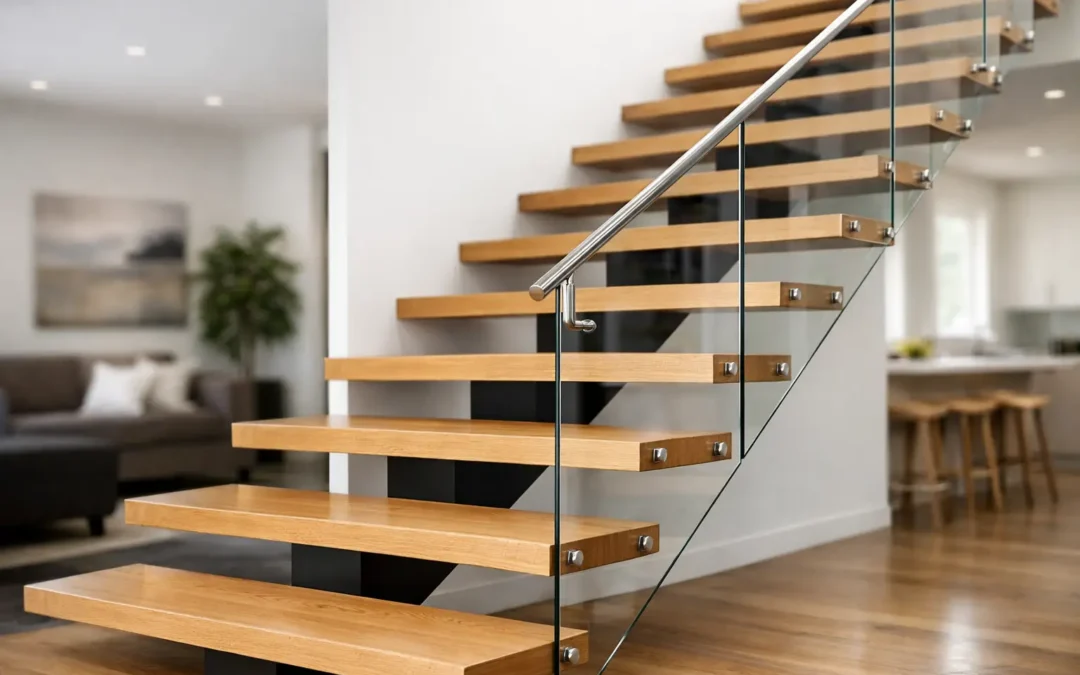
An open-riser staircase can make a room feel larger the moment you walk in. It brings in light, keeps sightlines clean, and gives a home or commercial interior a more architectural look. But the success of that look depends heavily on staircase guardrail design for open risers. If the guardrail feels bulky, underbuilt, or disconnected from the stair itself, the whole feature loses its impact.
That is why guardrail design has to do more than “match the stairs.” It needs to solve three things at once – safety, code alignment, and visual balance. When those pieces are handled together from the start, open-riser stairs feel refined instead of risky.
Why staircase guardrail design for open risers needs extra attention
Open-riser stairs are different from closed staircases because the empty space between treads changes how people perceive safety. Even when the structure is sound, more openness can make users feel exposed, especially in homes with children, older adults, or frequent guests. The guardrail becomes the element that restores confidence.
It also carries more visual weight. On a traditional staircase, risers and stringers already create a strong architectural mass. On an open-riser stair, the railing often becomes one of the main defining features. That means proportion matters more. A rail that is too heavy can overwhelm the staircase, while one that is too minimal can feel unfinished or unsafe.
This is where a custom approach pays off. The right design is not just about picking glass or metal. It is about how the infill, top rail, posts, mounting points, and stair geometry work together.
The best guardrail styles for open-riser stairs
There is no single best railing for every open-riser staircase. The right choice depends on the architecture of the space, the amount of natural light, who will be using the stairs, and how visible the stair is from surrounding rooms.
Glass guardrails
Glass is often the first option clients consider, and for good reason. It preserves the floating effect of open risers better than almost any other material. When designed properly, it keeps the staircase light and modern while still creating a strong safety barrier.
This approach works especially well in homes with contemporary interiors, wide-open layouts, and feature staircases positioned near entryways or double-height spaces. It also helps smaller interiors feel less crowded because the railing does not interrupt the eye.
The trade-off is maintenance and detailing. Glass shows fingerprints, dust, and smudges more easily than powder-coated metal. It also demands careful coordination at the design stage because the mounting method affects the final look. Side-mounted glass, base-shoe systems, and standoff hardware all create a different visual result.
Metal picket systems
Metal guardrails remain one of the most dependable choices for open-riser stairs because they offer a clean look with strong structure and design flexibility. Slim steel or aluminum pickets can feel modern and restrained, especially when paired with a simple rectangular or round top rail.
For many projects, this option strikes the best balance between openness and practicality. It provides more visual definition than glass, requires less day-to-day upkeep, and can be tailored to suit modern, transitional, or more architectural interiors.
The key is spacing, profile size, and finish. Thick ornamental pickets can make an open-riser stair feel dated or too dense. Narrow profiles in black, bronze, or custom finishes usually complement the lighter character of open treads more effectively.
Horizontal and custom infill designs
Horizontal metal lines can create a sleek, linear appearance that suits many modern spaces. They visually widen the staircase and can tie in well with contemporary interior details. In the right setting, they look sharp and intentional.
That said, this is one of those areas where design preference has to be balanced with code and safety considerations. Horizontal elements may not be ideal for every household, especially where children are a concern. Custom laser-cut panels or mixed-material infills can also work beautifully, but they need to be designed with restraint. Too much pattern can compete with the open-riser form instead of supporting it.
What makes a guardrail look right on an open-riser stair
Good design is usually the result of proportion, not decoration. With open-riser stairs, the cleanest solutions often come from controlling just a few important details.
Keep the lines consistent
If the staircase has crisp, modern geometry, the railing should follow that language. Straight runs, disciplined alignments, and well-planned transitions matter more than added ornament. A mismatch between stair design and rail profile is easy to notice.
For example, a slim mono-stringer stair paired with bulky posts can feel visually off-balance. In the same way, a refined glass system can lose its effect if the handrail or mounting hardware looks oversized.
Respect the visual weight of the stair
Open-riser stairs rely on negative space. Every added component changes that balance. Heavier materials are not automatically wrong, but they need to be used intentionally.
A dark steel rail can anchor a bright interior beautifully, while a nearly invisible glass system can make a stair feel like it is floating. The better choice depends on whether you want the staircase to be a quiet architectural element or a more defined focal point.
Think beyond the stair run
The best guardrail design does not stop at the last tread. It continues into upper-floor guards, landings, adjacent balcony areas, and even nearby handrails. When those elements are coordinated, the project feels complete.
This is especially important in custom homes and commercial interiors where stairs are visible from multiple angles. A great open-riser staircase can lose impact if the second-floor guard looks like an afterthought.
Safety and code are part of the design, not a separate step
A lot of people start with inspiration images and only later ask whether the design can actually be built the same way. That usually leads to revisions, delays, or a result that feels compromised. With staircase guardrail design for open risers, code awareness should be built into the concept from the beginning.
Open-riser stairs already involve more scrutiny because spacing, guard height, graspability, and opening limitations matter. The exact requirements depend on the project type and jurisdiction, and that is where professional measurement, drawings, and engineering review make a real difference.
This is not just about passing inspection. It is about avoiding the common problem of falling in love with a design that later needs visible changes to become compliant. A well-developed system looks better because it has already been resolved on paper before fabrication starts.
For homeowners and property investors, that translates into less uncertainty. For contractors and commercial clients, it means fewer surprises during coordination and installation.
Material choices that hold up over time
A staircase gets touched every day, and the guardrail takes the brunt of that contact. Material selection should reflect how the space is used, not just how it looks in a rendering.
Interior applications often allow more flexibility. Powder-coated steel, stainless steel, and tempered glass can all perform well when fabricated and installed properly. In busier settings, durability and maintenance tend to carry more weight. A finish that hides fingerprints, a rail profile that feels solid in the hand, and hardware that stays visually clean over time can make a big difference in long-term satisfaction.
For exterior open-riser stairs, the discussion changes again. Moisture exposure, freeze-thaw conditions, and long-term corrosion resistance need to be considered early. A design that looks exceptional indoors may need different materials or detailing outside.
Why custom drawings matter before fabrication
Open-riser stairs do not leave much room for guesswork. Because the design is so exposed, small alignment issues become obvious fast. That is why a professional workflow matters just as much as the material selection.
A strong process starts with accurate site measurement, then moves into project-specific drawings that show dimensions, connections, and design intent clearly. Once the client reviews and approves the layout, engineering review can confirm that the system is not only attractive but buildable and code-aligned.
That level of planning protects the finish result. It also protects the client from costly changes after production begins. At Iron & Glass Designs, that is a big part of how ideas get materialized with confidence rather than guesswork.
Choosing the right partner for the project
If you are planning an open-riser staircase, the railing contractor should not be brought in only to “add the guard later.” The best outcomes come from working with a team that understands the stair, the surrounding architecture, and the code requirements as one integrated project.
Ask how measurements are handled, whether approval drawings are provided, how engineering is approached, and what installation looks like on site. Look for a company that can talk comfortably about aesthetics and execution in the same conversation. That is usually the difference between a railing that simply fills the opening and one that completes the staircase.
A well-designed guardrail should make an open-riser stair feel effortless to use and impressive to see. When the details are resolved properly, you stop noticing the safety barrier and start noticing the quality of the whole space.