
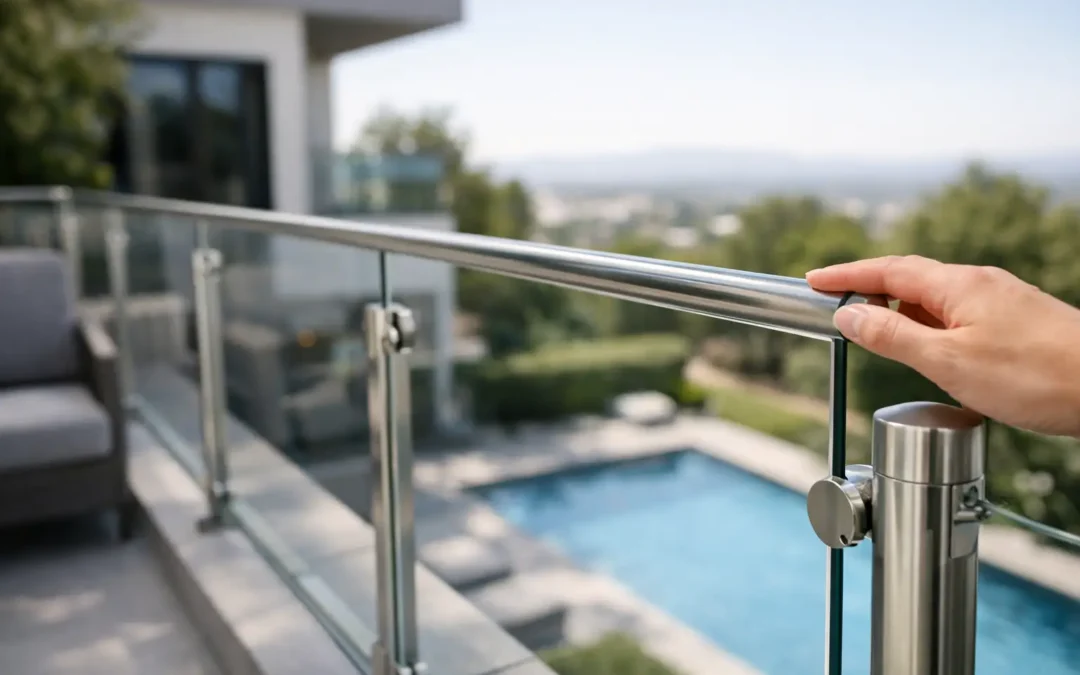
A glass railing can make a stair, balcony, or landing feel lighter and more open, but the clean look only works when the system is built around tempered glass railing safety standards from the start. This is where many projects go sideways. People focus on the visual finish, then realize too late that glass thickness, panel sizing, top rail requirements, and hardware selection are not design details alone – they are safety decisions.
For homeowners and property owners, that distinction matters. A railing is not decorative trim. It is a life-safety component, and the expectations are different for an interior stair than for a second-floor balcony or a commercial walkway. The right system balances modern design, structural performance, and code compliance without forcing you to compromise the look you wanted in the first place.
What tempered glass railing safety standards actually cover
When people hear the word tempered, they often assume that means the glass is automatically suitable for any railing. It does not. Tempered glass is heat-treated to increase strength and change how it breaks, but safety standards for railing systems go far beyond the type of glass alone.
A compliant railing system typically has to address guard height, load resistance, impact behavior, opening limitations, edge protection, attachment methods, and the way the glass interacts with the supporting structure. In other words, the standard applies to the whole assembly, not just the panel.
That is why two systems can both use tempered glass and still perform very differently. One may be engineered correctly for the span, exposure, and occupancy. The other may look similar in photos and still fall short where it counts.
Why tempered glass is used in railings
Tempered glass is popular for a reason. It is stronger than standard annealed glass, and if it breaks, it is designed to fracture into small pieces rather than large dangerous shards. That break pattern is one of the reasons it is widely used in safety glazing applications.
Still, stronger does not mean failproof. Glass can break from impact, edge damage, improper installation, or stress caused by poor hardware alignment. Exterior conditions add another layer. Wind, freeze-thaw cycles, movement in the framing, and long-term wear all affect performance.
For that reason, glass selection should never be separated from engineering and installation. A premium finish means very little if the panel has been underspecified for the opening or clamped in a way that creates stress points over time.
Tempered glass railing safety standards and laminated options
One of the most important conversations in any glass railing project is whether tempered glass alone is acceptable or whether laminated glass is the better choice. The answer depends on the system design, the location, and the governing code requirements.
Tempered glass on its own can be used in some railing applications, especially where the system includes additional framing or a cap rail that helps retain the panel and maintain the barrier. In other situations, laminated tempered glass is preferred or required because it offers post-breakage retention. If one lite breaks, the interlayer can help hold the assembly together instead of leaving an opening.
This is especially relevant in elevated applications where the glass itself forms the primary guard. A frameless balcony guard has different safety implications than a framed interior partition-style railing. That is why responsible fabricators do not treat every glass railing detail as interchangeable.
The role of code, engineering, and local approval
Safety standards for glass railings are shaped by model codes, testing standards, and local enforcement. That means there is rarely a one-size-fits-all answer you can pull from a generic online diagram. What passes in one jurisdiction or one building type may need revision in another.
For residential projects, the code path may be more straightforward, but it still requires careful review. Stair geometry, landing conditions, guard height, and top rail continuity all come into play. For commercial projects, the loading requirements are often more demanding, and the review process can be stricter.
This is where engineered drawings matter. A proper workflow includes field measurement, project-specific shop drawings, client approval, and engineering review before fabrication begins. That process protects the design intent and reduces the risk of expensive changes after production. More importantly, it helps ensure the railing is being built for the actual site conditions rather than a rough assumption.
Common design details that affect safety
The most common mistake in glass railing projects is assuming the hardware can solve everything. Hardware matters, but it cannot compensate for poor planning. Panel dimensions, glass thickness, edge clearances, anchor locations, and substrate quality all influence whether the system performs as intended.
Take a base shoe system as an example. It can create a refined, minimal look with very little visible metal, but it places serious importance on anchorage and alignment. If the supporting structure is weak or uneven, the cleanest-looking detail can become the riskiest.
Standoff-mounted systems create another set of considerations. They can look dramatic on open stairs and balconies, but the point loads at the attachment locations need to be engineered correctly. Glass holes, fastener placement, and edge distances are not cosmetic choices.
Even top rails involve trade-offs. Some clients prefer a completely frameless appearance with no cap rail at all. Depending on the application, that may be possible. In others, a top rail improves code compliance, user comfort, and post-breakage behavior. A good design conversation is not just about what looks best on day one. It is about what performs reliably for years.
Interior vs. exterior safety considerations
Interior glass railings and exterior glass railings may share a similar look, but they operate in very different conditions. Interior systems are generally protected from weather, UV exposure, and temperature swings. Exterior systems must handle all of that while continuing to resist lateral loads and maintain secure connections.
On an exterior balcony or deck, water management becomes part of safety. If moisture reaches anchors or supporting steel and corrosion develops, the long-term integrity of the system can be affected. In colder climates, expansion, contraction, and ice also deserve attention. That is why material selection and detailing are every bit as important as the glass itself.
For homeowners, this often comes down to expectations. A sleek exterior railing should still feel solid when leaned on, remain clear and stable over time, and require realistic maintenance. The best result is not the one with the fewest visible components. It is the one that gives you the modern look you want without creating hidden vulnerabilities.
What to ask before approving a glass railing system
If you are comparing proposals, ask how the system is being engineered for your specific opening. Ask whether tempered glass alone is being used or if the design calls for laminated tempered glass. Ask what substrate the railing attaches to and whether the support conditions have been verified.
You should also ask who is responsible for measurements, drawings, fabrication, and installation. Those handoffs matter. A beautiful rendering means very little if the field dimensions are off or the installation team is forced to make adjustments that were never part of the engineering.
The best projects feel controlled from the beginning. There is a site visit, a clear design direction, accurate drawings, engineering review where required, disciplined fabrication, and on-time installation. That is how safety and aesthetics stay aligned.
Why installation quality is part of the standard
Even a well-designed system can underperform if it is installed poorly. Glass railings do not hide mistakes well. Slight misalignment, improper shimming, overtightened hardware, or unsupported edges can create stress that shortens the life of the installation or causes immediate safety concerns.
This is one reason experienced installers matter so much in custom work. Every site has its own conditions. Floors are not always perfectly level. Stair stringers vary. Existing framing may need reinforcement. A professional team knows how to spot those issues before they become expensive problems.
At Iron & Glass Designs, that craftsmanship-led approach is part of the value. The goal is not simply to install a railing that looks sharp in a finished photo. It is to deliver a system that has been measured carefully, reviewed properly, fabricated precisely, and installed with the confidence that comes from doing the work right.
Safety and style should never compete
The good news is that meeting tempered glass railing safety standards does not mean settling for a bulky or outdated result. In most cases, the strongest projects are the ones where compliance is built into the design early. That gives you more freedom to refine the sightlines, hardware finish, and overall appearance without scrambling to fix structural issues later.
If you are planning a new railing, the smartest move is to treat safety standards as a design tool rather than a restriction. When the glass, hardware, engineering, and installation all work together, the final result feels exactly the way it should – clean, secure, and built to last.