
Fingerprints show up first. Then water spots. Then, if the railing is outdoors, you start noticing pollen, road dust, and a dull film that takes away the clean, open look you paid for. A good glass railing cleaning and maintenance guide is not about making glass perfect every day. It is about protecting clarity, preserving hardware, and keeping the whole system looking well cared for without using the wrong products or habits.
Glass railings are popular for a reason. They keep views open, make staircases and balconies feel larger, and bring a modern finish to both residential and commercial spaces. But unlike painted pickets or heavier metal infill, glass shows neglect quickly. The upside is that regular upkeep is straightforward when you know what to clean, what to avoid, and when a small issue deserves professional attention.
Why glass railing maintenance matters
Most owners focus on the glass itself, which makes sense because that is what people see first. But the performance of a railing depends on more than clear panels. Posts, clamps, base shoes, top rails, anchors, seals, and fasteners all work together. If grime builds up around hardware, moisture can sit longer than it should. If abrasive tools scratch the glass, the damage is hard to hide. If loose components are ignored, the railing may still look fine while gradually losing the crisp, solid feel it had after installation.
Routine care protects both appearance and long-term value. It also helps you catch early signs of wear before they become a larger repair. That matters even more for exterior railings, where weather, salt, and freeze-thaw cycles put more stress on finishes and connections.
The right way to clean glass railings
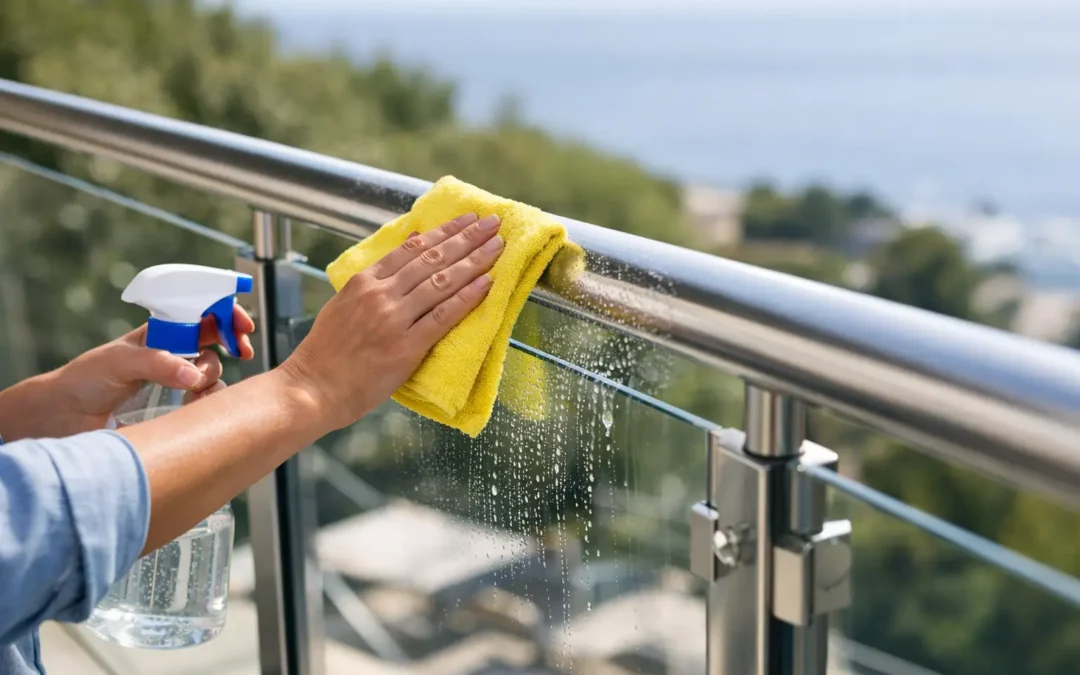
For most interior and exterior railings, simple cleaning is best. Start with water and a mild soap or a non-abrasive glass cleaner. Apply it with a soft microfiber cloth or a clean sponge, then wipe dry with a second microfiber cloth or a squeegee. That basic process handles most day-to-day buildup without putting unnecessary wear on the surface.
If the railing is outdoors, rinse first when possible. Dust and grit can act like sandpaper if you scrub them across the glass. A quick rinse removes loose debris and makes the actual cleaning safer and easier. On balcony railings and stair guards near landscaping, this step matters more than most people realize.
Drying is not just for appearance. It helps prevent water spotting, especially in areas with hard water. If your railing gets direct sun for part of the day, clean it earlier or later when the glass is cooler. Cleaner dries too fast on hot glass and tends to leave streaks behind.
Glass railing cleaning and maintenance guide: what to avoid
The fastest way to shorten the life of a beautiful railing is using aggressive products because the dirt looks stubborn. Avoid steel wool, scouring pads, razor blades, highly abrasive powders, and harsh chemical cleaners not intended for architectural glass or finished metal. These can scratch the glass, damage protective coatings, or dull nearby hardware.
Be careful with products that contain ammonia or strong solvents if your railing includes coated metal components, painted finishes, gaskets, or sealants. One product may be safe for the glass and too harsh for the rest of the assembly. That is why a mild cleaner is usually the better choice.
Pressure washing also deserves caution. It can seem efficient for exterior railings, but high pressure can force water into joints, disturb seals, and wear down finishes over time. A gentle rinse is safer than concentrated force close to hardware and edges.
How often should you clean a glass railing?
It depends on where the railing is installed and how much exposure it gets. Interior glass railings usually need light cleaning every one to two weeks in active households, especially on staircases where hand contact, dust, and fingerprints build up fast. Exterior railings often benefit from a more regular rinse and a more thorough cleaning every two to four weeks, particularly during pollen season or after storms.
Some properties need more attention. A balcony near a busy road will collect more film than a sheltered interior stair. A pool enclosure or deck railing may show mineral spotting faster because of water splash. Homes near winter road salt or commercial buildings with heavy foot traffic should expect a more proactive maintenance rhythm.
The goal is consistency, not over-cleaning. Frequent gentle care is better than letting buildup harden and then attacking it with stronger methods.
Caring for the metal components
The glass may be the visual focal point, but hardware carries the load and completes the design. Stainless steel, aluminum, and other architectural metals still need periodic cleaning to maintain their finish and resist corrosion. Wipe posts, top rails, clamps, and base channels with a soft cloth and mild soap solution, then dry them fully.
Pay attention to corners, fastener heads, and connection points where dirt and moisture collect. If you see tea staining, discoloration, or surface residue on stainless components, do not assume the metal is failing. In many cases, it is a maintenance issue rather than a structural one. Still, it should be addressed early so the finish stays sharp.
For powder-coated or painted metal, avoid abrasive pads and harsh cleaners that can wear the coating. Once that finish is damaged, the railing can lose its clean, premium appearance long before the structure itself has a problem.
Seasonal checks that help prevent bigger issues
A well-built railing should feel solid and look aligned. Seasonal inspections help keep it that way. As you clean, look for movement, rattling, loose fasteners, cloudy sealant, chips at panel edges, or signs that water is sitting where it should be draining away.
Exterior systems deserve a closer look after winter and after periods of heavy rain or wind. Freeze-thaw cycles can be hard on exposed assemblies, especially around stairs, balconies, and rooftop edges. Interior railings usually face less environmental stress, but they can still loosen over time in busy family spaces or commercial settings.
This is also the right time to check surrounding materials. Stone, tile, concrete, and wood can all affect how a railing performs. If adjacent surfaces shift, crack, or retain moisture, the railing may need attention even if the glass still looks spotless.
When cleaning is not enough
There is a difference between dirt and damage. Water spots, fingerprints, and environmental film are maintenance issues. Scratches, edge chips, persistent cloudiness between laminated layers, loose hardware, or visible movement are not problems to solve with better cleaner.
If the railing no longer feels as firm as it should, have it inspected. The same goes for cracked gaskets, corroded fasteners, or recurring staining around base connections. A premium railing system is designed for durability, but every installed assembly benefits from professional review when signs of wear move beyond the surface.
For owners planning a new installation, this is where quality fabrication and installation make a real difference. A railing that is measured correctly, engineered when needed, and installed with attention to drainage, alignment, and code requirements is simply easier to maintain over time. That is part of the value of working with a team that treats design and build quality as one package, the way Iron & Glass Designs does.
A practical maintenance routine that works
The best routine is one you will actually keep. Wipe interior glass as needed, rinse and clean exterior panels on a regular schedule, dry surfaces to reduce spotting, and inspect hardware every season. If you live in an area with salt exposure, heavy rainfall, or frequent freeze-thaw conditions, tighten that schedule a bit.
Keep your methods gentle and your observations sharp. Most glass railing systems do not need complicated care. They need consistency, the right products, and a quick response when something looks off.
A glass railing should continue doing what it was designed to do – open the space, protect the edge, and elevate the finish of the property. When it is cleaned properly and maintained with care, it keeps delivering that result year after year.