
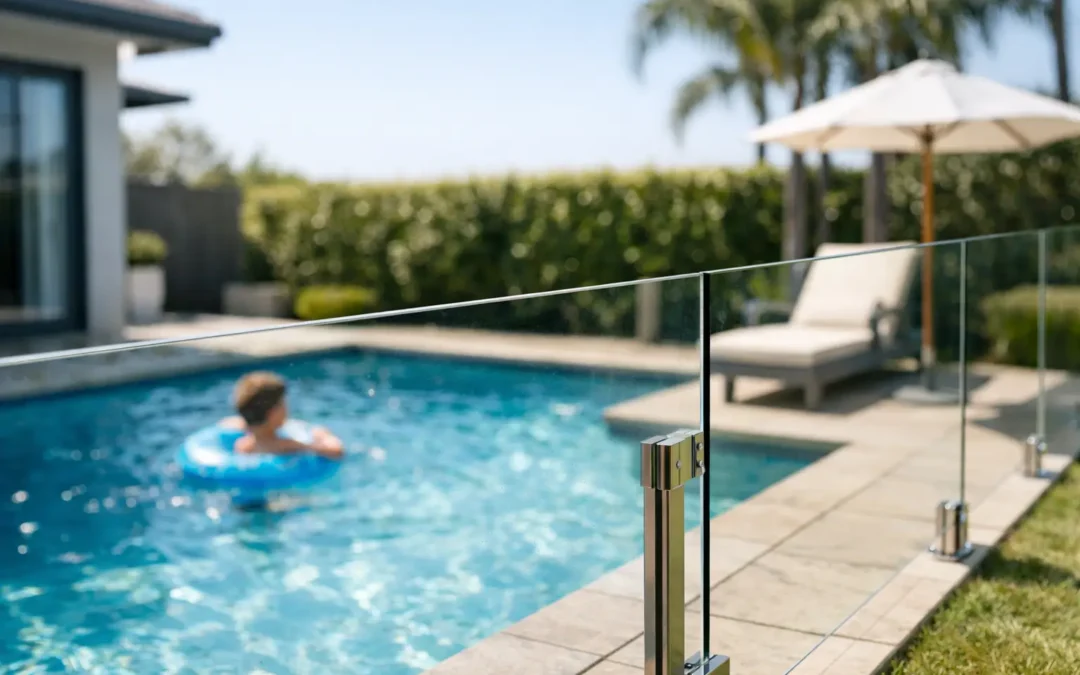
A pool barrier should do two jobs at once – protect people and preserve the space you invested in. That is exactly why glass railing for pool safety has become a leading choice for homeowners who want strong protection without closing off the view. Around a pool, visibility matters. You want a barrier that clearly defines the perimeter, helps supervise children, and still keeps the area open, bright, and high end.
For many properties, glass does what traditional fencing cannot. It creates a secure boundary without the visual weight of pickets, bars, or solid panels. From a design perspective, that means the pool remains the focal point. From a safety perspective, it means clearer sightlines across the deck, which can make day-to-day supervision easier. The best result, though, comes from more than the material itself. It comes from good planning, accurate measurements, code-aware design, and professional installation.
Why homeowners choose glass railing for pool safety
Most pool owners are balancing three priorities at the same time: safety, appearance, and long-term value. Glass speaks to all three when it is designed correctly.
The first advantage is visibility. A transparent barrier allows parents, grandparents, and guests to see activity around the pool from multiple angles. That does not replace active supervision, of course, but it removes a common problem created by more opaque or visually busy fencing. If you can see the water and the surrounding deck more clearly, you are better positioned to respond quickly.
The second advantage is the look. A pool area is often one of the most expensive and visually important parts of an outdoor property. Heavy fencing can make the space feel smaller. Glass keeps the lines clean and modern, which tends to work especially well with contemporary homes, landscaped backyards, and upscale renovation projects.
The third advantage is resale appeal. Buyers often respond well to details that feel premium and practical at the same time. A properly installed glass pool barrier signals both. It suggests that the property owner cared about safety, invested in durable materials, and made design decisions that elevate the home rather than simply checking a box.
Safety is not just about the panel
A lot of homeowners start by asking whether glass is strong enough. The better question is whether the full system is designed for the demands of a pool environment.
Tempered safety glass is engineered to perform far differently than standard household glass. When paired with properly selected hardware and installed to specification, it creates a durable barrier suitable for exterior use. But the panel alone is only one part of the equation. Post spacing, anchoring, gate hardware, latch placement, self-closing function, and the relationship between the barrier and surrounding grade all matter.
That is where many projects separate into two categories: systems that look good in a photo, and systems that actually perform on site. Around a pool, small oversights can create real problems. A gap that is too wide, a gate that does not close consistently, or hardware not suited for moisture exposure can undermine the purpose of the barrier. This is why experienced fabrication and installation matter so much.
What to look for in a pool glass railing system
Not every glass railing system is right for every property. Some homes benefit from framed or posted systems, while others are better suited to more minimal hardware configurations. The right answer depends on layout, design goals, code requirements, and budget.
If your main goal is an uninterrupted view, larger glass panels with minimal framing may be the preferred direction. If your site conditions are more complex, a system with visible posts can sometimes offer practical advantages in layout and installation. Neither is automatically better. It depends on the project.
Hardware selection matters just as much as the glass. Pool areas are wet, high-traffic environments, and materials need to hold up accordingly. Corrosion resistance, fastening method, and the durability of hinges and latches should all be considered early. A system should feel solid, operate reliably, and continue to perform through seasonal weather changes and regular use.
Code compliance and design need to work together
Pool barriers are not decorative add-ons. They are life-safety elements, and that means code compliance is central to the project from the start.
Requirements vary by jurisdiction, so there is no single rule that applies everywhere. Height, gate swing, self-closing and self-latching hardware, allowable gaps, and clearance from adjacent surfaces can all affect the final design. In some cases, engineered drawings and review are also part of a responsible project workflow, especially when permits or site-specific approvals are involved.
This is one of the biggest reasons homeowners benefit from working with a full-service team. When the company handling the project can measure on site, prepare job-specific drawings, coordinate approvals, and build with installation in mind, the process becomes much more controlled. You are not left trying to piece together design intent, code interpretation, and installation logistics from multiple sources.
For clients who want peace of mind, that structure matters. A beautiful barrier is only valuable if it is also correctly designed for the property and installed to perform as intended.
The design trade-offs are real
Glass offers major visual benefits, but it is still worth understanding the practical trade-offs.
One is maintenance. Glass shows water spots, fingerprints, and splash marks more readily than many metal fence styles. Around a pool, that means routine cleaning should be expected if you want the barrier to keep its crisp, polished appearance. For many homeowners, that is a worthwhile exchange for the open look. But it is still an honest consideration.
Another factor is cost. A custom glass railing system is generally a premium solution compared with basic fencing options. The value is in the finished appearance, the material quality, the custom fit, and the overall property impact. If budget is the only priority, there may be simpler ways to create a code-compliant enclosure. If the goal is to combine safety with a refined architectural result, glass is often the stronger investment.
Privacy can also be a factor. Some homeowners want complete visibility into the pool area, while others prefer a bit more screening from neighbors. In those cases, a mixed-material solution or strategic landscape planning may create a better balance. Good design is not about forcing one material everywhere. It is about choosing the right system for how the space will actually be used.
Why custom fabrication changes the outcome
Pool areas rarely follow perfect dimensions. Slopes, existing concrete conditions, stairs, retaining edges, and landscaping features all affect layout. That is why off-the-shelf thinking can fall short.
A custom approach allows the railing system to respond to the property instead of forcing the property to adapt to the product. Accurate field measurements, detailed drawings, and client review all help reduce surprises before fabrication begins. When engineering review is part of the process, that adds another layer of confidence that the final build is aligned with performance and code expectations.
This is also where craftsmanship becomes visible. Clean panel alignment, precise hardware placement, smooth gate operation, and a balanced overall layout make the difference between a project that looks expensive and one that truly is well executed. Homeowners notice it. So do guests, buyers, and contractors.
At Iron & Glass Designs, that kind of disciplined process is part of what gives clients confidence from concept to installation. The goal is not just to install a barrier, but to deliver a finished result that feels considered, secure, and built to last.
Installation is where safety becomes real
Even the best product can be compromised by poor installation. Around pools, exactness matters.
Anchoring must suit the substrate. Panel spacing must be consistent. Gates must be adjusted to close and latch reliably. The finished system should feel stable, look intentional, and function smoothly every day. Installation is also the stage where site conditions can test the quality of planning. If measurements were rushed or fabrication was not coordinated carefully, problems tend to show up here.
That is why experienced installers are such a critical part of the project. A pool barrier is not the place for guesswork or loose tolerances. It needs to be treated as both a safety system and a finished architectural feature.
For homeowners considering a pool upgrade, glass can be one of the smartest choices available when the project is handled properly. It protects the space, supports clear sightlines, and gives the backyard a clean, modern finish that feels every bit as strong as it looks. If you are planning a new pool enclosure or replacing an outdated fence, the right place to start is with a professional site review and a design that respects both safety and the way you want the space to feel.