
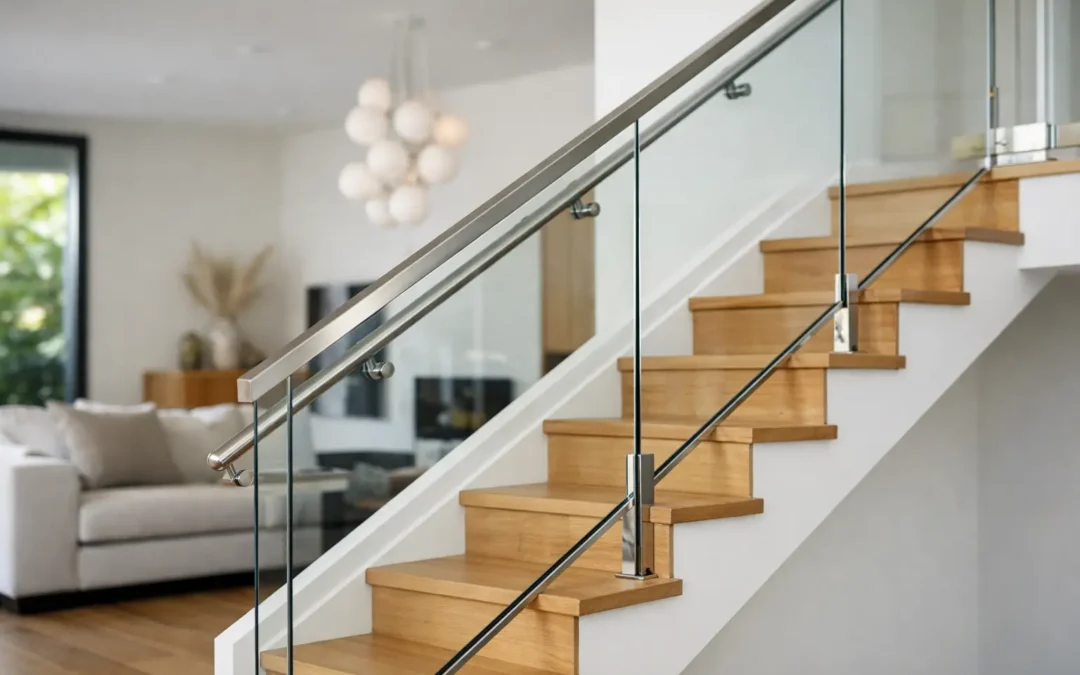
A stair guard does more than close an open edge. It shapes the way your whole interior feels the moment someone walks in. The best modern interior stair guards make a staircase look lighter, cleaner, and more intentional while still doing the serious work of protecting your family, guests, or tenants.
That balance matters. Homeowners want a modern finish that feels custom, not off-the-shelf. Property investors want a solution that looks upgraded, holds up over time, and passes inspection without last-minute surprises. In both cases, the right guard is not just a detail. It is part safety system, part design feature, and part long-term investment in the property.
Why modern interior stair guards change the room
Older stair guards often feel visually heavy. Thick posts, ornate pickets, and bulky wood assemblies can divide a space and make a staircase stand out for the wrong reasons. Modern designs do the opposite. They simplify the lines, open the view, and make the stair system feel integrated with the architecture.
That does not mean every modern guard looks the same. Some projects call for full glass to keep sightlines open from floor to floor. Others look better with slim steel or aluminum pickets that add rhythm without visual clutter. In a home with a warm interior palette, black metal can create contrast and definition. In a brighter, softer space, glass with minimal framing can make the stairway almost disappear.
The point is not to chase a trend. It is to choose a guard that supports how the space is meant to feel.
What defines modern interior stair guards
Modern interior stair guards tend to share a few qualities. They use cleaner geometry, fewer decorative elements, and materials that look precise rather than oversized. You will usually see straight lines, slimmer profiles, and finishes that are understated but deliberate.
Glass is one of the most requested options because it allows natural light to move through the stair opening. It works especially well in homes where the staircase sits near the entry, in open-concept layouts, or in narrow spaces that need to feel larger. A well-built glass guard looks polished, but it also asks for accurate measuring, proper hardware selection, and careful installation. If those parts are rushed, the finished result can feel misaligned even if the material itself is high-end.
Metal guards offer a different kind of strength. Steel, stainless steel, aluminum, and wrought iron can all be fabricated into contemporary forms, but they do not perform identically. Some clients want the bold definition of black steel. Others prefer stainless steel for its crisp, architectural appearance. Aluminum can be a smart option when weight, finish consistency, and maintenance are part of the decision.
Wood can still play a role, but in a modern application it usually works best as an accent, such as a handrail paired with glass or metal. That mix can soften the look without losing the contemporary edge.
Choosing the right material for your space
There is no single best material for every staircase. The right choice depends on layout, style, budget, maintenance expectations, and how much visual openness you want.
Glass tends to be the first choice when the goal is a bright, minimal look. It is excellent for preserving views across levels and making a stairwell feel larger. The trade-off is that glass shows fingerprints and requires precision in every stage, from field measurements to final alignment. In a busy family home, some clients love the look but need to be realistic about upkeep.
Metal picket systems are often a strong middle ground. They can be highly custom, they read as modern when detailed well, and they are easier to maintain day to day than full glass. They also create more visual structure, which some interiors need. If your space already has a lot of smooth surfaces, a metal guard can add contrast and character.
A mixed-material guard can offer the best of both. Glass with metal posts, or metal with a wood cap rail, can bridge modern architecture and warmer interior finishes. This is often the right move when homeowners want a current look without making the staircase feel too cold or commercial.
Design decisions that matter more than people expect
Most people start by thinking about material, but proportion is just as important. A beautiful stair guard can still look wrong if the post spacing, rail thickness, or panel sizes are out of scale with the staircase.
This is where custom work makes a visible difference. On-site measurements, project-specific drawings, and real coordination with the rest of the interior allow the guard to fit the architecture rather than fight it. A stair opening with an angled landing, a split-level condition, or an offset wall usually needs more than a standard kit. When details are worked out properly, the finished guard looks calm and intentional.
Finish selection matters too. Matte black remains popular because it gives a clean, modern profile and works with a wide range of interiors. But black is not the automatic answer. Brushed stainless, powder-coated custom colors, and low-iron glass can all change the final effect. The best choice depends on floor tones, wall color, trim, lighting, and even how much natural light the staircase gets.
Safety and code are part of the design
A modern look only works if the stair guard is built correctly. This is not an area where style comes first and engineering gets figured out later. Guard height, opening limitations, structural attachment, and load requirements all have to be addressed from the beginning.
That is especially important in renovation projects, where existing framing or finishes may limit attachment points. A guard that looks simple on paper may need hidden steel reinforcement or revised anchor locations to meet code and perform properly. In commercial settings and multi-unit properties, the compliance side becomes even more critical because inspection requirements are often stricter and timelines are less forgiving.
This is why experienced fabrication and installation matter. A dependable process typically includes a site visit, precise measurements, drawings for approval, engineering review where required, production, and professional installation. That sequence protects the look of the project, but it also protects the timeline and reduces the chance of expensive corrections later.
When custom fabrication is worth it
There are projects where a modular railing system can work. But if the staircase is a focal point, if the dimensions are unusual, or if the finish level needs to match a premium interior, custom fabrication is usually the better investment.
Custom guards allow you to refine the details that people actually notice once the project is complete. How the handrail returns into the wall. How a glass panel meets a landing edge. Whether the fasteners are exposed or concealed. Whether the guard feels light and architectural or heavy and overbuilt. Those choices separate a basic safety barrier from a finished architectural feature.
For homeowners, that difference shows up every day in how the space feels. For investors and builders, it affects resale appeal, tenant perception, and the overall quality signal the property sends.
What a smooth project should look like
The biggest concern many clients have is not the design itself. It is the process. They want to know that once they choose a direction, the project will move forward without confusion.
A professional stair guard project should feel structured from the start. It begins with a proper assessment of the site and the staircase conditions. From there, drawings are developed to reflect the exact layout and design intent. The client reviews and approves the concept before fabrication begins. If engineering review or stamped drawings are needed, that happens before production, not after a problem appears. Installation is then scheduled with the expectation of accuracy, cleanliness, and on-time completion.
That kind of workflow removes guesswork. It gives clients confidence that the finished guard will not only look right, but fit right and perform right.
Making modern interior stair guards feel personal
The strongest projects are not chosen from a generic catalog. They are shaped around the home, the building, and the people using the space. A family with young children may prioritize certain infill choices. A luxury renovation may focus on floating visual lines and minimal hardware. A rental property may need a durable finish that still feels upgraded without stretching the budget too far.
This is where working closely with a specialist pays off. A good fabricator does not just ask what style you like. They ask how the staircase connects to the rest of the interior, what level of maintenance you are comfortable with, what timeline you are managing, and what approvals may be needed. That is how ideas get materialized into something buildable, durable, and visually sharp.
At Iron & Glass Designs, that combination of craftsmanship and disciplined execution is what gives clients peace of mind. The goal is not simply to install a guard. It is to deliver a finished stair system that feels custom, secure, and completely at home in the space.
If you are planning a renovation or a new build, treat the stair guard like the architectural element it is. When the design is right and the process is handled professionally, the staircase stops being a problem to solve and becomes one of the best parts of the room.