
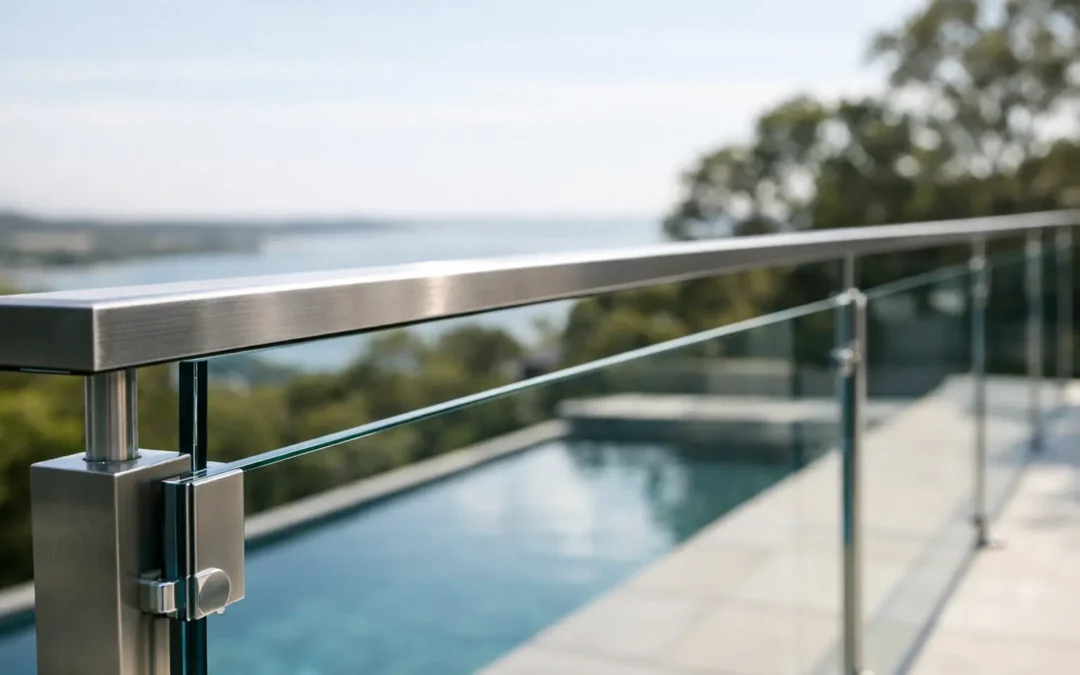
When clients ask for a railing that feels open, modern, and secure, laminated glass is usually part of the conversation. It gives you the clean sightlines people want, but the real value is not just appearance. It is the way the glass is built to hold together under impact, which makes it a serious safety product for stairs, balconies, decks, and commercial spaces.
If you are comparing railing options for a renovation or new build, understanding laminated glass helps you make a better decision before drawings, engineering, and installation begin.
What is laminated glass railing?
A laminated glass railing is a guard or handrail system that uses laminated safety glass as the infill panel, structural panel, or both, depending on the design. Laminated glass is made by bonding two or more pieces of glass together with an interlayer, usually a durable plastic material such as PVB or SGP. That interlayer is what changes the behavior of the glass.
If the panel breaks, the glass fragments tend to remain adhered to the interlayer instead of falling apart into an open gap. In railing applications, that matters. A railing is not decorative trim. It is a safety barrier, and the glazing choice needs to perform accordingly.
You will often see laminated glass used in framed, semi-frameless, and frameless railing systems. The exact thickness, hardware, edge detail, and support method depend on the span, the location, the loads, and local code requirements.
How laminated glass railing is different from tempered glass railing
This is where many property owners get tripped up. Tempered glass and laminated glass are not the same thing, although they are often used together.
Tempered glass is heat-treated to increase strength. When it breaks, it shatters into small pieces. Laminated glass is layered glass with an interlayer that helps keep the panel intact after breakage. In many railing systems, the panel is actually tempered laminated glass, meaning each layer is tempered first and then laminated together.
That combination gives you the strength benefits of tempered glass and the retention benefits of lamination. For many guards and railing conditions, especially where fall protection is critical, that added post-breakage performance is a major reason laminated glass is specified.
The best choice depends on the application. An interior stair in a private residence may call for a different configuration than an exterior balcony on a multi-unit building. This is why job-specific drawings and engineering review matter. A railing system should never be selected by looks alone.
Why homeowners and builders choose laminated glass railing
The most obvious reason is visual. Laminated glass railings create a clean, premium finish that works with modern homes, renovated staircases, luxury bathrooms, terraces, and commercial storefronts. They allow light to move through a space and keep views open instead of cutting them up with heavy vertical pickets or bulky infill.
But aesthetics are only half the story. Laminated glass also offers practical benefits that make it attractive for both residential and commercial work.
One is safety. Because the interlayer helps hold broken glass in place, laminated panels can provide an extra layer of protection in guard applications. Another is sound control. Laminated glass can help reduce sound transfer more effectively than standard monolithic glass, which can be helpful in some interior settings.
There is also a quality perception that matters. A well-designed glass railing changes how a property feels. It can make a stair opening look larger, sharpen the lines of a balcony, and give an entry sequence a more finished architectural look. For many clients, that visual upgrade is part of the return on investment.
Where laminated glass railing is commonly used
Laminated glass railings work in a wide range of spaces, but the system details need to match the use case.
Inside the home, they are often installed along staircases, loft edges, landings, and interior overlooks. In these settings, clients usually want a minimalist look that opens up the floor plan and makes the home feel brighter.
Outside, laminated glass is common for balconies, deck guards, terraces, porch enclosures, and pool-adjacent barriers. Exterior conditions bring more variables, including weather exposure, drainage, hardware durability, and maintenance planning. Not every glass detail that works indoors is the right answer outdoors.
In commercial properties, laminated glass railings are often used in office interiors, retail spaces, mixed-use developments, and hospitality environments where a polished appearance needs to be paired with dependable code performance.
What a laminated glass railing system includes
The glass panel gets most of the attention, but the railing is a complete system. Its performance depends on more than the glass itself.
A typical laminated glass railing may include base shoe channels, standoff pins, posts, top rails, cap rails, handrails, connectors, and anchoring hardware. Some systems are designed so the glass acts as the primary visual barrier with minimal metal. Others incorporate aluminum, stainless steel, or custom metal framing for a different look or additional support.
This is one reason custom fabrication matters. The right system is not just about choosing a panel thickness from a catalog. It is about coordinating finish materials, mounting conditions, structure, code requirements, and the visual intent of the project.
Is laminated glass railing safer?
In many applications, yes, and that is exactly why it is so widely specified. The interlayer helps the panel remain in place after breakage, which can reduce the risk of creating an immediate open hazard. For guards at elevated areas, this is a meaningful advantage.
That said, safety is not just about laminated glass versus non-laminated glass. It depends on the full assembly. Glass thickness, support spacing, edge protection, fastening method, top rail requirements, and structural backing all affect how the railing performs.
Code also matters. Requirements vary by project type and jurisdiction. A single-family interior stair may have different requirements than a commercial mezzanine or exterior guard. Working with a company that provides field measurement, prepares project-specific drawings, and coordinates engineering review helps remove guesswork from that process.
Design trade-offs to think about
Laminated glass railing is a premium solution, but premium does not mean automatic. There are trade-offs, and good planning starts with being honest about them.
Cost is one. Laminated glass systems generally cost more than simpler railing options because the material itself is more specialized and the installation tolerances are tighter. If the design is frameless, the price can increase further due to heavier glass, more demanding hardware, and closer coordination with structure.
Weight is another factor. Laminated glass panels can be heavy, which affects handling, transportation, and anchoring requirements. Existing structures may need review before installation.
Maintenance is usually straightforward, but glass does show fingerprints, water spots, and dust more readily than some other materials. If your project is outdoors or near a pool, you should expect regular cleaning to keep the railing looking sharp.
Then there is privacy. Clear laminated glass is great for openness, but not every location benefits from full transparency. In some cases, frosted or tinted laminated glass may be a better fit.
How to know if laminated glass railing is right for your project
The best starting point is to think about what matters most in your space. If you want unobstructed views, a modern finish, and a stronger safety profile than standard glass alone can offer, laminated glass railing is often worth serious consideration.
It is especially appealing when the railing is part of a larger architectural statement. A floating stair, a second-floor overlook, an exterior balcony with a view, or a commercial entry can all benefit from the clarity and refinement of laminated glass.
At the same time, the right answer depends on your structure, budget, timeline, and code path. That is why a professional process matters. Site measurement, accurate drawings, client approvals, and engineering review are not extras. They are how a custom railing goes from good idea to buildable, compliant result.
For clients who want the look of glass without taking risks on quality or fit, working with an experienced fabrication and installation team makes the biggest difference. Companies like Iron & Glass Designs approach these projects the right way – by balancing design intent, material performance, and dependable installation.
A laminated glass railing should do more than look impressive in photos. It should feel solid every day, fit the space precisely, and give you confidence that the finished result is as safe and well-built as it is beautiful. If that is the standard you want for your home or property, laminated glass is worth a closer look – and a proper quote.