
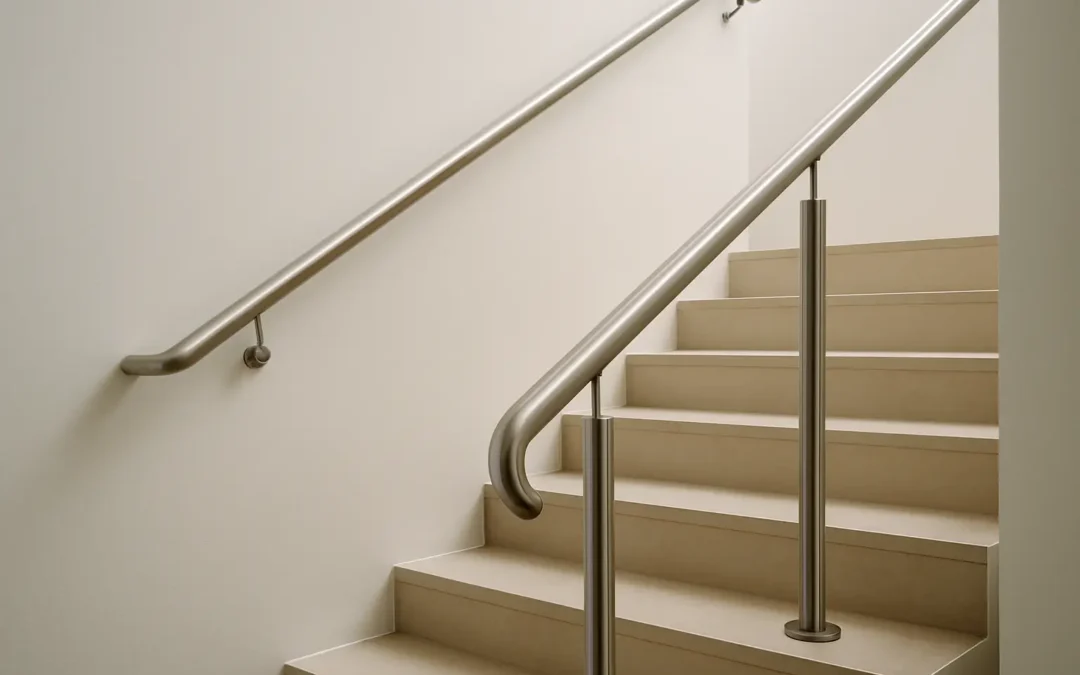
A stair can look finished and still feel unfinished. You notice it the first time you carry groceries down, host guests, or watch kids take the steps too fast – if the handrail flexes, sits at an odd height, or forces your hand to “hunt” for a grip, the whole staircase feels less secure than it should.
A stainless steel handrail for stairs is one of the cleanest upgrades you can make because it doesn’t just add safety. It adds confidence. Stainless reads modern, stays crisp over time, and can be designed to disappear into the architecture or become a deliberate detail. The difference between “nice metal” and “this feels built-in” comes down to choices you make early: profile, finish, mounting, transitions, and how the rail is measured and fabricated for the exact stair geometry.
Why stainless steel works so well on stairs
Stairs are high-contact, high-wear zones. Paint gets chipped, wood gets gouged, and softer metals show fingerprints and dents. Stainless steel earns its reputation because it resists corrosion, holds up to daily use, and keeps a consistent look even when the rest of the home evolves.
It’s also versatile. You can pair stainless with glass, wood treads, stone, tile, drywall, or exterior masonry without it looking like an afterthought. For many homeowners and property investors, that versatility matters as much as durability because stair upgrades often sit in the middle of a larger renovation timeline.
That said, stainless is not a magic wand. It will still show scratches if the finish is too glossy for the traffic level, and it still requires correct grade selection outdoors. A well-designed stainless rail is low-maintenance, not no-maintenance.
The decisions that actually change the feel of a handrail
Handrail shape: comfort beats trends
If you want the handrail to feel good every day, start with how it fits the hand. A round profile is the classic choice because it’s easy to grasp from any angle and works well for users of different heights. Square or rectangular profiles can look sharp and architectural, but they can feel less natural if the edges are too crisp or the profile is too large.
For modern interiors, many clients want a minimal look without sacrificing grip. That often means choosing a profile that reads slim from a distance but still gives a comfortable grasp at the touch point. The “right” option depends on your stair width, wall condition, and whether the handrail needs to serve as the primary support or just a secondary guide.
Finish: where stainless looks most expensive is not always where it performs best
Finishes change everything: how light hits the rail, how often you see fingerprints, and how quickly wear shows up.
A brushed or satin finish is usually the best match for busy stairs because it hides fingerprints and small scratches better than a mirror polish. Polished stainless can be stunning in the right setting, especially in commercial interiors or showpiece homes, but it’s more honest – it will show every contact point.
If your staircase sits near a kitchen, entry, or a high-traffic rental corridor, the finish decision is a practical one. The goal is to choose a surface that looks intentional on day one and still looks intentional after thousands of touches.
Mounting style: floating vs anchored
Wall-mounted handrails are common for interior staircases because they keep the walking path clear and feel lightweight. But “lightweight” should never mean wobbly. The mounting points, bracket spacing, and the wall backing all influence stiffness.
Post-mounted systems (where the handrail is supported by vertical posts) can be the better choice when there’s no continuous wall, when the stair is open on one side, or when you’re integrating the handrail into a guardrail system.
The trade-off is visual. Wall-mounted rails can appear almost floating. Post systems can feel more architectural and substantial. Neither is automatically better – it depends on what your staircase needs and what you want it to say.
Indoor vs outdoor: it’s not just “stainless is stainless”
Exterior stairs expose a handrail to moisture, temperature swings, de-icing salts, and airborne pollutants. That’s where material selection becomes critical.
For outdoor use, the stainless grade matters because some grades are significantly more resistant to corrosion in harsh environments. If your property is in a coastal region or a location where salt is part of winter maintenance, you want to be specific about the grade and the finish, and you want fabrication and welding that won’t introduce weak points.
For interior handrails, corrosion resistance is typically less demanding, but you still want a finish that works with your cleaning habits. A glossy rail in a busy household can become a “wipe it constantly” commitment. A brushed finish often looks cleaner with less effort.
Code and compliance: where good design meets real-world constraints
A stainless steel handrail for stairs has to do more than look good. It needs to meet local building code requirements for height, continuity, graspability, returns, and sometimes spacing from the wall.
Homeowners often discover code constraints when they’re trying to match a Pinterest image that doesn’t show the full context. A rail that stops short of the first or last step can look “minimal,” but it can also create a safety gap. A perfectly square profile can look modern, but it may not satisfy graspability requirements in some jurisdictions. The right approach is not to fight the code – it’s to design within it so the final result looks clean and still passes inspection.
If you’re planning a permitted renovation or working with a contractor, engineered drawings and clear specifications can prevent last-minute changes. That is especially true when a handrail ties into a full railing system, a glass guard, or an exterior stair structure.
The hidden variable: stairs are rarely as straight as they look
Walls bow. Treads vary by a fraction of an inch. Landings are “almost” level. Older homes and even new builds can have small deviations that don’t show up until you try to install something perfectly straight.
This is why measurement and layout are not a formality. A handrail that’s fabricated from rough dimensions may technically fit, but it can leave uneven gaps, awkward transitions, or bracket locations that land on weak drywall rather than solid backing.
A professional approach accounts for where the structure can actually take load, how the rail aligns through turns and returns, and where your hand naturally reaches as you move up and down the stairs.
What a professional workflow looks like (and why it protects you)
A reliable handrail project follows a clear path: site measurement, job-specific drawings, client review, engineering input when required, production, and scheduled installation. That sequence isn’t “red tape.” It’s how you avoid the two pain points that frustrate clients most: surprises and delays.
When the handrail is designed from real measurements and translated into drawings before fabrication, you can approve the details that impact daily life – height, bracket placement, wall offsets, and the way the rail starts and ends. You also get a chance to align the rail with other finishes in the space, such as door hardware, lighting, or nearby metal accents.
If you’re looking for a full-service partner that handles measurement, drawings, fabrication, and installation with a code-aligned process, Iron & Glass Designs builds stainless and mixed-material railing systems with a structured workflow that keeps projects predictable.
Design scenarios that come up all the time
“I want it modern, but I don’t want it cold.”
Stainless can read crisp, especially in minimalist interiors. If you want warmth, you can soften the look by pairing stainless brackets with a wood cap rail, choosing a satin finish instead of bright polish, or coordinating the rail with warm lighting and natural materials on the treads.
“We have kids or older family members. I want it to feel secure.”
Prioritize graspability and rigidity. That usually means a comfortable profile, correct height, continuous runs where possible, and bracket placement that’s designed around structure, not just symmetry. A rail that feels rock-solid reduces anxiety on stairs more than any visual feature.
“This is a rental or an investment property. I need durability.”
Stainless is an excellent choice, but choose the finish carefully. Brushed surfaces tend to hide wear better, and a simpler geometry often holds up longer because there are fewer corners and edges to catch impact. It’s also worth designing for easy cleaning and quick touch-up of surrounding walls at bracket points.
“I’m matching an existing stainless kitchen or entry hardware.”
Not all stainless finishes match even if they’re all called “brushed.” Bring a reference if possible, or at least identify whether your existing fixtures lean warm or cool in tone. Small differences are noticeable when components sit in the same sightline.
Maintenance expectations: simple, not fussy
Most interior stainless handrails do well with routine cleaning using mild soap and water and a soft cloth, followed by drying to prevent streaks. For higher-touch areas, a finish that disguises fingerprints will reduce how often you feel compelled to wipe it down.
For exterior installations, rinse-off maintenance can matter more, especially in environments exposed to salt or heavy urban residue. The key is consistency: occasional gentle cleaning is better than waiting until buildup becomes stubborn.
If you’re choosing between a more delicate polished look and a more forgiving satin finish, be honest about your tolerance for upkeep. The best handrail is the one that still looks sharp when life gets busy.
Pricing and value: what you’re really paying for
Handrail costs vary widely because you’re not just buying metal. You’re paying for measurement accuracy, design time, fabrication quality, finish level, hardware selection, and installation that feels intentional.
A basic straight run on a sound wall is simpler than a rail with multiple turns, transitions at landings, or special returns. Exterior rails add complexity because material grade, anchoring, and water exposure all raise the standard.
If you’re comparing quotes, don’t focus only on linear feet. Ask what’s included: drawings, engineering review if needed, hardware type, finish specification, and installation timeline. A handrail is a safety component – it should be priced like one.
Closing thought: the best stainless handrail is the one you stop noticing because it’s always where your hand expects it to be – steady, comfortable, and finished like it belonged to the staircase from the start.