
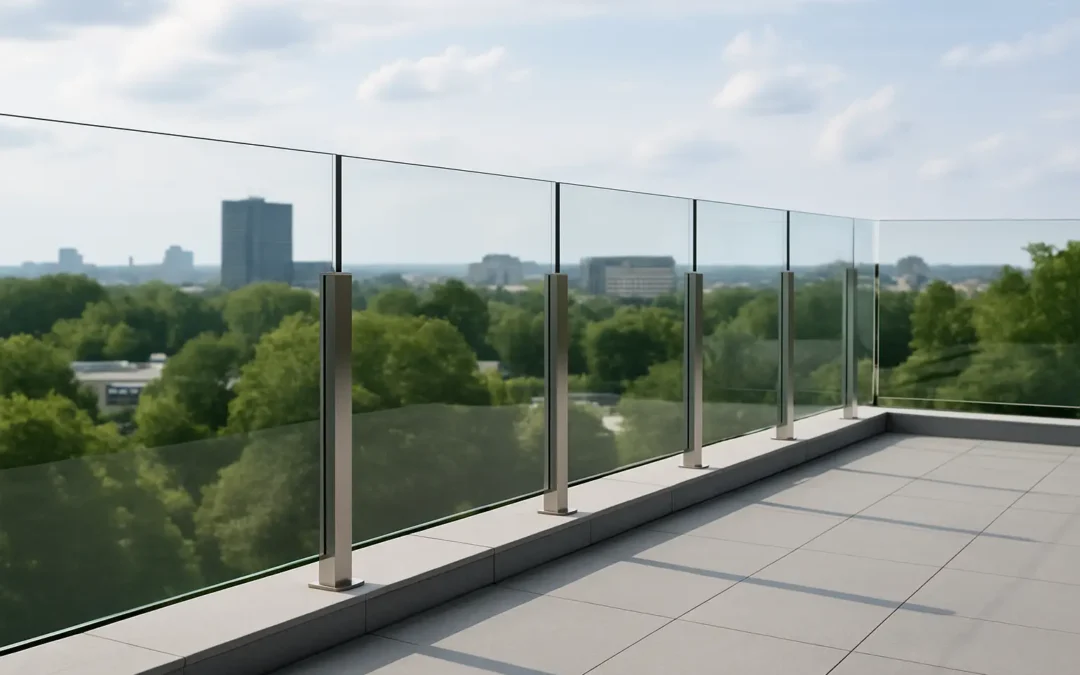
A rooftop terrace is the one place you do not want “almost safe.” Up there, wind has leverage, crowds shift weight, and one misjudged step can turn a great view into a serious liability. The good news is that a glass railing can deliver both the open, modern look people want and the real-world protection a rooftop demands – as long as it is designed and installed like a safety system, not a decorative add-on.
What “safe” actually means on a rooftop
A rooftop railing has to do more than keep someone from falling. It has to control risk in the messy, everyday moments: a guest leaning back for a photo, a kid running toward the edge, a dog pulling on a leash, a chair bumping the guard, a winter freeze-thaw cycle loosening hardware, or a contractor carrying materials during maintenance.
That is why rooftop guardrails are typically governed by building code requirements for minimum height and load resistance. The exact numbers can vary by jurisdiction and the building type, but the intent is consistent: the guard has to be tall enough and strong enough to resist people pushing, leaning, and gathering at the edge. A “looks solid” railing is not the same as a code-aligned guard.
If you are comparing options, start by treating the project as life safety first, design second. The best projects do both – the design simply expresses the engineering.
Glass railing for rooftop terrace safety: why it is a strong choice
A well-built glass guard has a practical advantage that homeowners and property investors appreciate immediately: visibility. You can see the edge. That matters for safety because people naturally self-correct when they can read a boundary. A bulky wall or dense pickets can hide a drop until you are close.
Glass also helps with supervision. If your rooftop is a shared amenity or a family hangout, clear sightlines make it easier to keep an eye on kids, pets, and foot traffic without crowding the perimeter.
There is a trade-off, though. Glass is honest. If the system is underbuilt, you will feel it as vibration, rattle, or noticeable flex. That is not just an annoyance – it is a sign the assembly may not be engineered and installed for rooftop conditions.
Start with code and permitting, not Pinterest
Rooftop terraces often involve permits, inspections, and sometimes condominium or commercial requirements. Even for a private home, you may be dealing with roof membranes, parapet conditions, and structural limitations that do not exist on a ground-level deck.
If you are planning a new build, the right time to talk about railings is early – when the roof edge, blocking, and waterproofing details can be coordinated. If you are retrofitting, you want a fabricator-installer who will measure on site, produce job-specific drawings, and coordinate anchor details that protect the roof assembly.
When a railing is designed from real field dimensions and reviewed as a system, permitting becomes far less stressful. It also helps you avoid the most expensive mistake in rooftop work: installing something that technically “fits” but cannot be properly anchored without compromising waterproofing.
The safety decisions that matter most
Height, climb resistance, and the “no surprises” edge
Most people focus on height first, and they should. But the more subtle safety issue is climbability and perceived boundary. Horizontal top rails can become an invitation to sit or step up, especially in social settings. A clean top cap or a minimal top rail is often a better choice for rooftops where people gather.
You will also want to think about the distance between walking surfaces and the guard. If there is a built-in bench, planter, or mechanical curb near the edge, it can create an unintended step that effectively reduces the guard’s protective height. This is a common “it depends” scenario where a site visit matters more than generic advice.
Choosing the right glass: tempered vs. laminated
For rooftop terraces, safety glass is not optional. The real question is which type.
Tempered glass is heat-treated to be stronger than standard glass and to break into small pieces. Laminated glass is made of layers bonded with an interlayer; if it cracks, the fragments tend to stay adhered.
On a rooftop, laminated glass is often favored because it provides post-breakage retention. If something extreme happens – impact, unusual stress, or a rare defect – laminated glass is more likely to remain in place as a barrier while you address the issue. Tempered glass can be appropriate in some configurations, but you should be clear about the performance you want, not just the price point.
Your installer should be able to explain what glass thickness and type they are specifying and why, based on the span, mounting method, and expected loads.
The system design: framed, post-and-panel, or base shoe
From a safety standpoint, the best style is the one that matches the structure and can be anchored correctly.
A post-and-panel system uses posts to carry loads and clamp or capture the glass. It can be a smart option when you need predictable anchoring points and easy field adjustment.
A base shoe (also called a channel-mounted system) can look incredibly clean, but it concentrates the work at the base. That means alignment, fasteners, and waterproofing details must be executed with zero shortcuts. On rooftops, that base is also where water and ice want to live, so drainage planning and corrosion resistance become more important.
A framed system adds visible structure around the glass. Some people prefer the look, and it can offer extra protection for glass edges in high-traffic environments. If your rooftop sees frequent rentals, parties, or commercial use, a bit more frame can be a practical decision.
Hardware, corrosion, and long-term stability
Rooftops are harsh. You have sun, temperature swings, wind uplift, and in many regions, salt exposure or de-icing chemicals. Hardware selection is not a detail – it is the difference between a railing that stays tight for years and one that needs constant attention.
Ask what grade of stainless steel or aluminum is being used, and how dissimilar metals are being isolated to reduce corrosion. Also ask how the system will be maintained. If you have to remove glass panels to tighten something, that is a different ownership experience than a system designed for easy inspection.
Deflection and “feel” under load
A safe rooftop guard should not feel flimsy. Some movement is normal in tall, slender assemblies, but excessive deflection makes people instinctively lean away from the edge – and it can signal that posts, anchors, or spacing are not optimized.
This is where engineered drawings matter. They help ensure the railing is designed around realistic loads and conditions rather than guesswork.
Rooftop-specific installation risks you should plan around
The single biggest rooftop risk is water. If your railing penetrates the roof membrane, the anchor detail must be coordinated with waterproofing. This can involve specialized flashing, sealants compatible with the membrane, and precise placement to avoid pooling.
Another rooftop reality is substrate inconsistency. You may have concrete, steel, wood blocking, or a parapet that looks solid but has limited fastening depth. A professional site visit and measurement prevents “day-of” improvisation.
Wind is the third factor that makes rooftops different. Wind loads can create forces that feel counterintuitive, especially at corners and open elevations. That is why rooftop railings benefit from a system approach: posts, glass, clamps, base channels, and anchors all working together.
A process that keeps safety predictable
When clients ask how to avoid surprises, we point them to a disciplined workflow. You want an installer who measures on site, produces drawings for your approval, and has the system reviewed for code alignment before anything is fabricated. That sequence reduces rework, protects your schedule, and keeps safety from being negotiated at the end.
If you are looking for a partner who takes that approach from concept through installation, Iron & Glass Designs builds glass railing systems with job-specific drawings and engineering review so your rooftop terrace looks clean and performs like it should.
Common questions that change the design
Homeowners and property investors often start with “frameless or posts?” and then realize the better question is “What conditions are we building for?” A few examples:
If you host often, you may prioritize a top rail that feels comfortable to lean on and resists scratches.
If your rooftop is exposed and windy, you may accept a slightly more structured look in exchange for a tighter, more solid feel.
If you are protecting premium finishes and a roof membrane, you may choose anchoring that minimizes penetrations, even if it costs more upfront.
If you plan to sell or lease the property, you may prioritize clear documentation, stamped drawings, and a system that reads as professionally executed during inspections.
None of these priorities are “right.” The right answer is the one that fits your building, your risk tolerance, and how you actually use the space.
Keeping it looking sharp without making upkeep a chore
Glass railings are easier to live with when you plan for cleaning access. On rooftops, you want enough space to wipe the inside face safely without leaning over the edge. You also want to avoid details that trap dirt at the base, especially where water drains.
For day-to-day care, mild soap and water usually do the job. The bigger issue is periodic inspection. Once or twice a year, it is smart to check for any loosened fasteners, sealant wear, or signs of corrosion – particularly after winter or major storms.
A rooftop terrace is meant to feel effortless. The way you get there is by choosing a railing system that was designed to stay stable, not one that requires constant babysitting.
Closing thought: if your rooftop is the place you go to exhale, your guardrail should be the last thing you think about when you step near the edge – because you already did the thinking up front.