
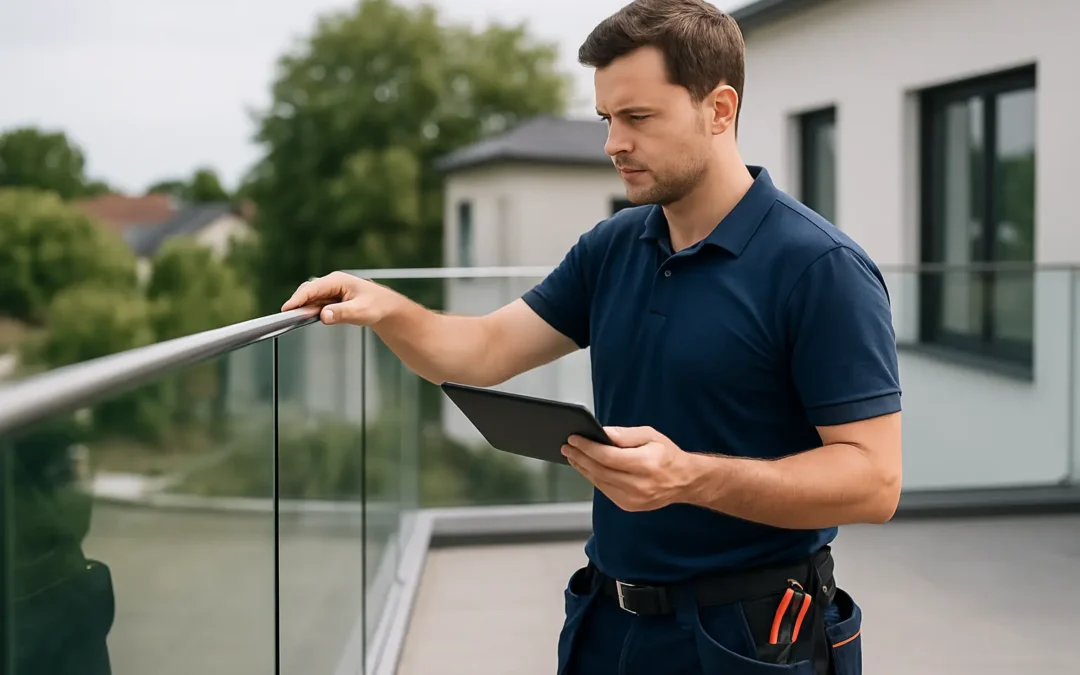
You can tell a lot about a glass railing installer by what happens before anyone touches a drill. Do they ask for accurate measurements, photos, and project goals – or do they toss out a price range after a two-sentence text? Glass railings look minimal, but the work behind them is anything but. If you want a clean, modern result that feels solid every time you lean on it, the “review” part of your search matters as much as the “near me.”
How to review glass railing installers near me (without guessing)
When people search “review glass railing installers near me,” they usually mean two things: they want someone local, and they want confidence. Reviews can help, but only if you know what to look for and how to verify it.
Start by treating the installer like a project partner, not a day-labor line item. A qualified team will be comfortable walking you through approach, materials, timelines, and code considerations. If they get defensive or vague, that tells you plenty.
What strong reviews actually look like
Five-star ratings are easy to buy. Specificity is harder to fake.
A useful review includes details about the process, not just the end result. You want to see mentions of clear scheduling, punctual installation, cleanup, communication when something changed, and whether the finished railing feels sturdy and aligned. In glass work, small tolerances matter – if posts are slightly out, if channels aren’t level, if panels aren’t seated properly, you’ll notice it every day.
Pay attention to repeated themes across multiple reviews. If several customers mention “showed up when they said they would,” “sent drawings,” or “handled permits,” that points to a structured workflow. If several mention “hard to reach,” “kept changing the price,” or “left the site messy,” take that seriously, even if the star rating is high.
Read between the lines: the process tells the truth
An installer can have decent craftsmanship and still be a risky hire if their process is loose. Glass railing projects don’t leave much room for improvisation, especially on stairs and balconies.
Look for signs that the company operates with repeatable steps. The best experiences usually include a site visit for measurements, a clear scope, and some kind of drawing or layout confirmation before fabrication. For many projects, engineered review is part of doing it correctly. Not every job needs the same paperwork, but a professional should be able to explain what applies to your situation and why.
If reviews mention that the team “figured it out on install day,” that’s not a compliment. For glass railings, install day should be execution, not problem-solving.
Photos matter – but know what you’re looking at
A photo gallery is helpful only if it shows the details. Wide-angle shots can hide problems.
When you’re evaluating images (from reviews, portfolios, or your own site visit), look for consistent panel spacing, clean lines, and hardware that matches the promised finish. On standoff systems, the alignment of the standoffs and the panel edges should feel intentional. On base shoe or channel systems, the glass should sit straight with no visible waviness, and corners should look sharp, not “good from far away.”
Also look at the transitions – where glass meets a wall, where a handrail starts and stops, and how the railing terminates at a post or landing. These are the areas that separate a premium install from a rushed one.
The questions that expose quality fast
You don’t need to speak in building-code language to vet an installer. You just need to ask questions that force a clear, specific answer.
Ask what type of system they recommend for your space and why. A good installer will talk about function and context: wind exposure on a balcony, foot traffic on a commercial stair, drainage and waterproofing around exterior mounting points, or the sightline you’re trying to preserve.
Ask what glass thickness and type they use and what drives that choice. Tempered glass is common, and laminated options may be discussed depending on the application and expectations. The right answer depends on where the railing goes, local requirements, and performance goals.
Ask how they confirm measurements and how they prevent delays. If the response is “we’ll measure when we get there,” push harder. You want a defined measurement method, a clear lead time, and a plan for approvals.
Ask what the quote includes. Hardware finishes, handrails (if needed), removal of existing railings, patching, and permits can change the number. A professional quote should spell out what is included and what isn’t so there are no surprise change orders.
Spot the red flags early
A few warning signs show up again and again in problem projects.
One is pricing that’s dramatically lower than everyone else with no explanation. Glass railing costs are driven by materials, engineering (when required), fabrication precision, and skilled installation. If the price is low because corners are being cut, you may not find out until you’re dealing with loose hardware, misaligned glass, or a failed inspection.
Another red flag is reluctance to put details in writing. If the installer won’t specify system type, glass specs, hardware finish, timeline, and payment milestones, you’re being asked to trust a handshake for a high-precision installation. That’s not a fair trade.
A third is a lack of local familiarity. “Near me” should mean they understand common regional conditions and expectations – everything from weather exposure to inspection norms. If they can’t speak confidently about how they handle typical local scenarios, they may be learning on your project.
“It depends” scenarios that affect your decision
Not every glass railing job should be judged by the same criteria. The right installer for a simple interior guardrail might not be the right installer for a complex exterior stair system.
If your project is exterior, waterproofing and corrosion resistance become central. Hardware selection, mounting methods, and drainage details matter. You’ll want to see evidence of exterior work that still looks clean years later.
If your project is on stairs, layout accuracy becomes everything. The installer needs to get the angles right, align the panels cleanly, and make the handrail feel continuous and comfortable. Stair glass that looks “almost right” will bother you every time you use it.
If you’re working on a multi-unit property or commercial space, schedule discipline and documentation become more important. Tenants, inspections, and contractor coordination raise the stakes. In those cases, reviews that mention professionalism, communication, and meeting deadlines are worth more than generic compliments about aesthetics.
How to use negative reviews the right way
Don’t automatically disqualify a company for a few negative reviews. Instead, read them like a contractor.
If the complaint is about a one-time delay and the company responded with specifics, that’s a normal business reality. If the complaint is about broken promises, unclear pricing, sloppy installation, or refusing to fix issues, that’s different.
Also look at how the company responds. A defensive, dismissive response suggests you’ll have a hard time if anything goes wrong. A professional response that acknowledges the issue and explains the resolution usually points to a company that stands behind its work.
What a dependable workflow should feel like
A strong glass railing experience is surprisingly structured. You shouldn’t feel like you’re chasing updates or guessing what happens next.
Typically, it starts with a site visit and measurement, then a clear design direction and job-specific drawings or layout confirmation. After you approve, fabrication begins based on final measurements and confirmed specs. Installation should be scheduled with a defined window, and the crew should arrive with the correct materials and a plan.
When this workflow is in place, the final install looks calm because the problem-solving already happened. That’s when glass railings look the way you want them to look – crisp, clean, and intentional.
A local shortcut: ask for proof, not promises
If you want to move quickly, ask each installer for two things: recent project photos similar to yours and a simple written description of their process from measurement to installation.
The companies worth hiring can do this easily because they do it every day. They can show consistent results and explain how they avoid surprises. You’re not just buying glass and hardware – you’re buying the planning that makes the finished railing feel premium.
If you’re in the Greater Toronto and Mississauga area and want a partner that combines custom design, engineered review when required, and a structured install process, Iron & Glass Designs is built around that end-to-end workflow.
Pricing clarity: what “fair” usually means
Homeowners often worry they’ll overpay, while investors worry the project will drift and blow the budget. Both concerns are valid.
A fair quote is not the cheapest number. It’s the number that aligns with the real scope: correct system choice, appropriate glass, quality hardware, accurate measurement, professional installation, and the documentation you need for your property.
If you’re comparing bids, compare apples to apples. Two quotes can look similar until you notice that one includes a handrail and proper finishing details while the other doesn’t. The goal isn’t just to get glass up – it’s to get a railing that passes inspection, feels solid, and still looks sharp years from now.
If you take one thing from your search, let it be this: the best time to judge a glass railing installer is before you sign, when they’re explaining their process and proving their past work – because once glass is fabricated, the project becomes expensive to “fix later.”