
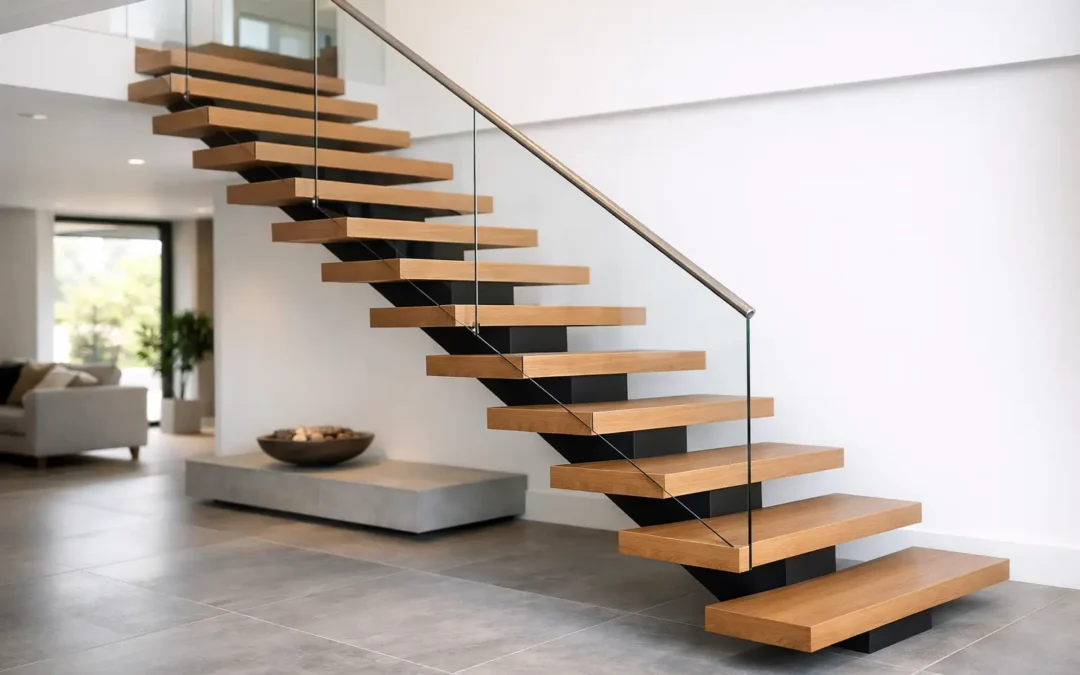
A staircase can either take up space or define it. That is the appeal of monostringer stairs. Instead of bulky framing on both sides, the stair is supported by a single central beam, creating a lighter profile and a more architectural look without giving up strength.
For homeowners, builders, and property investors, that balance matters. You want the staircase to feel modern and open, but you also need it to perform well, meet code, and hold up to daily use. When monostringer stairs are designed properly, they do all three.
What monostringer stairs actually are
A monostringer stair system uses one structural stringer placed at the center of the stair run. The treads are attached to that central support, and the result is a staircase that looks clean, floating, and intentionally minimal. In many projects, the visual effect is what draws people in first. The real value, though, is that the design can be engineered for serious durability while keeping the space visually open.
This style works especially well in contemporary interiors, custom homes, duplex conversions, office buildouts, and commercial entry spaces where every line matters. It pairs naturally with glass railings, metal pickets, wood treads, and other modern finishes.
Why monostringer stairs are in demand
The strongest reason clients choose this stair style is simple: it changes how a room feels. Traditional stairs can make a space look heavier than it is. A single-stringer system reduces visual clutter and allows sightlines, light, and surrounding finishes to do more of the work.
That matters in open-concept homes, narrow footprints, and renovation projects where every square foot needs to feel intentional. A well-built monostringer staircase can make an entry area feel larger, help natural light travel farther, and turn a necessary circulation element into a focal point.
There is also a practical side. Because the structure is centralized, the design can be highly customized. Tread thickness, riser style, railing system, finish color, and landing transitions can all be tailored to the space. For clients who want a stair that feels custom rather than off-the-shelf, this format gives a lot of flexibility.
Where monostringer stairs work best
Not every project needs a monostringer stair, but many benefit from one. Interior applications are the most common because the clean lines are easy to showcase and the environment is more controlled. In a custom home, this style often works well in front foyers, living spaces, and basement walk-ups where the stair is visible from multiple angles.
In commercial spaces, monostringer systems can add polish without feeling overdesigned. Offices, showrooms, and boutique retail environments often use them to reinforce a modern brand image while maintaining structural performance.
Exterior use is possible too, but it requires careful material selection and detailing. Moisture exposure, drainage, slip resistance, and coating systems matter much more outdoors. The look can be excellent, but exterior stairs need a build approach that accounts for weather from the start.
The design choices that make the biggest difference
The central stringer gets most of the attention structurally, but the finished look depends on how all the parts work together. Treads have a major impact. Solid wood treads warm up the system and help soften a steel-heavy interior. Metal treads create a sharper industrial profile. Stone or composite surfaces may suit some high-end or commercial settings, depending on weight and detailing.
Railing design matters just as much. Glass railings tend to emphasize the open effect and are a natural match for monostringer stairs. Slim metal pickets can work beautifully when you want more definition or a slightly more classic edge. A minimal handrail can keep the profile crisp, but it still needs to feel comfortable and code-conscious.
Finish selection is where craftsmanship really shows. Powder-coated steel in black remains a popular choice because it is versatile, modern, and easy to coordinate with other finishes. That said, the right color depends on the room. In some spaces, a softer custom tone creates a better fit than standard black.
Structure first, aesthetics second
A monostringer staircase should never be treated as just a design feature. It has to perform structurally, and that starts long before fabrication. The beam size, tread attachments, span, load requirements, connection points, and railing integration all need to be resolved clearly.
This is one reason custom fabrication matters. What works in one home will not necessarily work in another. Floor conditions, wall placement, headroom, stair width, landing geometry, and local code requirements all influence the final design. A stair that looks effortless usually comes from a very disciplined planning process.
That process should include field measurement, project-specific drawings, client approval, and engineering review where required. If any of those steps are skipped, the risk goes up fast. Small errors on stairs do not stay small. They affect comfort, safety, finish quality, and installation timing.
Cost: what drives the price of monostringer stairs
Clients often ask whether monostringer stairs cost more than standard stair systems. In many cases, yes. But the better question is why.
You are not just paying for a different look. You are paying for custom engineering, fabrication precision, high-quality materials, and a more demanding installation process. The central structure must carry loads efficiently while keeping the finished stair clean and balanced. That level of coordination takes real shop and site expertise.
Pricing is usually influenced by stair height, overall span, tread material, railing type, finish selection, and the complexity of the installation environment. A straight run is typically more straightforward than a stair with turns, landings, or difficult access. Glass railings and premium wood treads will usually raise the budget, while simpler metal railing systems may keep it more controlled.
The good news is that custom does not have to mean unpredictable. When the scope is measured correctly and drawings are approved before production, the project becomes much easier to price accurately.
Common concerns clients have
One concern is movement. People sometimes assume a single-stringer stair will feel less stable than a traditional stair. Poorly built systems can feel that way. Properly designed and fabricated monostringer stairs should feel solid underfoot and secure in daily use.
Another concern is maintenance. In reality, maintenance depends more on the chosen materials than on the stair format itself. Powder-coated metal is relatively low maintenance. Wood treads may need more attention over time, especially in high-traffic areas. Glass railings look excellent, but they do show fingerprints more readily than picket systems.
There is also the question of whether this style will feel too modern later. That depends on execution. A monostringer stair with balanced proportions and well-chosen materials tends to age better than one built around a short-term trend. Clean design usually lasts.
Why installation quality matters so much
Even the best drawings and fabrication can be undercut by poor installation. Stairs need to align correctly, connect cleanly, and integrate with surrounding finishes without looking forced. This is where experience shows up in very visible ways.
A professional process should make the project feel controlled from the beginning. Site measurements need to be exact. Drawings need to reflect real conditions. Fabrication should follow approved details, and installation should be scheduled and executed with care. For clients, that means fewer surprises and a result that feels as strong as it looks.
At Iron & Glass Designs, that full-process mindset is a big part of the value. Working closely with clients from measurement through installation helps turn a design idea into a staircase that is buildable, code-aware, and finished with confidence.
Is a monostringer stair right for your project?
It is a strong fit if you want a staircase that feels lighter, more custom, and more architectural than a conventional build. It makes sense when the stair will be visible, when open sightlines matter, and when the surrounding finishes deserve a system that complements them rather than competes with them.
It may be less suitable if the budget is extremely tight or if the project calls for a more basic utility stair with minimal finish requirements. There is no one-size-fits-all answer. The best staircase is the one that fits the space, the use case, and the level of finish you want to live with long term.
If you are considering monostringer stairs, the smartest next step is not choosing a finish. It is starting with a team that can measure the space, draw it properly, account for structure and code, and build the stair to match the vision. When that part is handled well, the final result does more than connect two levels. It gives the whole space a stronger sense of purpose.