
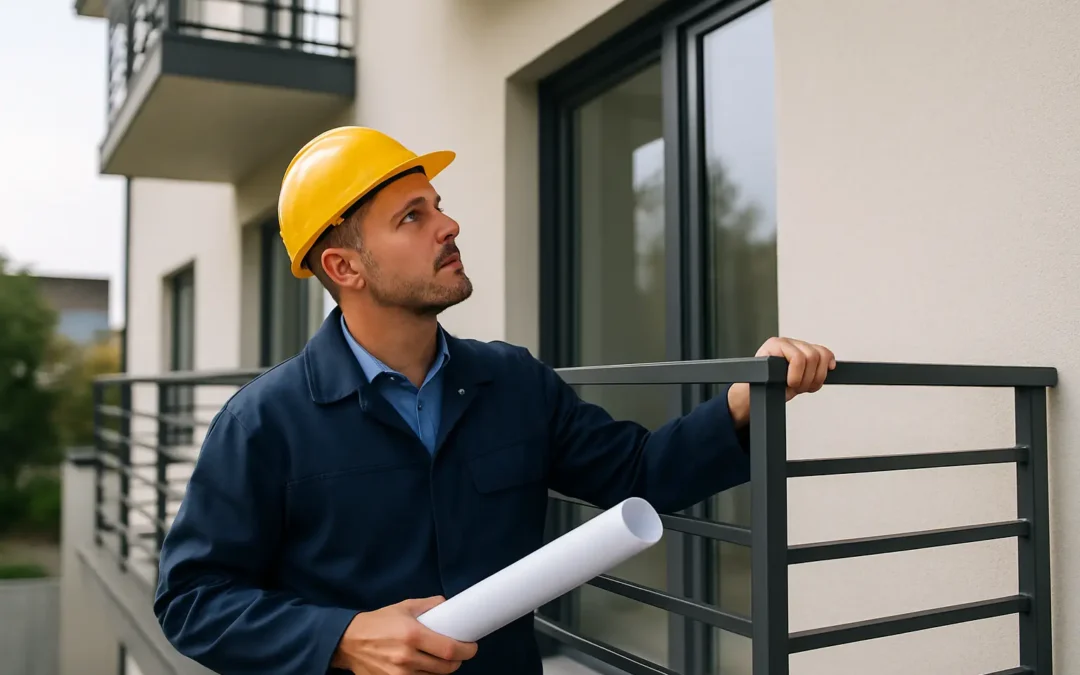
A balcony looks simple until you stand on it.
That moment – when the view is perfect, the railing feels solid under your hand, and the floor doesn’t flex – is the real test of the work. A balcony is architecture you trust with your family, your tenants, and your liability. That’s why choosing a metal balcony fabrication contractor is less about “getting metal installed” and more about getting a clean design, accurate engineering, and an installation that behaves the way it should for years.
This is a practical guide to help you hire the right team, avoid the usual project surprises, and understand what a professional workflow should look like from measurement to final install.
What a metal balcony fabrication contractor actually does
A good contractor is not just a welder with a truck. Balcony work sits at the intersection of design, structural coordination, and code compliance, especially when you’re attaching to an existing building or replacing an older system.
At a minimum, you want a contractor who can take responsibility for: field measurements, design guidance (style, materials, drainage, privacy, and sightlines), shop drawings that match real site conditions, and fabrication with consistent tolerances so parts fit on install day. On many projects, you also need engineering review and stamped drawings for permitting or for the building’s records.
If you’re comparing bids, this is the first filter: are you buying “metal parts,” or are you buying a controlled process that produces a balcony that’s safe, inspectable, and finished at a high level?
Start with the balcony’s job – not the style
Most clients begin with aesthetics: black steel, aluminum, glass panels, cable infill, maybe a modern picket look. Those choices matter, but they should be downstream of function.
Ask yourself what the balcony must do on day one and year ten. Is this a walk-out where people gather? A Juliet balcony that’s mostly visual? A multi-unit property where maintenance needs to be predictable? An exterior escape stair landing that must meet stricter requirements? Usage drives load demands, railing height, infill rules, and finish durability.
Then consider your exposure. Coastal air, heavy freeze-thaw cycles, direct sun, and constant rain each punish metals differently. A smart contractor will guide you toward material and coating decisions based on where the balcony lives, not just how it looks in a photo.
Materials: steel, aluminum, stainless, and mixed systems
A metal balcony can be built with different base materials, each with trade-offs.
Steel is strong, cost-effective, and highly customizable. It’s also less forgiving if coating is rushed. If water gets under the finish, corrosion starts and spreads. Steel balconies can last a long time, but only when surface prep and finishing are handled like part of the structure – not an afterthought.
Aluminum is lighter and naturally corrosion resistant, which is why it’s common for railing systems and coastal applications. The trade-off is that aluminum can require different detailing to avoid visible movement, and some custom shapes may cost more than steel depending on the shop.
Stainless steel excels in corrosion resistance and modern aesthetics, especially for hardware and select architectural components. It can be a premium option, and it demands careful fabrication to avoid visible heat tinting or inconsistent finishes.
Mixed systems are common: a steel frame with aluminum or glass railings, stainless hardware, or engineered posts. These can be excellent when coordinated correctly. They can also become a headache when multiple trades point fingers at each other, so clarity on who owns the full scope matters.
The details that separate “looks good” from “built right”
Balcony projects rarely fail because a contractor chose the wrong baluster style. They fail because details were rushed.
Water management is one. Exterior balconies need a plan for drainage so water doesn’t sit at posts, collect at corners, or leak into the building envelope. That plan affects how base plates are designed, where penetrations occur, and what flashing or waterproofing coordination is required.
Connections are another. How the balcony attaches to structure – wood framing, concrete slab, steel beams – determines anchor selection and plate sizing. A professional will ask early what substrate they’re mounting to and what’s behind the finished surfaces.
Movement and tolerance matter too. Real buildings are not perfectly square, especially older ones. If a contractor fabricates off assumptions instead of field measurements and job-specific drawings, installation day turns into field cutting and patchwork. That’s when finishes get damaged, timelines slip, and the final product looks improvised.
Drawings and engineering: when “it depends” is the honest answer
Homeowners often ask, “Do I need engineered drawings for a balcony?” The truth is: it depends on your local permitting requirements, your building type, and whether the work is structural or purely railing replacement.
If you’re building a new balcony, modifying structure, or working on a multi-family or commercial property, engineered review is commonly required and often non-negotiable. Even on smaller residential projects, engineering can be a smart risk reducer when you want documentation that the design matches expected loads and anchoring conditions.
A metal balcony fabrication contractor should be able to produce clear shop drawings for approval, then coordinate engineering review and stamping when needed. That step protects you twice: it supports permits and inspections, and it gives you a paper trail that the system was designed intentionally.
The workflow you should expect from a professional contractor
Balcony projects go smoothly when the process is structured.
It should start with a site visit for measurement and a real conversation about goals: privacy, view, maintenance, and budget. From there, you should receive job-specific drawings that show dimensions, post locations, infill type, attachment methods, and finish notes. You approve those before fabrication begins.
If engineering is required, it should happen before production, not after the parts are already made. Once everything is approved, fabrication should proceed with materials and finishing that match the drawings. Then installation should be scheduled with a clear plan: how the site will be protected, what areas will be accessed, and how long the work will take.
This process isn’t “extra.” It’s how you avoid rework, change orders driven by missing information, and that uneasy feeling that the job is being figured out as it goes.
Pricing: what drives cost on a metal balcony
Balcony quotes can vary widely, even when the visual design looks similar. That’s because you’re not only paying for metal – you’re paying for fabrication hours, finishing, installation complexity, and risk.
Size and geometry are obvious drivers, but small details add up: more corners, more posts, more weld length, and more custom hardware. Finish is another major factor. Higher-performance coating systems and better prep cost more, and they should.
Access can swing labor dramatically. A ground-level patio guard is not priced like a third-floor balcony that requires careful staging, tight site logistics, and controlled material handling. Removal of existing railings, repairs to substrate, and coordination with waterproofing or siding also affect the total.
If a bid is significantly lower, ask what’s missing. Is engineering excluded? Is finishing basic? Are drawings and approvals included? A low number can be fine, but only if scope and quality are truly equal.
Questions to ask before you sign
You don’t need to interrogate a contractor. You do need to confirm they’re set up to deliver professionally.
Ask who is taking final measurements and when. Ask to see the drawing package you’ll approve. Ask what finish system is being used and what prep is included. Ask how attachments are determined and whether engineering is part of the scope if required. Ask what the installation schedule depends on and how changes are handled once drawings are approved.
You’re listening for calm, specific answers. A contractor who builds balconies regularly will explain these steps without getting defensive, because this is their normal.
Choosing a partner, not a vendor
The best balcony outcomes happen when the contractor acts like a full-service partner – someone who can translate a design idea into buildable drawings, coordinate reviews, and install with consistent fit and finish.
That’s the approach we follow at Iron & Glass Designs: a controlled workflow with field measurements, drawings for approval, engineering review when needed, then fabrication and on-time installation. For homeowners and property investors, it removes a lot of the uncertainty that usually comes with exterior metalwork.
A closing thought you can use on any project
If you remember one thing while hiring: don’t judge a balcony by the railing profile alone. Judge it by the process behind it. When the measurement, drawings, engineering, fabrication, and installation are treated as one continuous job – not five disconnected tasks – the balcony doesn’t just look premium. It feels trustworthy every time you step outside.