
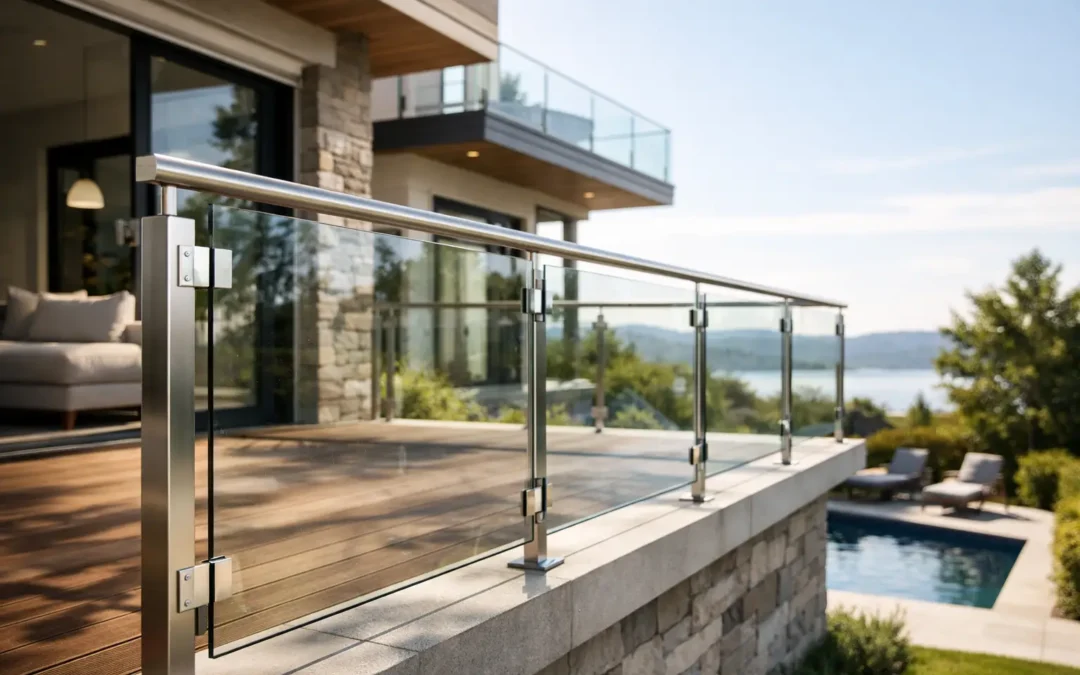
A dark stair with bulky balusters can make an otherwise beautiful home feel closed in. Glass railigns change that fast. They open sightlines, pull more light through the space, and give stairs, balconies, and exterior edges a cleaner, more finished look without giving up safety.
For homeowners and property investors, that combination matters. You want the visual impact of a modern upgrade, but you also need a system that feels solid, suits the architecture, and meets code. That is where the difference between a generic railing product and a properly designed, fabricated, and installed glass system becomes clear.
Why glass railigns keep showing up in high-end projects
The appeal is not hard to understand. Glass has a way of making square footage feel more generous. On interior stairs, it reduces visual clutter and helps natural light travel from one level to another. On balconies and decks, it preserves views instead of chopping them into sections.
There is also a practical side. Glass railings work well with many design directions, from warm contemporary homes with wood treads and black accents to sharper modern builds with steel, stone, and large-format tile. They do not force you into one style. Done well, they quietly support the architecture instead of competing with it.
That said, the best results come from customization. Panel size, top rail choice, mounting method, post style, and surrounding materials all affect the final look. A system that feels sleek in one home can look out of place in another if the proportions are wrong.
Where glass railigns work best
Glass railings are often associated with interior staircases first, but their use is much broader. In residential settings, they are a strong fit for stair openings, loft edges, second-floor landings, balconies, decks, and pool-adjacent barriers where visibility matters. In commercial settings, they are equally effective in office interiors, lobbies, mezzanines, and exterior entries where a clean professional finish is part of the experience.
The main reason clients choose them is simple – they want safety without visual heaviness. Traditional pickets create rhythm and structure, but they also break up the line of sight. Glass gives you a barrier that protects the edge while keeping the space feeling open.
Exterior projects need a more careful evaluation. Weather exposure, fastening conditions, drainage, and long-term maintenance all matter more outdoors. The right design can perform beautifully, but exterior glass railing is never just about appearance.
Frameless vs. framed glass railings
This is one of the first design decisions, and it affects both budget and appearance.
Frameless glass railigns
Frameless systems are the minimalist option. They rely on heavy glass panels secured through specialized base channels or hardware with little visible structure. The result is crisp, open, and highly architectural.
They are popular for luxury interiors and view-focused exteriors because there is so little interruption to the eye. But frameless systems usually require more precise engineering, tighter installation tolerances, and a stronger supporting structure. They can also come at a higher price point, depending on the site conditions and hardware package.
Framed or post-supported systems
Framed glass railings use metal posts, top rails, or surrounding structure to support the glass. This approach still delivers a modern look, but with more visible framing elements.
For many properties, this is the smart middle ground. You still get openness and light, yet the system may offer more flexibility for certain layouts and budgets. Material choice also matters here. Aluminum and stainless steel each bring a different visual character and maintenance profile.
What matters more than the glass itself
Clients often start by focusing on panel clarity, thickness, or whether the railing is frameless. Those are important choices, but they are not the whole job. The real success of a glass railing project depends on design coordination, measuring accuracy, engineering review where required, fabrication quality, and installation discipline.
That is especially true when the railing ties into stairs, slab edges, concrete curbs, waterproofed decks, or finished flooring. A beautiful rendering means very little if the attachment points are wrong or the heights do not comply with local requirements.
This is why a structured process is worth paying attention to. Site measurement should happen before fabrication. Drawings should reflect the actual conditions, not rough assumptions. Clients should be able to review and approve the design before production begins. And on projects that require it, engineer review and stamping bring another layer of confidence.
Design details that shape the final result
A glass railing can look premium or average depending on a few small but important details. The top rail profile changes the overall character immediately. Slim and understated reads more modern. Heavier and more pronounced can feel more traditional or commercial.
The metal finish matters just as much. Matte black creates strong contrast and pairs well with wood, white walls, and contemporary interiors. Stainless steel feels lighter and more technical. Powder-coated finishes offer flexibility when the railing needs to connect visually with windows, doors, or exterior trim.
Then there is the glass itself. Clear glass is the most common choice because it keeps the system visually light. Low-iron glass is an upgrade for clients who want a cleaner, less green edge, especially in bright interiors. Privacy glass or frosted treatments can make sense in certain settings, but they change the look significantly.
Safety, code, and the value of getting it right the first time
No railing project should be treated as a decorative add-on. It is a safety system first. That means height requirements, guard loading, glass specification, spacing, and attachment methods all need to be addressed correctly.
This is where many property owners run into trouble with off-the-shelf solutions or installers who treat every opening the same. Stair geometry is different from balcony geometry. Interior dry conditions are different from freeze-thaw exposure outside. Commercial occupancy can trigger different performance expectations than a single-family home.
A professional team should be able to walk you through what is feasible, what needs engineering input, and where design ideas may need to adjust to suit real-world conditions. That clarity saves time and avoids the expensive frustration of rework later.
The buying process should feel controlled, not confusing
For most clients, the hardest part is not choosing glass. It is knowing how the project will move from idea to installation.
A dependable process removes a lot of that uncertainty. It starts with a site visit and accurate measurements. From there, project-specific drawings help translate the concept into something buildable. Once the design is approved, engineering review and stamping can be completed where needed, followed by fabrication and installation.
That kind of workflow matters because custom railings are not plug-and-play products. They depend on precise coordination. When clients know what comes next, the project feels less risky and the final result is usually better.
For homeowners in the Greater Toronto area looking for that level of structure, craftsmanship, and follow-through, Iron & Glass Designs focuses on custom solutions that balance clean design with dependable execution.
Are glass railigns hard to maintain?
Not usually, but expectations should be realistic. Interior glass railings are straightforward to clean with the right non-abrasive products. Exterior systems need more attention because they collect dust, water spots, and seasonal residue faster.
Fingerprints are more visible on glass than on pickets, so if you have young children or a busy household, you will notice that. Still, most clients feel the visual payoff is worth it. The key is using quality materials and details that are made for the environment they are installed in.
When glass railings are the right choice – and when they are not
Glass railings are a strong fit when your goal is openness, modern design, and clear sightlines. They are especially effective in homes with good natural light, attractive views, or a stair layout that currently feels too heavy.
They may be less ideal if your priority is the lowest possible upfront cost, minimal visible cleaning, or a more traditional architectural style that calls for heavier ornamental metalwork. There is no single right answer for every property. The best railing is the one that matches the architecture, the use of the space, and your expectations over time.
A good project starts with honest guidance. If glass is the right fit, it should feel intentional, solid, and tailored to the space – not like a trend added at the last minute. When design, engineering, fabrication, and installation are handled as one coordinated process, the result is more than a railing. It becomes part of how the property feels every time you walk through it.