
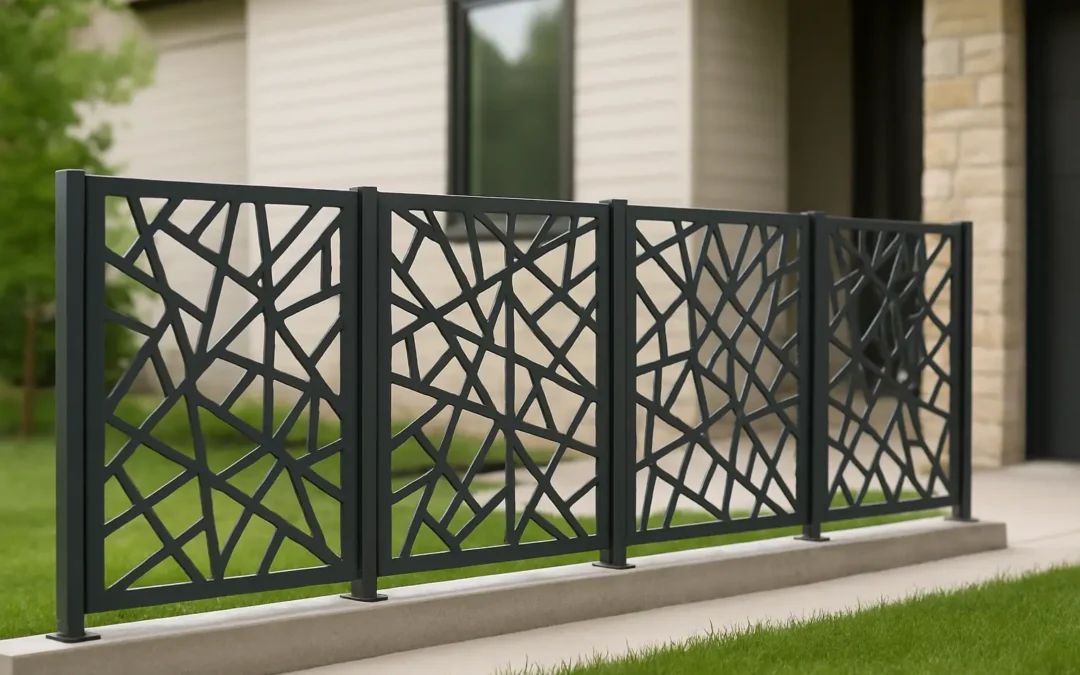
Most fences fail in the same place – the details you only notice after install. A panel that looks perfect online can feel too “busy” next to clean architecture, rattle in the wind, or clash with your windows and railings by half a shade of black. That is why homeowners and property investors keep coming back to the same request: modern metal fence panels custom to the property, not forced onto it.
Custom does not have to mean complicated. It means you choose the lines, the privacy level, and the durability you expect, then the fence is engineered and built so it installs cleanly and stays that way.
What “modern” really means in metal fencing
Modern fence design is less about a single look and more about discipline. Clean lines. Intentional spacing. Consistent reveals. Posts that look like they belong, not like they were “added” to hold a panel up.
Most modern metal fences land in a few families of styles. Horizontal slats feel architectural and can add privacy without turning the yard into a box. Vertical pickets read lighter and more classic, but can still feel modern when the spacing is consistent and the top line stays flat. Mixed-material designs (metal plus glass or metal plus wood accents) can be striking, but they demand tighter coordination so the fence complements the house rather than competing with it.
The trade-off is that modern designs are less forgiving. If posts are slightly out of alignment, you see it. If panel spacing varies, you see it. A professional workflow matters more here than it does with a more rustic fence.
Why modern metal fence panels are worth customizing
A fence is both a safety system and a major visual element. When you customize, you are not just picking a pattern. You are tailoring how the fence behaves day-to-day.
First, you can dial in privacy without losing airflow. Solid panels give maximum screening, but they also catch wind and can feel heavy. Slatted designs can reduce wind load and still block sightlines from certain angles.
Second, you can align the fence with the architecture. Modern homes often have repeating verticals in window mullions or horizontal lines in siding and soffits. Matching that rhythm makes the whole exterior feel designed.
Third, you can solve site-specific problems. Sloped grades, retaining walls, tight side yards, pools, and driveways all introduce constraints that stock panels are not built to handle elegantly.
Finally, customization is often the cleanest way to keep everything code-aligned. That includes picket spacing, gate latch height, climb resistance near pools, and overall fence height. Requirements vary by location and application, so it depends – but building to the real conditions beats trying to “make it work” on install day.
Picking the right metal: aluminum, steel, stainless
Modern metal fence panels can be fabricated in several materials, and the best choice depends on exposure, budget, and the look you want.
Aluminum is popular for contemporary exteriors because it is lightweight, corrosion-resistant, and holds a clean powder-coated finish well. It is a strong choice near moisture and in climates where rust is a concern. Aluminum can span nicely when engineered correctly, but it may dent more easily than heavier steel if you expect impacts.
Steel (including wrought iron-style fabrication) gives you a substantial feel. It is an excellent option when you want thin, crisp profiles that still feel rigid, or when you need heavier-duty gates. The trade-off is corrosion management. Steel fencing needs high-quality prep and a proper finish system to stay looking sharp.
Stainless steel is a premium option, often used when you want a refined, minimal look and strong corrosion resistance. It can be ideal near pools or coastal environments. It is typically more expensive, and fingerprints or smudges can be a consideration depending on finish.
If you are deciding between materials, focus less on what is “best” in the abstract and more on what matches your environment and how you plan to use the fence. A driveway gate that opens multiple times per day has different needs than a side-yard boundary fence.
Design decisions that change cost and performance
Two fences can look similar from across the street and behave very differently up close. The most important custom choices are usually geometry, spacing, and structure.
Panel height and infill density are the big cost drivers. More material and more welding or assembly time increases cost. Privacy-forward designs also add wind load, which can require stronger posts, deeper footings, and heavier hardware.
Post spacing matters, too. Wider spans can look cleaner with fewer posts, but they increase deflection risk and require a panel design engineered to stay stiff. Tighter post spacing often costs more in labor and footings but can allow lighter panels.
Gate construction is its own category. A modern driveway gate or tall pedestrian gate needs the right hinge system, latch hardware, and frame reinforcement to avoid sagging. If you want automation, that should be planned early so power, clearances, and hinge loads are accounted for.
Finish selection affects both appearance and maintenance. A high-quality powder coat in a modern matte black is a go-to for a reason: it is clean, consistent, and pairs well with glass, brick, stone, and wood. Textures can hide fingerprints and minor scuffs. Gloss finishes can look premium but may show imperfections more.
Site conditions: where “custom” pays off fast
The reason custom fencing feels so satisfying is that it resolves the awkward parts of a property. Those awkward parts are common.
Sloped yards are a perfect example. You can stair-step panels, or you can rake the panel to follow the slope. Stair-stepping is simpler but leaves triangular gaps that can impact privacy and pet containment. Raked panels look sleek but require more precise fabrication and installation.
Retaining walls and existing masonry also change the approach. You may be surface-mounting posts, core-drilling, or coordinating post placement around drainage and coping. A custom plan prevents surprises like anchors landing too close to an edge.
Pool areas demand special attention. Many jurisdictions have strict rules for climb resistance, self-closing gates, and latch locations. Even if your fence is primarily about aesthetics, it still needs to function as a safety barrier.
If your property has multiple exterior metal elements (railings, balcony guards, stair systems), custom fence panels let you keep a consistent design language. That is where the “modern” look feels intentional instead of piecemeal.
A professional process for modern metal fence panels custom
The fastest way to lose confidence in a custom project is vague communication. A modern fence should be built with the same discipline you expect from architectural railings.
A reliable workflow starts with a site visit and real measurements. Not a guess, not a “standard panel” assumption. Measurements should include grade changes, hardscape edges, and gate clearances.
Next comes a drawing phase. A job-specific drawing helps you see post locations, panel layout, and details like spacing and top-line alignment. This is also where you confirm what you care about most: privacy, symmetry, view preservation, or matching other exterior features.
After client approval, engineering review may be needed depending on scope and local requirements. This is especially relevant for taller fences, gates with automation, or any condition where loads and anchoring need verification. It is not about overcomplicating the project – it is about building something that is defensible, safe, and built to last.
Then production happens based on the approved design. Finally, installation should be scheduled and executed with clean alignment, consistent reveals, and hardware that feels solid from the first close.
That end-to-end approach is exactly how we run projects at Iron & Glass Designs: measurements first, drawings you can approve, engineering review when required, then fabrication and on-time installation.
What to ask before you approve a design
Good custom work is collaborative. The right questions help you get the fence you pictured, not a close substitute.
Ask how the fence will handle wind and impact. A more private panel often needs heavier posts and smarter anchoring. Ask where expansion gaps are needed and how rattling is prevented.
Ask what “black” finish actually means. Matte black, satin black, and textured black read differently next to window frames and railings. If you are matching existing elements, confirm the finish system and sheen level.
Ask how the top line will look from the street. Modern fences often live or die by that clean horizon. If your grade changes, you want to understand whether the fence will step, rake, or combine both.
Ask about gate sag prevention. The best-looking gate is the one that still closes perfectly three years from now.
Maintenance expectations: keep it modern
One reason people love metal fencing is that maintenance is simple compared to wood, but “simple” does not mean “never.” Rinse off dirt and salt residue occasionally, especially near roads that are treated in winter. Check gate hardware once or twice a year and tighten if needed.
If a powder-coated fence gets scratched to bare metal, touch-up matters. Small chips can be addressed quickly before corrosion has a chance to start on steel. Aluminum is more forgiving, but touch-ups still keep the fence looking crisp.
The goal is not to baby the fence. The goal is to keep the finish looking intentional, because modern design puts every line on display.
The real value of custom: it looks like it belongs
A modern fence is one of the first things people see, but the best compliment is quieter: it feels like it was always part of the property. When the panel rhythm matches the architecture, the gates swing true, and the finish ties into your other exterior details, the fence stops being a “project” and starts being part of the home.
If you are deciding how far to take customization, let your property guide you. A simple, well-built panel that fits your grade and aligns with your sightlines will outperform an over-designed fence every time – and you will notice that satisfaction every time you pull into the driveway.