
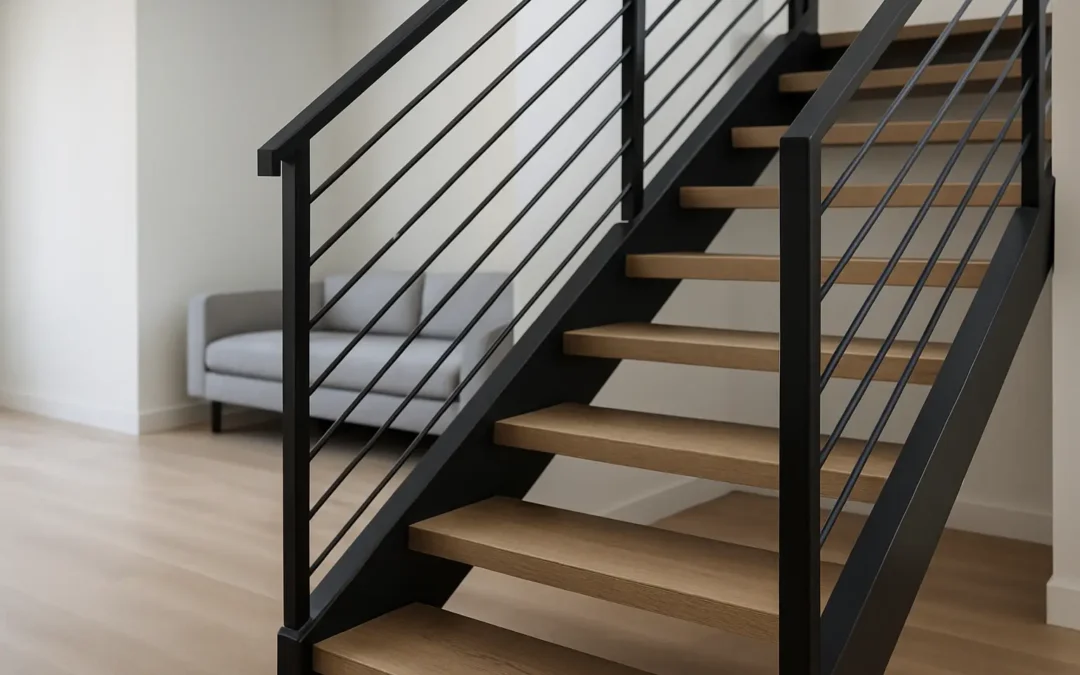
A staircase is one of the few architectural elements you touch every day. You feel it under your foot, you grip it when your hands are full, you notice it when guests walk in. If it squeaks, flexes, or looks like an afterthought, it quietly drags down the whole space. If it feels solid, crisp, and intentional, it does the opposite.
That is why a custom metal stair system is not just a materials choice. It is a design decision, a safety decision, and a project-planning decision. Done well, it becomes a permanent piece of the building – one that looks clean, lasts, and stays aligned with code requirements.
What “custom” actually means for a metal stair system
People hear “custom” and think it only means the shape. Sometimes it does – switchbacks, spirals, or tight runs that need clever geometry. More often, custom means the stair is made to match the exact conditions on site: floor-to-floor height, finished flooring thickness, landing locations, wall conditions, and how the stair ties into existing structure.
A pre-made stair can look fine in a showroom and still fight you in the field. Small mismatches add up quickly: a tread height that lands just outside comfortable range, a landing that crowds a door swing, a railing that cannot meet required heights once the final flooring goes in. Custom is how you avoid “almost fits” decisions that get expensive later.
The other side of custom is visual. Metal gives you the ability to get thin, strong profiles and consistent lines. That is the look many modern homeowners and commercial owners are after – clean edges, minimal bulk, and a stair that complements glass, wood, and stone instead of competing with them.
Why metal is the go-to for modern stairs
Metal is popular because it solves multiple problems at once. It delivers strength without heavy-looking structure, holds crisp tolerances, and handles interior or exterior exposure when finished properly.
For interiors, steel stringers are the backbone of many contemporary designs. They can be tucked, centered, or expressed as a focal feature. Pair that with wood treads for warmth, or keep it ultra-modern with metal treads and open risers where allowed.
For exteriors, metal stands up well when the system is designed for drainage, corrosion resistance, and movement through seasons. The right coating and detailing matter here. Exterior stairs fail early when water gets trapped, salt sits in corners, or coatings are chosen more for color than real-world exposure.
Metal also plays nicely with glass and cable railing systems when the look calls for openness. The trade-off is that openness needs careful planning for code and comfort. What looks minimal still has to feel secure when you are walking it daily.
Design choices that change the feel of the stair
A stair can be technically correct and still feel wrong if it does not match how the space is used. The most successful custom stair projects start with a few key decisions.
Stringer style: center, side, or concealed
A center stringer gives a floating effect and can make the space feel larger. Side stringers feel more traditional and can hide connections more easily. Concealed structure can look incredibly clean, but it may require more coordination with framing and finishes. The right answer depends on what you want to see, what you want hidden, and how much access you have to the supporting structure.
Treads and risers: open vs closed
Open risers are popular for their light, modern look. They can also allow more light to travel through a tight stairwell. The trade-off is privacy and, depending on local requirements, limitations on riser openings. Some families prefer closed risers for a more solid feel, less dust transfer, and a quieter walk.
Railings: the part you touch the most
Railings are where design and safety meet. Glass offers a clean view and a premium finish. Metal pickets can be timeless or modern depending on spacing and profile. Cable is sleek but needs proper tensioning, line spacing, and thoughtful use in homes with kids. Handrail shape matters too – a beautiful rail that is uncomfortable to grip becomes a daily annoyance.
Noise, vibration, and “feel”
A stair’s comfort is not only about looks. It is about stiffness, connection points, and how the system is anchored. Metal stairs can feel exceptionally solid when engineered and installed with the right supports. They can also feel springy if the structure is under-designed or attached without a plan for load paths.
If you want a stair that feels built-in, not bolted on, you plan for that from the start.
Code and engineering: where projects stay on track
Most stair regrets come from the same place: treating code as something you check at the end. Stair geometry, railing heights, guard requirements, tread depth, and consistent riser heights are not minor details. They are the difference between a stair that passes inspection and one that requires rework.
A custom metal stair system is a good candidate for drawings and engineering review because metal is fabricated to what is on paper. If measurements or assumptions are off, fabrication will faithfully reproduce the mistake.
This is also where experienced coordination pays off. Finished floor thickness, tile build-ups, threshold transitions, and landing elevations all affect final riser heights. A stair can be framed correctly and still end up with an out-of-tolerance top step if the finish schedule changes after the stair is designed.
In practical terms, the safest path is a controlled workflow: site measurement, job-specific drawings, client approvals, engineering review when required, then fabrication and installation. It reduces surprises and keeps the project moving.
Interior vs exterior stairs: different problems, different solutions
Interior stairs are mostly about integration and finish. You are managing aesthetics, comfort, and how the stair works with walls, flooring, and lighting. You might be planning for hidden fasteners, clean transitions, and guard details that look minimal while staying secure.
Exterior stairs are about water, temperature swings, and long-term maintenance. The smartest exterior designs do not rely on perfect caulking or hope. They shed water, avoid dirt traps, and use coatings and materials that make sense for the exposure.
If you are deciding between paint, powder coating, galvanized finishes, aluminum components, or stainless steel elements, it depends on the environment and the look you want. Some finishes are beautiful but require touch-ups. Others are more forgiving but may limit color choices. The best answer is the one you can maintain without stress.
The real cost drivers (and how to control them)
Custom does not have to mean unpredictable. But you should know what actually moves pricing.
Complex geometry costs more than straightforward runs. A simple straight stair with a clean railing is often more efficient than a stair with multiple turns and tight landings. Material choice matters too. Stainless steel and glass typically price differently than painted steel with metal pickets.
Details also add time. Hidden connections, extra polishing, custom caps, curved handrails, or special tread materials can raise fabrication and installation effort. Sometimes that is exactly what the project needs. Other times, you can get 90 percent of the look with simpler detailing.
One of the easiest ways to control cost is to lock decisions early and coordinate with other trades. If your stair fabricator is designing around a wall that gets moved, or flooring that changes thickness, you can end up paying for revisions that were avoidable.
What a professional custom stair process looks like
A good stair project feels calm, not chaotic. The building should not have to “figure it out in the field” with cutting, shimming, and last-minute compromises.
It typically starts with a site visit to measure and understand the structure and finishes. Then you review drawings that show the stair layout, railing details, attachment points, and key dimensions. Once you approve the design, engineering review can be completed when needed for permits or compliance. Only then should fabrication begin.
The final step is installation that respects the finished space. A stair is not a rough framing element. It is a feature. Clean protection, precise alignment, and careful anchoring make the difference between something that looks expensive and something that just was expensive.
If you want a partner that handles the full workflow – design, drawings, engineering coordination, fabrication, and installation – Iron & Glass Designs builds custom metal-and-glass systems with a process that is built for clear approvals and dependable delivery.
Choosing the right partner: what to ask before you commit
You do not need to be a stair expert to vet a stair build. You just need to ask questions that reveal whether the team has a real plan.
Ask who is measuring the site and when. Ask what the drawings will show and how approvals work. Ask how code requirements are handled for your specific property type. Ask what finish system is recommended for the environment and what maintenance it will need. Ask how the stair will be anchored and what parts of the structure need to be ready before installation.
The goal is not to overwhelm you with technical detail. The goal is to confirm that the project is being treated like a system, not a collection of parts.
A staircase is one of the clearest signals of build quality in a home or commercial space. When it is designed with intention and built with discipline, you notice it in the best way – it simply feels right every time you use it.