
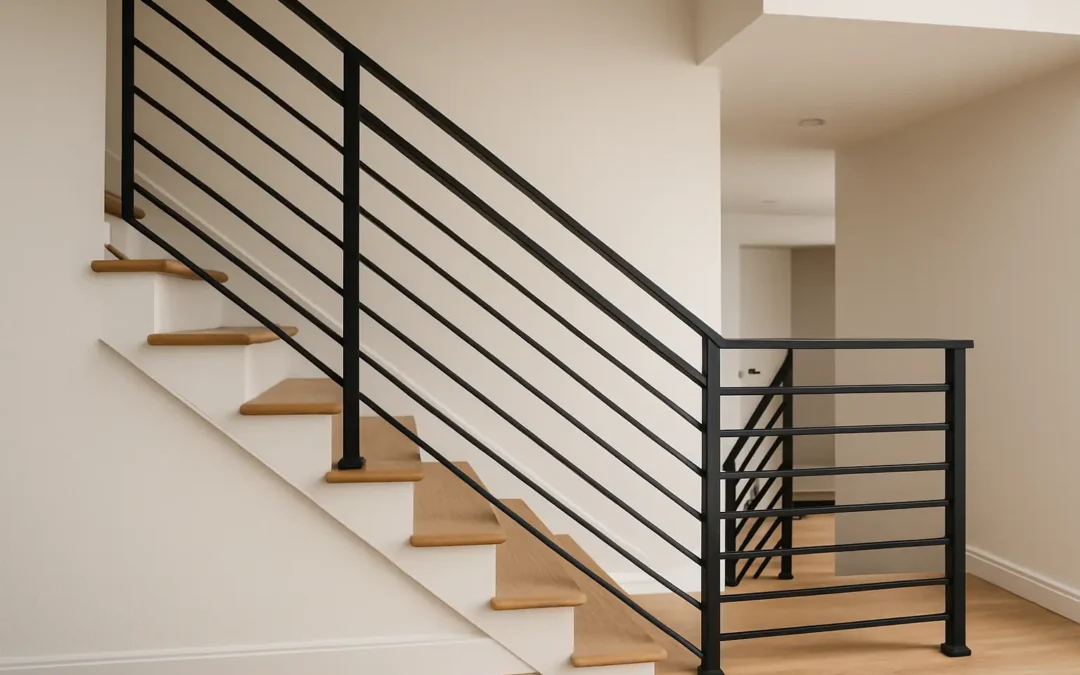
A staircase is one of the few places in your home you touch every single day. If the railing feels wobbly, looks dated, or was clearly “made to fit” after the fact, you notice it – and so does everyone who walks through the front door. The right railing fixes that instantly. Not by shouting for attention, but by looking like it was always meant to be there.
Custom metal railings for indoor stairs are where design and safety meet in a very practical way. They can be clean and modern, traditional and detailed, or quietly minimal. The difference is that custom work respects the exact geometry of your stair, your sightlines, and how people actually move through the space.
Why custom beats “off-the-shelf” indoors
Indoor stairs are rarely perfectly standardized, especially in older homes or renovated properties. Treads can vary slightly, landings may not be perfectly square, and floors can be out of level. Prefabricated railing kits assume the opposite. They can work in a pinch, but they often force compromises: odd angles at the newel, awkward transitions at the landing, or posts that land where they look most inconvenient.
Custom fabrication starts with the reality of your home, not a box of parts. Measurements are taken to the millimeter, and the design can account for constraints like tight stairwells, door swings, nearby baseboards, and open-to-below edges. The result is a railing that feels “built-in,” not bolted-on.
There’s also the long-term factor. A properly fabricated metal railing is rigid, durable, and less prone to loosening over time than many lightweight systems. That matters on stairs, where small movement can quickly become a safety issue.
Design choices that change the whole look
Most people start with a reference photo: a sleek black railing they saw in a modern reno, a classic scroll detail, or a clean vertical picket style that feels timeless. The best approach is to treat that photo as a direction, then tailor the details to your space.
Profile and presence: thin and minimal or bold and architectural
Metal can be light and refined or heavier and more structural-looking. A slim square tube handrail can disappear visually and let your stair finishes take the lead. A wider flat bar top rail reads more architectural and can better match thicker trim, chunky treads, or an industrial-style interior.
The “right” presence depends on the scale of the stairwell and what surrounds it. In a narrow hallway stair, lighter profiles often feel more natural. In a two-story foyer with an open stringer stair, a stronger profile can anchor the space.
Infill options: vertical pickets, horizontal rails, or mixed materials
Vertical pickets remain a go-to for indoor stairs because they’re clean, familiar, and generally easier to align with code requirements. They also age well stylistically – they don’t lock you into a trend.
Horizontal rails create a more contemporary look, but they can introduce code and safety considerations depending on jurisdiction and the context of the home. If kids are in the picture, many homeowners prefer the peace of mind of vertical pickets.
Mixed-material combinations are where custom work really shines. Metal frames with glass panels can keep the interior bright and open, especially on stairs that border a living room or entry. Metal-and-wood pairings can also be stunning: a metal guard with a wood cap handrail that matches your flooring or stair treads ties the levels together.
Transitions that look intentional
Landings, turns, and wall returns are the spots where railings either look professional or look like a compromise. A clean transition at the landing, a smooth rake-to-level change, and a thoughtful end condition (like a return into the wall or a well-placed terminal) are small details that make a big difference.
Custom design lets you decide how those moments should feel. Do you want the guard to “float” off the landing with minimal posts? Do you want a stronger post at the bottom for a grounded look? Those choices are aesthetic, but they also affect rigidity and how comfortable the rail feels in your hand.
Material options: what you gain (and what you trade)
Not all “metal railings” are the same. Indoors, the best material is usually the one that balances appearance, durability, and maintenance for the way you live.
Wrought iron and mild steel
For classic black railings with crisp welds and a substantial feel, mild steel is a common choice. It can be fabricated into clean modern lines or more decorative shapes. The trade-off is that steel needs a quality finish system to resist scratches and surface rust over time, especially in high-touch areas.
Stainless steel
Stainless has a clean, high-end look and excellent corrosion resistance. It’s popular in modern interiors, especially with glass. The trade-off is aesthetic fit: stainless can feel “cooler” visually than matte black steel, and fingerprints can be more noticeable depending on finish.
Aluminum
Aluminum is lightweight and corrosion-resistant, and it can be a smart choice for certain interior applications. However, if you want a heavier, more traditional feel in the hand, steel often delivers that better.
If you’re unsure, focus on the end goal: do you want a warm, classic presence; a sleek modern line; or maximum light and openness with glass? From there, a fabricator can recommend the material and finish system that matches.
Code and safety: the part you can’t afford to guess
Indoor stairs look simple until you talk about compliance. Handrail height, guard height, spacing between pickets, graspability, and how a railing is anchored all affect safety – and whether the work will pass inspection when permits are involved.
Even when a project doesn’t require a permit, most homeowners still want the reassurance that the railing was built to meet real standards, not just “looks fine.” Spacing and height are the obvious parts, but rigidity is just as important. A railing should feel solid under everyday use, not flex when someone leans on it.
Because requirements can vary by jurisdiction and by application (handrail versus guard, open side versus wall side, stair run versus landing), this is where professional drawings and engineering review can reduce risk. It’s also where custom fabrication helps: when the design is built around your stair geometry, it’s easier to meet the intent of the code without awkward workarounds.
What the custom process should look like
A custom railing should not feel like a leap of faith. A professional shop will run a structured process that makes the outcome predictable.
It typically starts with a site visit to take accurate measurements and understand the job conditions – stair material, finished floor heights, wall construction, and how the railing will be anchored. From there, you should expect job-specific drawings that show heights, post locations, and key dimensions. That’s your moment to approve the look and the layout before anything is fabricated.
For projects that require it, engineering review and stamped drawings add another layer of confidence. Then comes fabrication, finishing (paint or powder coat, or the selected metal finish), and installation. A good install team treats your interior like it matters: protecting floors, aligning posts cleanly, and leaving you with a railing that feels tight, straight, and comfortable to use.
If you want a clear, end-to-end workflow like that – including measurement, drawings, engineering review when required, fabrication, and installation – Iron & Glass Designs builds projects this way so the finished railing looks intentional and performs like it should. You can start with a free quote request at https://ironglassdesigns.com/.
Budget drivers: what actually changes the price
“Custom” doesn’t automatically mean “out of reach,” but pricing depends on a few real variables.
Complex geometry raises labor. A straight run with a simple landing is typically more efficient than multiple turns, curved sections, or intricate transitions. Glass usually increases cost because of panel fabrication, hardware, and the precision required in layout and installation. Decorative details can also raise fabrication time – not just the parts themselves, but the finishing and the added weld cleanup.
Finish quality matters too. A durable powder coat or a high-quality paint system can cost more upfront, but it’s often the difference between a railing that stays sharp for years and one that shows wear quickly in high-touch spots.
The smartest way to control budget is to pick one “hero” feature and keep the rest clean. For example, choose glass on the most visible section and use matching metal pickets in a less prominent area, or keep the design minimal but invest in a premium finish.
Choosing a design you won’t regret in five years
Trends come and go, but stairs are permanent. If resale matters, or if you just want to avoid design fatigue, aim for lines that support the architecture instead of competing with it.
Matte black remains popular because it works with nearly everything – white walls, warm wood floors, and modern fixtures. But the most future-proof choice is consistency: match your railing style to other fixed elements like door hardware finishes, lighting style, and trim thickness. If your home is full of soft traditional details, an ultra-industrial railing can feel out of place. If your interior is crisp and minimal, heavy ornament can look busy.
When in doubt, prioritize comfort in the hand and visual simplicity at the landing transitions. Those two factors tend to age well.
A great indoor railing doesn’t just “meet code” or “look modern.” It makes the stairs feel confident underfoot and makes the whole space feel more finished every time you walk by it – which is exactly what a daily touchpoint should do.