
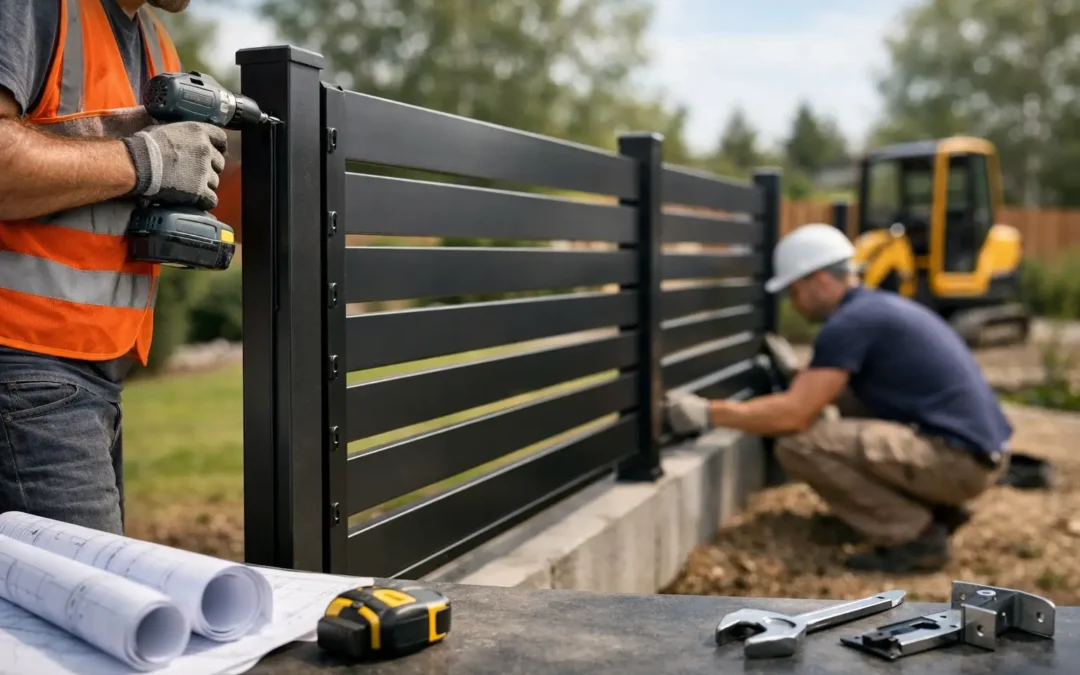
If you are planning a new perimeter fence, one of the first questions is usually not about style – it is about timing. A custom metal fence installation timeline can move quickly when the scope is clear, but it is never a one-size-fits-all schedule. Design choices, site conditions, permitting, and fabrication all affect how soon your fence is ready to install.
For homeowners and property investors, that timing matters. You may be coordinating landscaping, a pool project, a front entry upgrade, or a larger exterior renovation. For commercial properties, delays can affect occupancy planning, safety requirements, and contractor sequencing. The good news is that a well-run process keeps surprises to a minimum and gives you a realistic path from idea to finished fence.
What affects a custom metal fence installation timeline?
The biggest factor is customization itself. A standard panel fence pulled from stock can be scheduled differently than a fence designed for a specific property, slope, gate opening, or architectural style. When your project includes custom spacing, decorative metalwork, integrated gates, privacy features, or engineered details, the timeline naturally includes more steps.
Material also matters. Aluminum, steel, wrought iron, and mixed-material systems each come with different fabrication requirements and finishing times. Powder coating, specialty finishes, and corrosion-resistant treatments may add days or weeks depending on shop capacity and the complexity of the order.
Then there is the site. A flat, accessible yard with clear property lines is faster to measure and install than a narrow side yard, sloped frontage, or site with hardscape obstructions. Existing concrete, retaining walls, tree roots, utility markings, and access limitations can all stretch the installation window.
A realistic custom metal fence installation timeline, step by step
Most custom fence projects move through five stages: quote and site visit, design and drawings, approvals, fabrication, and installation. Some projects can move through this process in a few weeks. Others take longer because the design is more involved or the property requires engineering review or permit coordination.
1. Site visit and quote
This stage is usually the fastest. A professional team visits the property, takes measurements, reviews grade changes, checks access points, and discusses goals for security, privacy, appearance, and code compliance. If there are gates, latch requirements, or special transitions near stairs or retaining walls, those details should be addressed early.
A quote typically follows once the scope is clear. If the client is deciding between fence heights, picket spacing, gate types, or finish options, the pricing stage can take a little longer. Speed here depends less on fabrication and more on decision-making.
2. Design, drawings, and scope confirmation
This is where custom work earns its value. Instead of forcing your property into a generic product, the design is built around your exact layout and priorities. Drawings help confirm dimensions, post locations, gate swing, and the overall look before production begins.
For many clients, this stage is where confidence increases. You are no longer trying to imagine the fence from a verbal description. You can review the design, make adjustments, and approve the direction before materials are ordered and fabrication starts.
On straightforward residential jobs, this can move along quickly. On larger or more detailed projects, it may take longer because revisions are part of the process. That is not a delay in the negative sense – it is quality control before metal is cut.
3. Engineering review or permitting when required
Not every fence needs engineering or permits, but some do. Height, location, gate systems, commercial applications, pool enclosures, and municipal requirements can all affect what approvals are needed. If the fence is tied to a broader renovation or new construction project, coordination with other trades or permit documents may also come into play.
This is one of the biggest it-depends stages in the timeline. If approvals are simple, the project keeps moving. If stamped drawings or municipal review are required, the schedule should account for that upfront rather than treating it as an unexpected hold-up.
A disciplined contractor will flag this early, not after fabrication is underway. That protects the client from rework and helps keep the process aligned with code and site realities.
Fabrication is where timing and craftsmanship meet
Once the design is approved and any required reviews are cleared, production begins. This is often the longest part of the custom metal fence installation timeline because the fence is being made specifically for your project.
Posts, panels, gates, frames, and hardware all need to be produced to the approved measurements. If the fence includes custom ornamental work, laser-cut elements, heavier structural sections, or specialty latching systems, shop time increases. Finishing also matters. Powder coating or other protective finishes improve durability and appearance, but they require proper preparation and curing rather than rushed handling.
Clients sometimes assume the installation itself is the major time commitment. In reality, field installation may be only a small portion of the full schedule. The shop work is where precision is built in, and precision is what helps the installation go smoothly.
How long does installation take on site?
Actual installation can be relatively quick once everything is fabricated and scheduled. A smaller residential fence section or gate may take a day or two. A full perimeter fence, sloped site, or multi-gate layout may take longer.
What affects on-site duration most is not just fence length. It is footing conditions, excavation needs, weather, surface type, and access. Installing posts into soil differs from core drilling into concrete or coordinating anchors around finished hardscape. If crews need to work carefully around landscaping, pool decks, or occupied commercial areas, the pace may be more measured.
Weather can also shift the plan. Rain, frozen ground, or extreme conditions may affect excavation, footing performance, finishing protection, or safe crew access. A dependable installer will build around those realities instead of pushing through at the expense of quality.
Common reasons a fence timeline gets longer
The most common slowdowns are not always construction problems. Often, they come from unresolved choices. A project may pause because the gate width changes, the finish color is still undecided, the property line needs confirmation, or another contractor has not finished adjacent work.
Permit timing is another variable. Municipal review does not always move on a predictable schedule, especially when seasonal demand is high. Material availability can also affect timing, particularly for custom hardware, special-order profiles, or finish colors outside standard stock.
The good news is that these issues can usually be managed with strong communication. When the contractor provides a clear sequence – measurement, drawing, approval, review, fabrication, installation – clients know what is happening and what decisions are needed to keep the project moving.
How to keep your custom metal fence installation timeline on track
The best way to protect the schedule is to finalize the scope early. That means confirming layout, height, gate locations, finish, and any site constraints before fabrication starts. Late changes are possible on some projects, but they often affect both cost and timing.
It also helps to work with a full-service team that handles measurement, drawings, production, and installation under one roof. That reduces handoff errors and keeps accountability clear. At Iron & Glass Designs, that structured workflow is a major advantage because clients are not left coordinating separate vendors and hoping each one interprets the project the same way.
You should also share the full context of the site. If there are upcoming paving dates, landscaping plans, tenant access rules, or condo management requirements, say so early. A custom project runs better when the installer understands the bigger picture, not just the fence line.
What clients should expect from a professional process
A quality custom fence project should feel organized from the beginning. You should know when measurements are happening, when drawings will be ready, what approvals are required, and what fabrication depends on. You should also hear honest answers about trade-offs. For example, a more intricate design may take longer than a simpler one, but it may deliver the exact look that makes the property feel finished.
That is the real value of a professional timeline. It is not about promising the shortest possible schedule. It is about giving you a dependable one, with craftsmanship and code alignment built into every step.
If you are comparing options, ask less about the fastest case and more about the actual process. A custom metal fence should not just arrive quickly – it should fit the property, perform well, and look like it belonged there from the start. When timing and execution are handled with care, the finished result feels less like another exterior project and more like a permanent upgrade you will appreciate every time you pull into the driveway.