
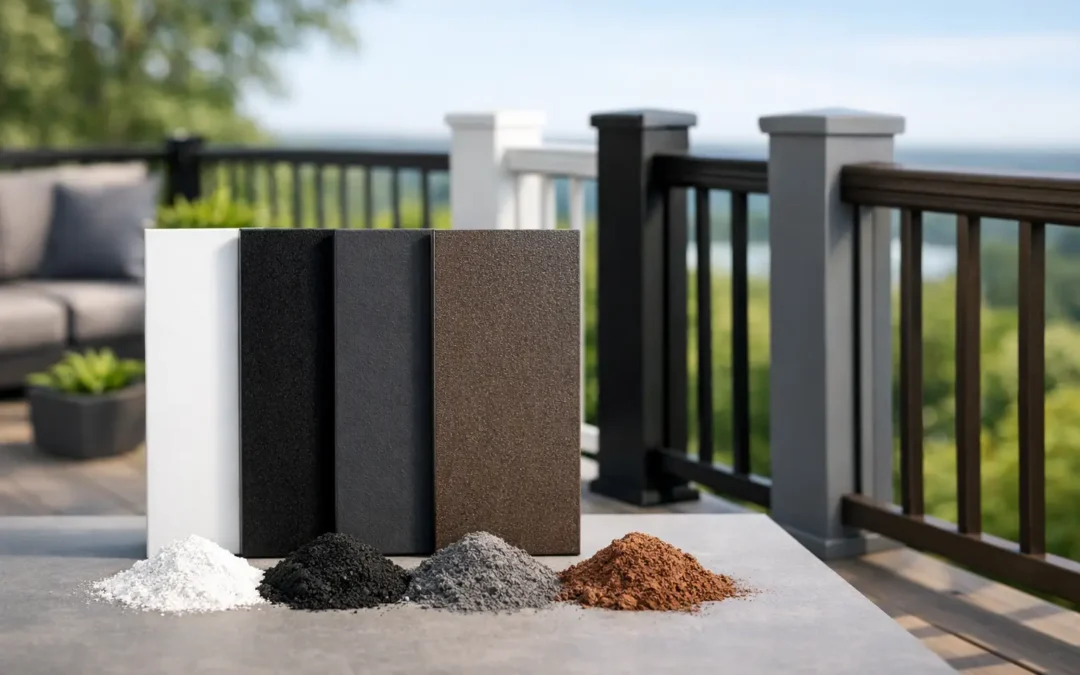
If you are choosing a railing finish based only on a sample chip, you are missing the part that affects the final result most – how that finish will live on your property. Aluminum railing powder coat options can look nearly identical in a showroom and behave very differently once they face sun, rain, salt, fingerprints, and daily use.
For homeowners, builders, and property investors, that choice is not just about color. It is about matching the architecture, reducing maintenance, and making sure the railing still looks intentional years after installation. A well-selected powder coat finish helps aluminum railings stay sharp, modern, and durable without the ongoing upkeep many people expect from exterior metal.
What powder coating actually changes
Powder coating is more than a decorative layer. It is the finish that gives aluminum railing its visible character while adding a protective barrier against wear, moisture, and weather. When applied properly, it creates a more durable surface than standard paint and gives designers much more control over sheen, texture, and consistency.
That matters on both interior and exterior projects. On an indoor stair railing, the finish affects how refined the railing feels in the hand and how easily it shows smudges or scuffs. On an exterior balcony or porch, the coating has to hold its appearance through changing seasons, direct sun, and regular cleaning.
The right finish should support the design, not compete with it. Clean lines, strong fabrication, and precise installation do the heavy lifting. Powder coating is what brings the whole system together visually.
Aluminum railing powder coat options by look and feel
Most clients start with color, but color is only one part of the decision. The better way to review aluminum railing powder coat options is by looking at four variables together: color, gloss level, texture, and environment.
Standard colors
Black remains the most requested option for a reason. It works with glass infill, contemporary homes, brick exteriors, and commercial entrances without feeling dated. A black aluminum railing can read bold and architectural or quiet and minimal depending on the profile and surrounding materials.
White has a lighter, more traditional feel and can work well on porches, transitional homes, and projects where the railing should blend into trim rather than stand out. Bronze and dark brown finishes add warmth and often pair nicely with stone, wood-tone decking, and earth-toned facades.
Gray and charcoal have become strong choices for modern builds. They offer a softer alternative to black while still looking crisp and current. If the project includes large windows, metal cladding, or cool-toned masonry, a gray finish can create a very balanced result.
Matte, satin, and gloss
This is where many railing decisions become more refined. A matte finish tends to look modern and understated. It reduces glare and usually hides fingerprints and minor surface dust better than high-gloss finishes. Satin sits in the middle and gives a clean, finished look without too much shine.
Gloss finishes reflect more light and can make a railing feel more formal or decorative. In some settings that works well, especially where the design leans classic. But gloss also shows smudges, scratches, and surface imperfections more readily. If the railing will be heavily touched, matte or satin is often the safer choice.
Smooth vs. textured finishes
A smooth powder coat has a sleek, precise look that fits minimalist design. It is especially popular on modern interior railings and aluminum systems paired with glass. Textured finishes, on the other hand, can be more forgiving. They help disguise small surface marks and often perform well in high-traffic or exterior conditions.
Texture can also change how a color reads. A textured black may feel softer and more architectural, while a smooth black can appear sharper and more formal. That is why full-system samples matter more than a flat color swatch.
Choosing the right finish for the setting
The best powder coat option depends on where the railing is going and what surrounds it. There is no single finish that is right for every project.
Exterior railings
For decks, balconies, porches, and exterior stairs, durability should lead the conversation. UV exposure, moisture, and seasonal temperature changes all affect long-term appearance. Dark finishes are popular outdoors, but the exact sheen matters. A matte or lightly textured black often gives the strongest balance of style and practicality.
If the property is near heavy traffic, water, or harsh winter conditions, the finish quality becomes even more important. A good-looking color is not enough if the coating system cannot handle the environment. This is one reason custom fabrication and professional installation matter – the finish choice should be considered as part of the whole railing system, not as an afterthought.
Interior railings
Inside the home, the design conversation opens up. You may choose a finer texture, a lower sheen, or a custom tone that complements flooring, wall color, and lighting. Indoor aluminum railings often benefit from finishes that feel quiet and intentional rather than overly glossy.
In modern interiors, black, charcoal, and soft bronze remain strong choices. If the railing is next to glass, a matte finish usually helps preserve the clean, open feel. If the space is more decorative, a smoother satin finish can add just enough presence.
Commercial and multi-unit properties
Property owners and contractors usually have a different priority mix. Appearance still matters, but so do maintenance cycles, touch-up concerns, and consistency across multiple sections. Textured, lower-gloss finishes are often preferred because they hold up well visually in high-use environments.
For these projects, finish selection should support durability, code-compliant design, and repeatability. A railing needs to look good on day one, but it also needs to keep looking professional after years of use.
Custom colors vs. standard finishes
Custom colors can be a strong move when a project has a specific design language or brand requirement. They are especially useful in commercial work or high-end residential projects where the railing needs to align with windows, cladding, doors, or interior metal accents.
That said, standard colors usually offer the best balance of availability, lead time, and proven performance. Custom selections can add complexity, and not every project benefits from that extra step. If the goal is timeless design, a standard black, bronze, or gray often delivers exactly what the space needs.
The smartest approach is to ask whether the finish is supporting the architecture or trying to steal attention from it. In most railing projects, restraint ages better.
What to ask before you approve a finish
A powder coat decision should be made with the same care as the railing design itself. Ask to review actual finish samples when possible, not just printed references. Light, texture, and surrounding materials can shift how a color appears.
It also helps to ask how the finish will perform in your specific environment and how it should be maintained. A beautiful finish is only a good choice if it fits the use case. On a family home with active outdoor spaces, practicality matters. On a statement stair in a custom interior, visual precision may matter more.
This is where working with an experienced fabrication and installation partner makes a real difference. At Iron & Glass Designs, the process is built to reduce uncertainty – site measurement, project-specific drawings, approval, engineering review when required, fabrication, and installation. That structure helps ensure the finish you choose works with the design, the setting, and the long-term expectations for the project.
The finish should match the standard of the build
A well-made aluminum railing already offers a strong mix of strength, low maintenance, and modern appeal. The powder coat is what completes it. Done right, it sharpens the profile, supports the architecture, and helps the railing hold its value visually over time.
The best choice is not always the boldest one. It is the one that fits the property, handles the conditions, and still looks right after the project is no longer new. When you review aluminum railing powder coat options through that lens, the decision becomes much clearer.