
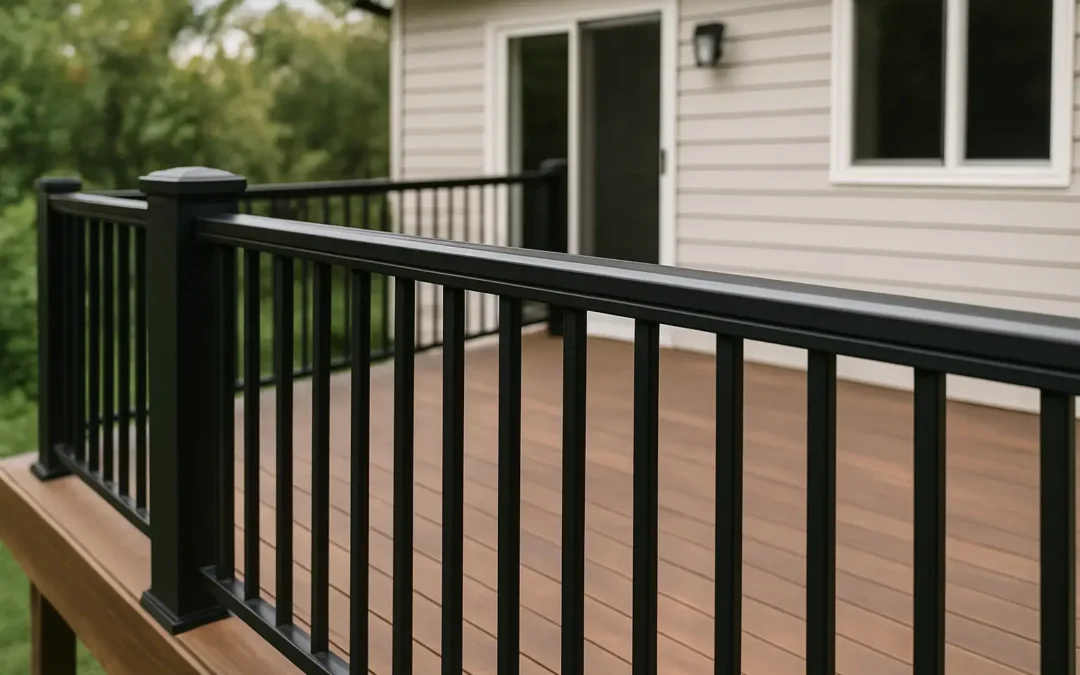
A deck is one of the few places in a home where you notice the details twice – once from inside looking out, and again when you’re standing on it with a drink in your hand. If the railing feels bulky, shaky, or dated, it changes the whole experience. That’s why aluminum railing for deck projects has become a go-to upgrade for homeowners who want a crisp, modern look without signing up for constant maintenance.
Aluminum hits a sweet spot: it reads clean and architectural, it holds up in real weather, and it works with a wide range of layouts from simple rectangles to multi-level decks with stairs and landings. But it’s not a one-size-fits-all purchase. The right outcome depends on how your deck is built, what you’re trying to see through the railing, and what your local inspector will look for.
Why aluminum railing for deck upgrades keeps winning
Aluminum railings are typically powder-coated, which means the color is baked on as a hard finish rather than painted on like a skin that can peel. For homeowners, that translates into a railing that keeps its appearance with minimal effort. You’re not sanding, staining, or chasing corrosion spots every season.
Structurally, aluminum is light but strong. That matters on decks where you want posts and rails to meet code load requirements without looking overly heavy. A well-designed aluminum system can feel solid under hand while keeping lines slim and intentional.
Then there’s the design flexibility. Aluminum can be paired with vertical pickets for a classic rhythm, or with glass infills for an open view. It can be built with square, modern profiles or softened slightly depending on the style of your home. Done right, it doesn’t just “finish the deck,” it elevates the exterior architecture.
How it compares to wood, steel, and glass
Homeowners often start with the same question: “Should I just rebuild the wood railing?” If budget is the only factor and you don’t mind maintenance, wood can still make sense. But wood railings move. They shrink, swell, and loosen over time, especially at fasteners. That movement is exactly what makes railings feel shaky.
Steel is strong and can be beautiful, but outdoors it demands serious attention to coating and long-term protection. Stainless steel performs well, but it’s a different price category and look. If you want a clean, dark frame that stays consistent, powder-coated aluminum is often the more straightforward path.
Glass railings are the gold standard for view preservation. Many deck owners love glass, but not everyone wants fully frameless. Aluminum is often the “frame” that makes glass practical and code-friendly, giving you a defined structure that still feels open.
It really comes down to priorities. If your deck faces a view, you may lean toward glass and aluminum together. If you want a modern upgrade that’s low-maintenance and cost-conscious, aluminum with pickets is hard to beat.
Picking a style that matches your deck and sightlines
Most aluminum deck railings fall into a few visual categories, and the right choice is usually obvious once you consider what you want to see from the deck.
Vertical pickets are the most common. They read classic, they’re generally cost-efficient, and they’re easy to keep looking tidy. They do put a repeating pattern in your view, which some people don’t mind and others can’t unsee.
Wide picket spacing is not a free design choice, though. Railing infill spacing is a code-driven detail, and you don’t want to get that wrong because it can turn a finished project into a failed inspection.
Glass infill is where aluminum really shines visually. With glass, the railing becomes a thin perimeter instead of a visual barrier. If you have a pool, a ravine lot, or even just a nice backyard, that openness changes how the whole deck feels.
Cable is another look people ask about, but it typically brings more ongoing tensioning and alignment considerations. Aluminum and glass tends to feel more “set and forget,” which is exactly what most homeowners want from an exterior upgrade.
What “code-compliant” actually means for a deck railing
A deck railing is a safety system, not decor. Inspectors care about things like height, the ability to resist lateral loads, opening sizes, stair graspability, and how posts are anchored into the structure.
Where projects get into trouble is not the railing itself, but the deck framing underneath. If the rim joist is weak, if blocking is missing, or if previous work was done without proper fastening, even a premium railing can’t perform the way it should.
Stairs add another layer. Handrails often have different requirements than guards. The railing that looks great along the deck edge might not satisfy what’s needed on the stair run. This is where job-specific drawings and an experienced installer matter because you’re solving the full system, not just ordering parts.
If you’re planning permits, or if you want the confidence that the final install will pass inspection, it’s smart to treat the railing like a designed and reviewed component. That approach reduces last-minute surprises like needing extra posts, changing spacing, or reworking stair details.
Finish and color: small choice, long-term impact
Most homeowners pick black because it disappears visually and works with almost every exterior palette. But aluminum can also be done in whites, bronzes, and custom tones. The important part is selecting a finish that can actually hold up to sun exposure and seasonal swings.
Powder coating quality matters. A cheap coating can chalk, fade, or show wear faster. A better coating system holds color and resists scratching from normal use – chairs bumping into it, grills moving around, kids’ toys, and the day-to-day life of a deck.
Texture is a detail people don’t think about until they see it. Matte finishes hide fingerprints and dust better. Gloss finishes can look sharp but show more. Neither is “right” – it depends on your home and how much visual contrast you want.
Cost factors: what changes the quote
Aluminum railing pricing isn’t just about linear feet. The design and the deck geometry do most of the steering.
A simple, straight run with standard post spacing is efficient. Add stairs, corners, landings, or transitions, and the labor and engineering details increase. Glass infill typically adds cost too, not just for the panels, but for the hardware and the precision required to keep lines clean.
Another variable is how the railing is mounted. Fascia mounting can look sleek because it keeps the deck surface clearer, but it requires the deck edge to be structurally ready for that load. Top mounting is more common and sometimes simpler depending on your framing.
If you’re comparing quotes, make sure you’re comparing the same scope. One quote may include removing an old railing, repairing framing, or handling stair handrail requirements. Another might assume the deck is perfect and only include the new railing. The numbers can look far apart until you line up what’s actually included.
The process that keeps the job predictable
Deck railing projects go smoothly when the work is treated like a real build, not a parts purchase. The best outcomes usually follow a clear sequence: a site visit to measure and understand the deck conditions, drawings that show post locations and stair details, client approval so nothing is guessed, engineering review where required, then fabrication and installation.
That workflow protects you in a few ways. First, measurements are taken in the real world, not estimated from photos. Second, you see what you’re getting before it’s made. Third, the final install is based on a plan, so the crew isn’t improvising on your deck.
This is also how you keep the aesthetics tight. Good railing work looks intentional – consistent spacing, clean corners, aligned posts, and transitions that don’t scream “field adjustment.”
If you want that kind of controlled, professional experience, Iron & Glass Designs builds aluminum railing systems with a structured process from measurement and drawings through fabrication and on-time installation.
Common “it depends” scenarios homeowners should know
If your deck is older, the biggest question might be whether the structure can support the railing style you want. Sometimes the deck needs additional blocking or reinforcement, especially for stair posts or long runs where movement can develop over time.
If you have a hot tub on the deck, wind exposure on an upper level, or heavy traffic from tenants or guests, sturdiness becomes even more important. Aluminum can absolutely handle demanding use, but post placement and anchoring should be engineered and installed accordingly.
If you’re prioritizing a view, glass is often the answer. But if you have pets or you know the deck gets messy, you might prefer pickets simply because glass shows smudges and pollen more quickly. It’s not hard to clean, but it’s a real lifestyle consideration.
If you’re planning to sell in a few years, aluminum is a strong value choice because it reads as a modern upgrade and signals low maintenance to buyers. It’s one of those improvements that feels immediately “done,” not “one more thing to take care of.”
A railing is something you touch every day and trust without thinking about it. When it’s designed to match your deck, built to meet code, and installed with care, it quietly raises the standard of the whole outdoor space – and that’s the kind of upgrade you’ll appreciate every time you step outside.