
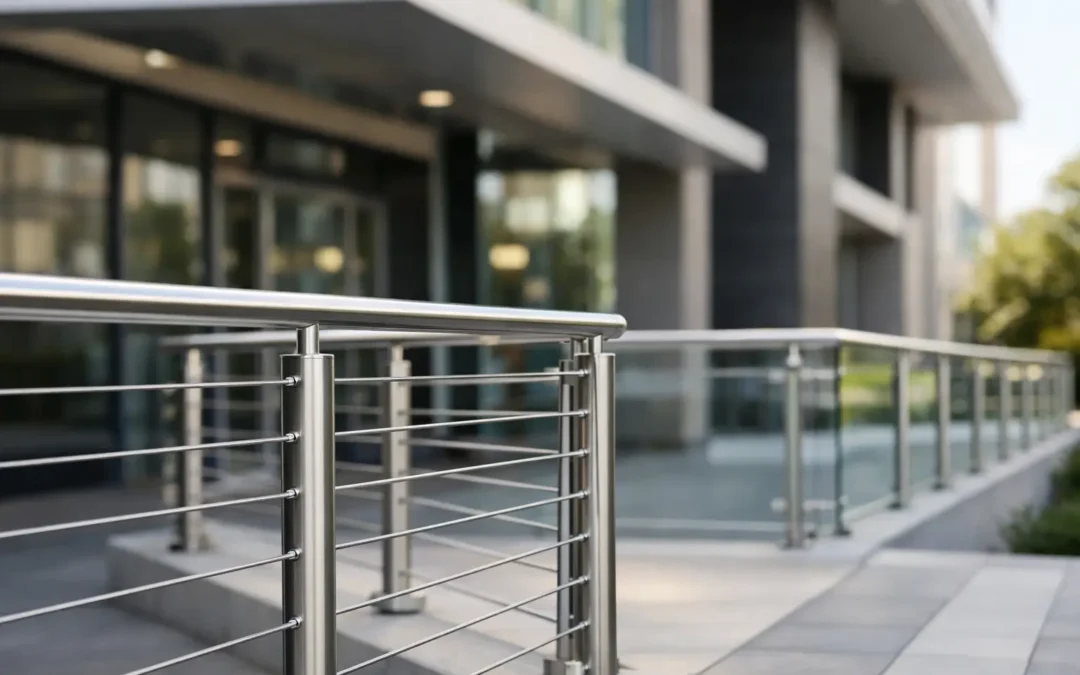
A railing that looks sharp in a rendering but fails inspection on site is not a finished solution. For builders, property owners, and facility managers, commercial railing systems code compliant means more than checking a box. It means the system is designed for the real conditions of the project, detailed correctly, reviewed properly, and installed with the same level of care that went into the drawings.
That is where many projects get delayed. The issue is not usually the idea of the railing. It is the gap between a visual concept and a buildable, approvable system. In commercial work, that gap matters. Railings affect safety, liability, scheduling, tenant turnover, and the overall appearance of the property. When they are handled correctly, they do all of those jobs at once.
What commercial railing systems code compliant really means
The phrase commercial railing systems code compliant is often treated like a product label, but compliance is not something you simply buy off the shelf. It is the result of several decisions working together – the right height, the right spacing, the right structural support, the right attachment method, and the right material for the environment.
A glass guard at an office entry, for example, is not judged only by how clean it looks. It has to meet guard requirements, resist the required loads, and be anchored to a structure that can support it. A steel stair handrail in a retail space may look straightforward, but if the grip profile, height, returns, or bracket spacing are wrong, the installation can become a problem during inspection.
This is why experienced fabrication and installation teams do not start with fabrication. They start with site conditions, intended use, and applicable code requirements. From there, the design can be developed into something that is both attractive and dependable.
Why code compliance starts long before installation
Most railing issues are created early. A concept is approved before field measurements are confirmed. A material is chosen for appearance without considering corrosion, impact, or maintenance. An attachment detail is borrowed from another project even though the substrate is different.
Commercial projects do not leave much room for those assumptions. A stair in a multifamily building, a balcony at a mixed-use property, and a guard around a commercial landing may all require different detailing even when they look similar from a distance. Load requirements, occupancy type, exposure to weather, and the condition of the existing structure can all change what works.
That is why a professional workflow matters. Site measurement, job-specific drawings, client approval, engineering review when required, fabrication, and precise installation create a much more reliable path than trying to adapt a generic system in the field. It protects the schedule, and it protects the finished result.
The details that usually decide whether a railing passes
When owners and contractors think about code, they often focus on guard height first. That matters, but it is only one part of the picture. Spacing within the system, handrail continuity, graspability, edge conditions, and the strength of posts, base shoes, and anchors can all affect approval.
Glass railings are a good example. They offer a clean, modern appearance that works especially well in commercial entries, balconies, and interior stairwells. But the visual simplicity can be misleading. Glass type, thickness, edge treatment, hardware selection, and support conditions all need to be coordinated carefully. A beautiful glass guard that is not engineered for the project is a risk, not an upgrade.
Metal systems bring their own decisions. Aluminum can be a great fit when clients want durability, lighter weight, and a crisp contemporary look. Stainless steel works well in many commercial environments where corrosion resistance and a premium finish are priorities. Wrought iron and custom steel can deliver stronger architectural character, but detailing and finishing become even more important, especially outdoors.
None of these materials is automatically the right one. It depends on the property, the traffic, the design intent, and how much maintenance the owner wants to take on over time.
Design matters, but buildability matters more
Commercial clients rarely want a railing only for safety. They want it to strengthen the property visually. On a storefront, in a lobby, around a stair opening, or along an exterior terrace, the railing is part of the architecture. It should feel intentional, not like an afterthought added to satisfy code.
The challenge is balancing that design goal with practical construction reality. Minimalist sightlines are appealing, but ultra-light visual design still needs real structural performance. Custom metalwork can make a property stand out, but overly complicated fabrication can slow production and add unnecessary cost. Frameless glass can look impressive, but only when the substrate, drainage conditions, and installation tolerances are properly addressed.
Good railing design finds the middle ground. It respects the architect’s vision, meets the engineer’s requirements, and gives the installer details that can be executed cleanly in the field. That balance is where quality really shows.
Why engineering review is not a formality
On commercial projects, engineering review and stamped drawings are often the difference between confidence and guesswork. They help confirm that the system is appropriate for the required loads and that the design aligns with the actual site conditions. They also support permitting and provide a clearer record of what is being built.
This matters for owners because code issues do not disappear after installation. If there is a future claim, renovation, inspection, or tenant improvement, the documentation behind the work becomes important. For contractors, engineered drawings reduce back-and-forth and help avoid site improvisation. For architects and designers, they protect the integrity of the original concept by turning it into a system that can actually be approved and fabricated.
A disciplined process does not make a project slower. In many cases, it prevents the delays that happen when compliance is treated as something to solve at the end.
Choosing the right partner for code-compliant railings
Not every railing vendor is set up for commercial work. Some can fabricate attractive products but are not structured to handle site verification, project-specific drawings, engineering coordination, and installation standards at the level commercial projects require.
A better partner will ask the right questions early. What is the occupancy? Is the railing interior or exterior? What is the substrate? Is this new construction or retrofit? Are there permitting requirements? Will the system need engineer review and stamping? How will the railing interact with waterproofing, finishes, stair geometry, or adjacent trades?
Those questions are a sign of professionalism, not complication. They are how problems get solved before they become change orders.
For commercial clients who want both modern design and dependable execution, working with a full-service team makes the process far more controlled. At Iron & Glass Designs, that means starting with measurements, moving into project-specific drawings, coordinating approvals, supporting engineering review, and then producing and installing the finished system on time. The result is not just a railing that looks right. It is one that is made for the project it is going into.
Where owners can save money – and where they should not
Every commercial project has budget pressure. The smart goal is not simply to lower railing cost. It is to avoid spending money twice.
Value engineering can be useful when it simplifies fabrication, uses a more suitable material, or reduces installation complexity without compromising safety or appearance. For example, a framed glass system may be the better choice than a more expensive minimalist option if the project needs easier coordination and stronger tolerance for site variation. Powder-coated aluminum may offer a cleaner long-term ownership experience than another metal that demands more upkeep.
Where owners get into trouble is cutting corners on design review, engineering, or installation quality. If a railing fails inspection, needs to be modified after fabrication, or creates warranty issues because of poor anchoring, any upfront savings disappear quickly.
A code-compliant railing should still feel custom
There is a misconception that compliance limits design. In reality, the best commercial railings prove the opposite. When the system is designed properly from the start, code requirements become part of the solution rather than an obstacle.
That opens the door to railings that do their job beautifully. Clear glass systems that preserve views. Metal railings that sharpen the character of a facade. Interior handrails that feel understated but precise. Exterior guards that hold up to weather and heavy use without losing their finish or alignment.
A commercial railing should protect people, support the permit process, and elevate the space at the same time. When those priorities are coordinated early, the project moves better and the result feels finished in every sense.
If you are planning a commercial stair, balcony, entry, or guardrail upgrade, the best next step is simple: treat compliance as part of the design from day one, not something to check after the railing is already built.