
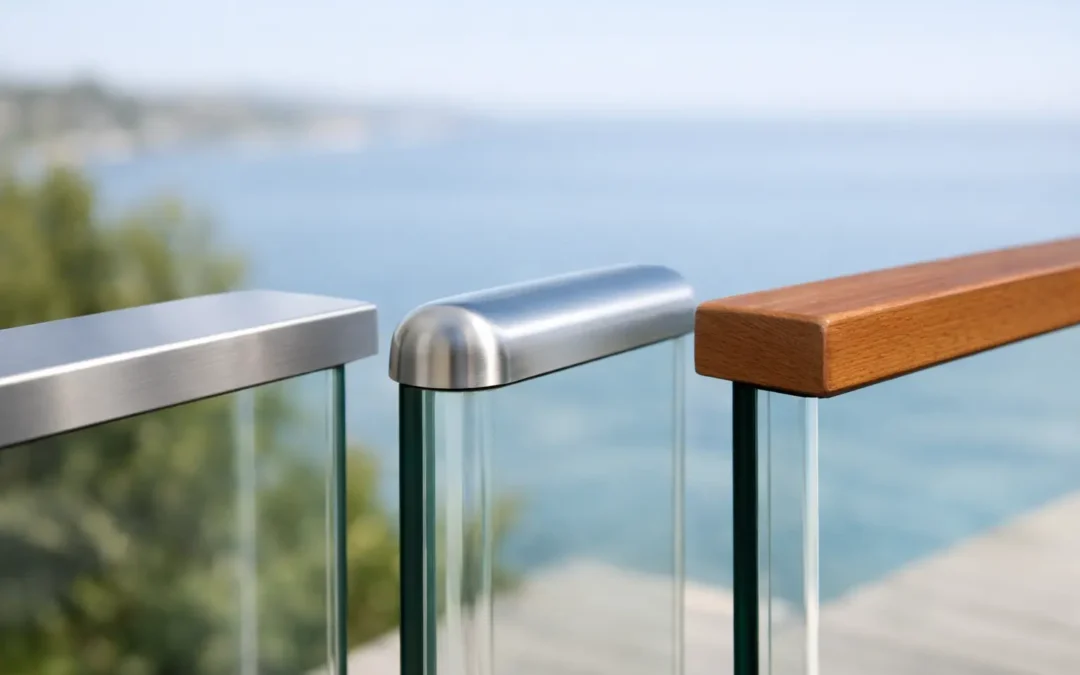
When clients ask about glass railing top cap options, they are usually trying to solve two things at once: how the railing will look every day, and how it will feel when you put your hand on it. That small detail changes the whole system. It affects the finished style, the amount of visible metal, the comfort of the rail, and in some cases how the assembly meets project requirements.
A top cap is the material attached along the top edge of the glass. On some projects, it acts as a clean visual finish. On others, it also serves as the graspable surface people expect on stairs, landings, or balcony edges. The right choice depends on where the railing is going, how minimal you want the design to feel, and whether you want the glass to read as the star of the space or as part of a larger metal-and-glass composition.
What glass railing top cap options actually change
From a distance, many glass railings look similar. Up close, the top cap tells a different story. A slim metal profile can make the glass feel sharp and contemporary. A more substantial cap can give the railing a stronger architectural presence. No top cap at all creates the most open look, but that choice is not always right for every application.
This is where a custom approach matters. A railing is not just a product pulled off a shelf. It has to suit the space, support the design intent, and work within code requirements. On a second-floor interior landing, your priorities may be visual openness and a refined edge detail. On an exterior deck or commercial entry, durability, grip, weather exposure, and maintenance often carry more weight.
The most common glass railing top cap options
Stainless steel top caps
Stainless steel is one of the most requested choices, especially for modern homes and commercial properties. It pairs well with clear glass, keeps the look crisp, and holds up well in both interior and exterior settings. Brushed stainless tends to be the most forgiving finish because it hides fingerprints and minor wear better than highly polished surfaces.
The appeal is straightforward. Stainless steel feels substantial in the hand, coordinates well with other modern details, and gives the railing a finished edge without making it look heavy. If you want a contemporary system that still feels premium and durable, this is often the safest choice.
The trade-off is that stainless steel introduces a visible band across the top of the glass. Some clients love that definition. Others want less metal and more uninterrupted transparency. Budget can also shift the decision, since stainless typically sits above simpler aluminum options.
Aluminum top caps
Aluminum top caps are a strong fit when you want a clean look, dependable performance, and practical pricing. They are especially useful on exterior railings where corrosion resistance matters and weight is a factor. Powder-coated aluminum also opens the door to color matching, which can help tie the railing into window frames, trim, or other architectural metalwork.
Visually, aluminum can go in two directions. It can be understated and minimal, or it can become more prominent if you choose a larger profile. The advantage is flexibility. You get a modern appearance without the cost profile of some higher-end finishes, and maintenance is generally straightforward.
The main consideration is feel. Aluminum can be excellent structurally and visually, but some clients prefer the heavier, more solid hand-feel of stainless steel. That difference may matter more on interior stairs where touch and daily interaction are part of the experience.
Minimalist slim-line caps
For homeowners and developers chasing the lightest possible look, slim-line top caps are often the sweet spot. They preserve the open character of glass while still providing a defined top edge. In many designs, this approach gives you the best balance between minimalism and practicality.
A slim-line cap works well when you want the glass to remain visually dominant but do not want the exposed edge left entirely bare. It creates a neat finish, can improve comfort at the top edge, and often helps the system feel intentional rather than unfinished.
This option is popular for interior staircases, balcony guards, and contemporary homes where every detail is expected to read clean and precise. The trade-off is simple: it is minimal, but not invisible. If your goal is absolute visual disappearance, you may still lean toward a capless design if the application allows it.
Capless glass railings
Not every glass railing uses a top cap. Capless systems are chosen for their pure, uninterrupted look. They let the glass stand alone visually, which can be striking in high-end interiors, terraces with a view, and spaces where minimalism is the entire point.
Done well, capless glass looks sharp and modern. It reduces visual clutter and keeps sightlines open. For some clients, there is nothing better.
But this is also where expectations need to be grounded in real project conditions. Capless does not automatically mean better. It depends on the mounting method, the location, the intended use, and code requirements. The exposed glass edge may not provide the same tactile comfort people expect from a top rail, and some projects require a cap or separate handrail solution. This is why drawings, review, and proper engineering matter before the system moves into fabrication.
Custom metal top caps
In custom residential and commercial work, standard profiles are not always enough. A bespoke top cap can be fabricated to match adjacent stair rails, gates, architectural steel, or other metal details in the property. This creates a more cohesive result, especially when the railing is part of a larger renovation or new build.
Custom top caps are worth considering when design continuity matters more than off-the-shelf simplicity. The profile, finish, dimensions, and visual weight can all be tailored to suit the project. If you want the railing to feel integrated into the architecture rather than added afterward, this is often the strongest path.
The trade-off is lead time and fabrication complexity. Custom work asks for more coordination upfront, but it usually pays off in the finished result.
Choosing the right top cap for your project
The best glass railing top cap options are not chosen in isolation. They should be selected with the full railing system in mind.
Start with location. Interior stairs, exterior decks, balconies, and commercial entries all place different demands on the material. Exterior applications need to handle weather, temperature swings, and moisture. Interior applications often prioritize touch, visual refinement, and how the railing connects with flooring, wall finishes, and adjacent trim.
Then think about how minimal you really want the system to be. Some clients say they want an all-glass look, but when they see samples, they prefer the finished feel of a slim metal cap. Others want a stronger top line because it gives the railing more presence and complements surrounding metal features.
Hand comfort matters more than people expect. If the top edge will be touched regularly, especially on stairs, the profile should feel good in use. A detail that looks perfect in a rendering can feel too sharp, too cold, or too slight in real life.
Budget plays a role too, but it should be weighed against longevity and overall fit. Saving on the top cap only makes sense if the result still aligns with the architecture and performance expectations of the space.
Why installation and engineering matter as much as the cap itself
Top cap selection is only one piece of the job. The appearance of the finished railing depends just as much on measurement accuracy, glass sizing, hardware alignment, finish quality, and installation precision. A beautiful cap will not rescue a system that was poorly planned.
That is why professional workflow matters. Site measurement, job-specific drawings, client approval, and engineering review help avoid the common problems that make custom railing projects stressful. They also make sure the chosen design can actually be built, installed correctly, and meet the needs of the property.
At Iron & Glass Designs, we work closely with clients to turn ideas into buildable railing systems that look sharp and perform properly. That process is what protects the final result. It is not just about picking a finish from a sample board. It is about making sure the entire assembly works together.
A better question than “Which top cap is best?”
The better question is which option is best for your space, your style, and the way the railing will be used. Stainless steel may be perfect for one staircase and wrong for another. A capless detail may look incredible on an interior landing but be less practical in a different setting. A slim aluminum cap might deliver exactly the balance of cost, durability, and clean design that a project needs.
If you are planning a new glass railing, ask to see profile samples, review finish options in person, and consider the whole system rather than the top edge alone. The smallest details often have the biggest influence on how custom work feels once it is installed. Choose the top cap that makes the railing look intentional, feel right in use, and belong naturally to the space around it.
That is usually the choice you will still be happy with years later.